s of followers. Well, turned out that smaller creators like nano influencers are better choices due to higher engagement rates. Their engagement rate spans from 2.53% – 4.84% on IG and 8 -18% on TikTok; much higher than that of large influencers. The only question is, how to find nano influencers?
Sourcing nano creators yourself is the cheapest route and the slowest. If the hours are the constraint rather than the budget, the best influencer marketing agencies compares the firms that will do the sourcing for you.
Mega and macro influencers easily appear in users’ feeds. They make news, trends, and are seen all over social media. But nano influencers are lost names that you have to find. If you’re looking for ways to find and collaborate with these influencers, this guide is for you.
You’ll learn about: what a nano influencer is, how to find and vet them, and how to organize the perfect campaign with these creators. Let’s start:
What Is a Nano Influencer?
A nano influencer is a social media creator with small but active followers, usually between 1,000 and 10,000 followers. Nano influencers are one of the earliest types of influencers and usually focus on a very specific topic or audience.
Unlike celebrities or mega influencers, nano influencers have the trust of their smaller circle. Because nano creators have fewer followers, they don’t post many ads or sponsored content.
That means their suggestions are honest and they only recommend products or services they really believe in. That is why they are so trusted in the community and have a high engagement rate.
What’s The Difference Between Nano And Micro Influencers?
Nano and micro influencers aren’t just different in follower count. Nanos (1K–10K followers) usually post raw, personal content and have close relationships with their audience. They value their followers a lot, which leads to high engagement rates of 4-8%. They’re also very budget-friendly and usually work for free products or low fees.
Micros (10K–100K followers), on the other hand, are seen as niche experts. Their content is more polished and professional, and has a slightly lower engagement rate compared to nanos (2–5%). Let’s take a look at this comparison table:
| Feature | Nano Influencers | Micro Influencers |
| Follower Count | 1K–10K | 10K–100K |
| Audience Feel | Like friends, highly personal | Like niche experts, less intimate |
| Content Style | Raw, unfiltered, relatable | More polished and topic-focused |
| Engagement Rate | Very high (4–8%) | Strong (2–5%) |
| Cost | Low; often accept free products | Higher, typically $100–$500 per post |
| Best For | UGC, grassroots buzz, social proof | Niche reach, credibility, conversions |
How Much Do Nano Influencers Charge Per Post?
Most nano influencers charge between $10 and $100 per post, depending on their niche and engagement. Some may even collaborate in exchange for free products.
Here’s a rough idea of what they might charge per post:
- Instagram Post: $10–$100
- Instagram Story: $20–$150
- TikTok Video: $5–$200
- YouTube Mention or Integration: $20–$200
In addition to that, some factors affect these pricings. One example is the platform and content type. Quick posts like TikTok or Instagram images usually cost less, while YouTube videos are priced higher due to production time.
Other factors include their niche, content quality, audience interaction, and whether the brands want to reuse the content.
Benefits Of Working With Nano Influencers
Based on multiple sources, like Influencer Marketing Hub’s 2025 report, more brands are turning to collaborate with nano-influencers. This is because they can deliver higher engagement at a lower cost. Let’s break down the benefits of working with nano influencers:
1. More Trustworthy: Nano creators usually promote the products they actually use, not just paid partnerships. They don’t get that many sponsored post deals, maybe just a few.
Therefore, their followers see them as real people with honest recommendations, not advertisers. In fact, 88% of people trust these small social media creators than famous creators.
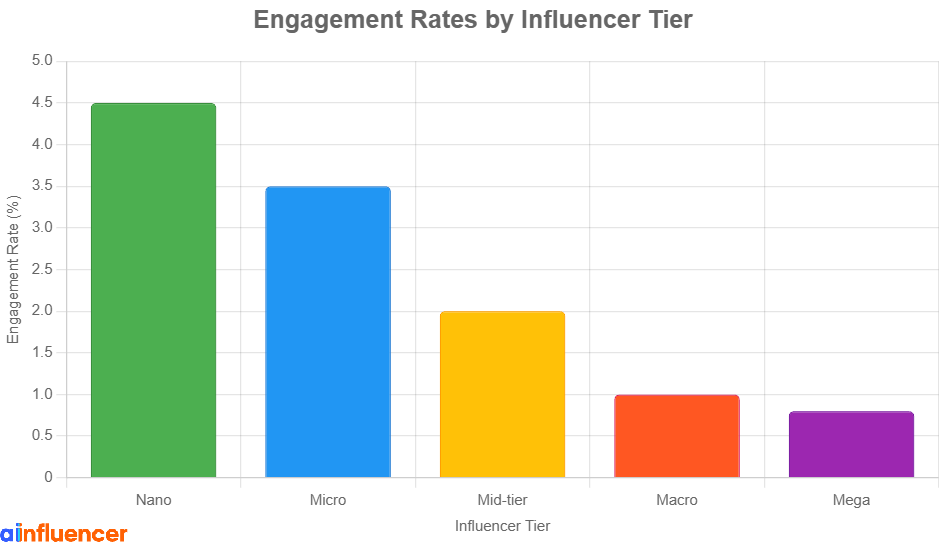
2. Higher Engagement Rates: A high engagement rate is very important to brands. It’s the thing that leads to sales. Nano influencers’ average engagement rate is around 4%, which is over three times higher than macro influencers (1.3%).
Additionally, engagement drops as followers increase (for example, mega influencers’ engagement rates average is about 0.92%). Therefore, brands are turning to nano creators for better sales.
3. Affordability: As you know, as the number of followers of an influencer goes higher, so do their fees. Nano influencers are the smallest type of influencers, so they are the most affordable option. As we mentioned, their fees are $10-100 per post. So they are 50-100x more affordable than macro-influencers ($5,000-10,000).
Also, most of the time, brands don’t even need to pay them anything. Usually, nano influencers are open to product exchange, which is basically a cost-free option for brands.
4. Dedication: Lastly, when you work with a nano creator, there’s a good chance it’s their first brand collaboration. That means they’re excited to do their best for their first campaign, and that usually leads to great results.
Now let’s see how to find nano influencers:
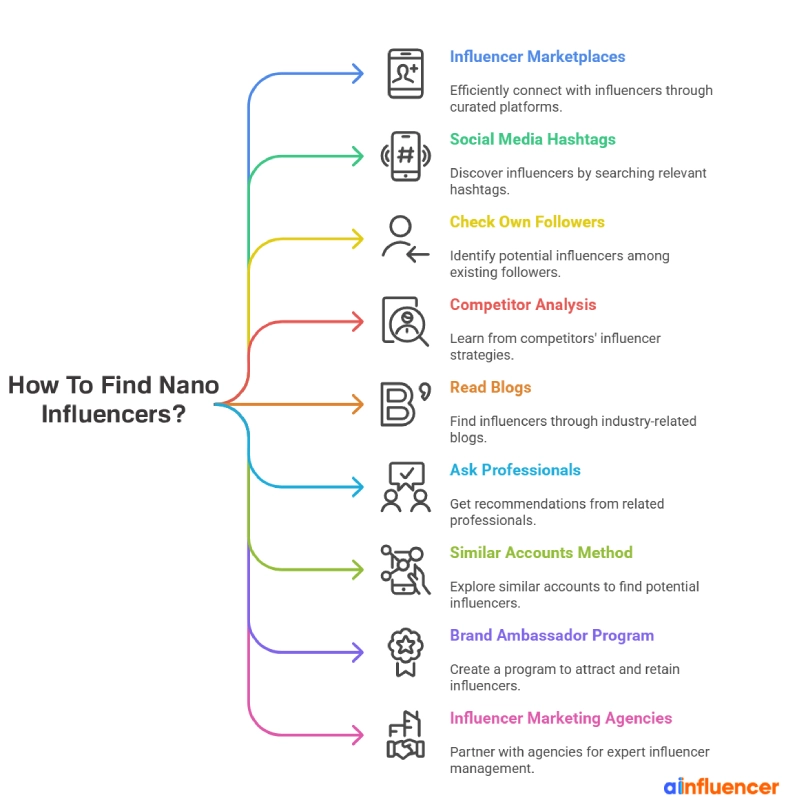
How To Find Nano Influencers: 10 Methods
You can find nano influencers by using influencer marketing platforms, searching hashtags, checking your followers, and niche communities on social media. Let’s break down each of these and explain more about them:
1. Use Influencer Marketplaces
Using an influencer marketplace is one of the easiest and effective methods for finding nano influencers.
In these platforms, you can search in their huge database of influencers, which usually includes millions of creators. Then you can use smart filters like location, niche followers, etc, to narrow down your choices and find the right influencers for your brand in a few minutes.
Some famous examples of these tools are Ainfluencer, Aspire, Upfluence, and CreatorIQ.
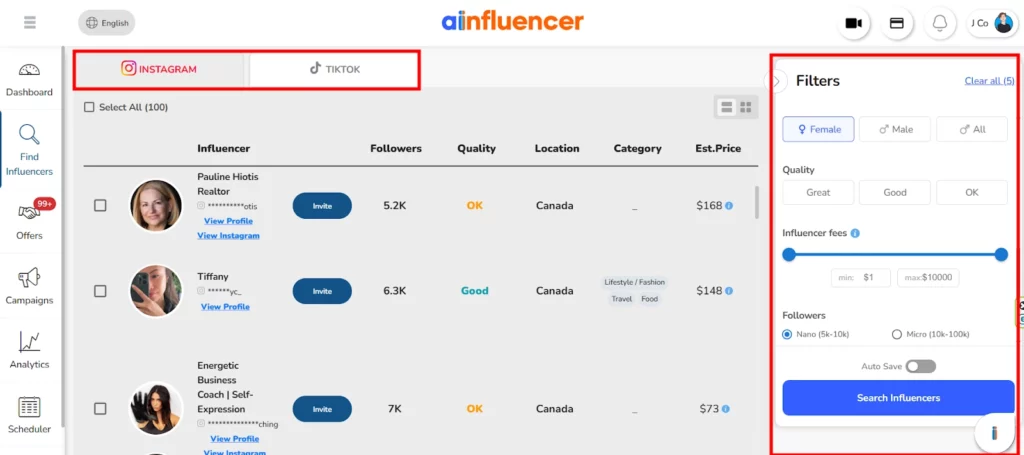
Let’s walk you through one of these tools and see how you can find influencers with these platforms. Here’s how to find influencers with Ainfluencers:
First, sign up on the platform. When you log in, you can choose your desired platform. Then, you can use the filters on the right side of the screen to narrow down your options and find the creator you’re looking for.
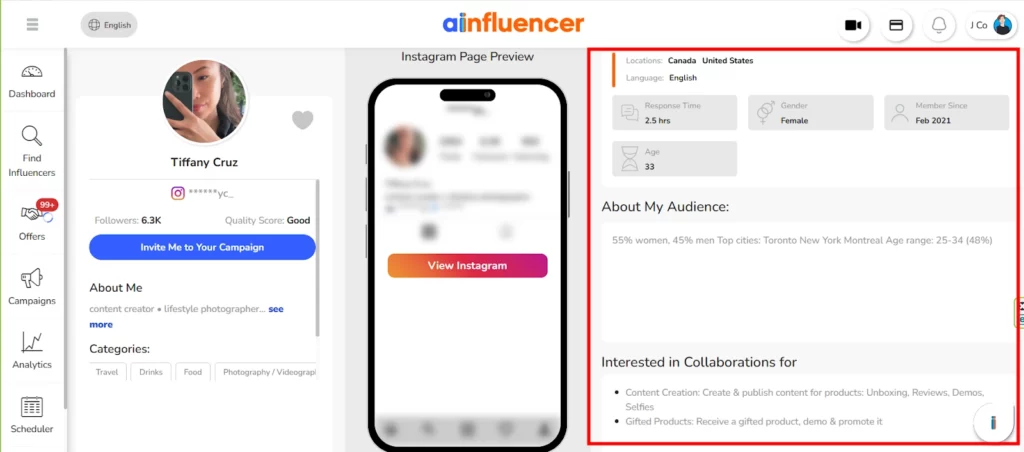
After finding a few suitable influencers, you can click on the list to view their full profile and information. If they were a good fit, you can send them a collaboration invitation.
2. Search Hashtags on Social Media
Small creators like nanos use hashtags in their posts 99% of the time. Hashtags are a way to expand reach and appear in searches, and nano influencers want to be seen by more people.
So, searching niche hashtags is a smart strategy to find these small creators.
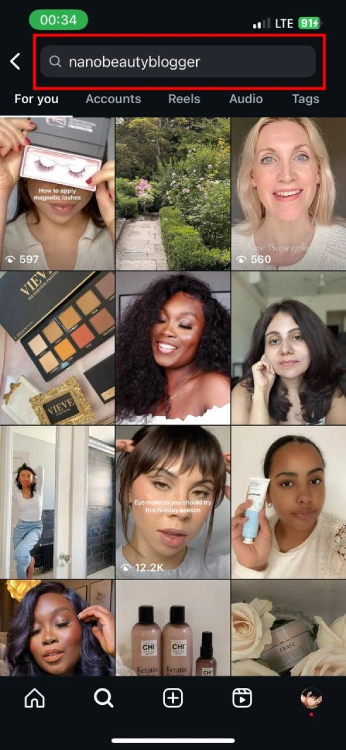
For example, if you’re looking for nano beauty bloggers, then you can search hashtags such as #nanobeautyblogger or #nanomakeupinfluencer.
3. Check Your Own Followers
Some of your most engaged followers might already be nano influencers! Look for people who comment, share, or tag your brand. These are probably the creators who are interested in your brand and will likely accept to promote your business.
Especially if they have a small but active audience, they could be ideal partners for collaborations, product seeding, or ambassador programs.
4. Do Competitor Analysis
It’s guaranteed that your competitors are using influencers for their marketing campaigns. So, you can take advantage of this situation and find out who they are working with. Since they have done the hard part and found the nano influencers for you, you can reach out to these influencers and start collaborating.
5. Use Social Media Search
One of the best ways of finding nano influencers is to use social media platforms. Influencers usually share complete information about themselves in their profiles and bios, making it easier for us to identify them.
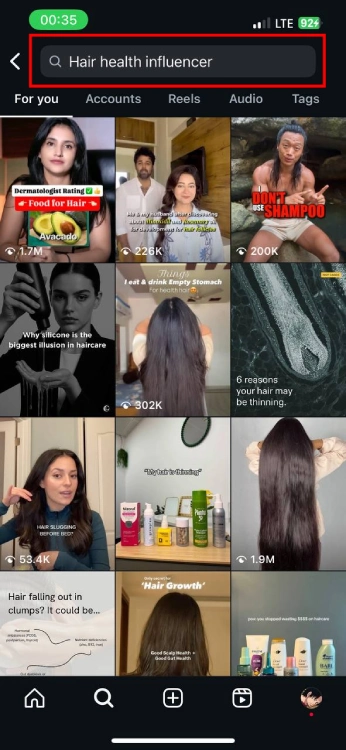
Platforms like Instagram and tiktok are slowly turning into search engines, so you can easily search and find the creators you’re looking for.
To do this, search related keywords to your niche, like “fashion,” “Beauty influencer,” etc. Then, content related to your keyword will show up, and you can find the creators you’re looking for.
6. Read Blogs
Reading and searching through blogs on Google is another way to find small creators. Some influencer platforms like Ainfluencer usually publish listicle blogs about influencers and introduce them for brand collaboration.
For example, we have a blog on American tech influencers that features 18 creators, ranging from mega to nano. It also breaks down key metrics like follower count, engagement rate, average likes and comments, and more.
You’ll find many similar blogs on Ainfluencer, covering creators across different niches and regions. So if you prefer list-style content to discover nano influencers, Ainfluencer could be a great place to start.
7. Ask Related Professionals
Sometimes the best way to find small influencers is by asking around. Talk to your team, customers, or anyone you know in your industry. They might follow creators who feel real and trustworthy.
People in fields related to influencer marketing usually have the best answers, especially those who have organized nano influencer campaigns. These personal suggestions often lead to great partnerships, because they understand your brand and know what works.
8. Try The “Similar Accounts Method”
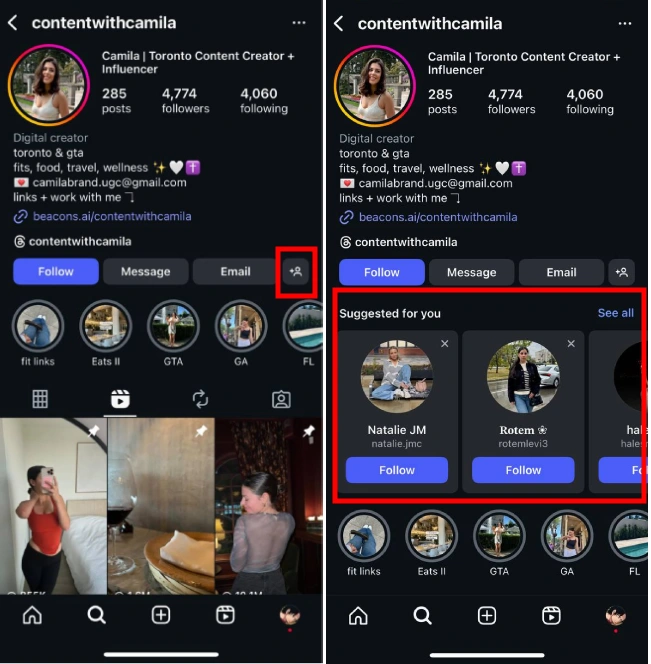
When you find an influencer whose content, niche, or audience feels like a good fit, Instagram can help you discover others like them. Go to their profile and look near the button next to the Message or Email button, you’ll see a small icon that looks like a person with a plus sign. Tap that.
Instagram will then show you a curated list of “Suggested Accounts,” creators who share similar content styles, audience types, or niche interests. These suggestions are based on Instagram’s algorithm, which looks at things like hashtags, engagement patterns, and follower overlap. It’s a quick way to uncover more influencers in the same space without using external tools.
9. Create a Brand Ambassador Program
A brand ambassador program is when a company works with people who like their products and asks them to promote them to their friends or followers. In return, these ambassadors get rewards like free products, discounts, or payments.
For nano-influencers, this method works perfectly because:
- They are already fans: Nano-influencers usually focus on a niche, content, and they are most willing to promote products they genuinely love and use.
- They seek formal recognition: Nano-influencers often want to take their content creation more seriously. They like having an official role like “brand ambassador” and clear steps for how to work with a brand.
To make nano creators join your program, you can find them by reaching out on social media or setting up a sign-up page. Once they join, give them clear guidelines, creative freedom, and tools like affiliate links or early access to new products.
10. Partner With Influencer Marketing Agencies
Last but not least, working with influencer marketing agencies is a smart way to find nano influencers because these agencies already have networks of trusted creators.
They’ve done the hard work of vetting influencers, checking their engagement, and matching them to the right brands. Instead of searching one by one, you can tell the agency what you’re looking for, like your niche, budget, or location, and they’ll bring you a list of nano influencers who fit.
It saves time, reduces risk, and helps you scale faster, especially if you’re running a bigger campaign or want to work with multiple creators at once.
Now that you know how to find nano influencers, let’s review how to vet them and make sure they are a good fit for your brand:
How to Vet Nano Influencers?
After following the steps above, you’ll have a list of influencers. Now, to find out which one of them is the best, you need to vet them and check a few factors. Let’s review them:
1. Check Follower Authenticity and Growth
Before working with an influencer, it’s important to make sure their followers are real. If their audience is full of fake accounts or bots, your campaign won’t reach actual people, and that means wasted time and money. To avoid empty results, you need to check their followers for authenticity.
To check this, you can use tools like HypeAuditor, Social Blade, or Modash. These platforms show you how many of the influencer’s followers are real. Aim for at least 80–90% authentic followers; that’s a good sign they haven’t bought fake ones.
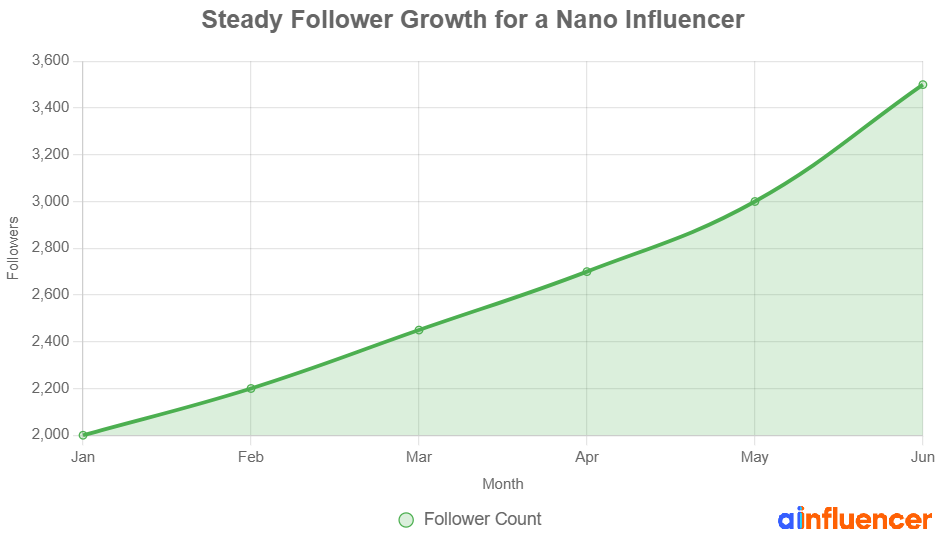
Also, look at how their follower count has grown over time. If they suddenly gained thousands of followers overnight, it might mean they used giveaways or bought followers. Steady, natural growth is what you want to see. Again, you can use the tools we mentioned above to check their followers’ growth patterns.
Here’s how a normal growth pattern should look. The example shows a gradual increase from 2,000 to 3,500 followers, reflecting a consistent 5–10% monthly growth rate.
2. Evaluate Engagement Rate
To see how active and connected an influencer’s audience is, you need to check their engagement rate. It shows how many followers are actually liking, commenting, and interacting with their posts. For nano influencers, a good engagement rate is usually between 5–10%.
You can calculate their engagement rate manually with a simple formula: (Average likes + comments per post) ÷ number of followers × 100.
To get a reliable number, check around 10 to 20 recent posts, add up the likes and comments, divide by their follower count, and multiply by 100. This gives you their average engagement rate.
On platforms like Instagram or TikTok, you can do this by scrolling through their posts and counting likes and comments yourself. It takes a bit of time, but it gives you a clear picture of how active their audience really is.
If you want to save time, you can use tools like Modash or Not Just Analytics. These platforms automatically calculate engagement rates and give you reports. If you’re checking multiple influencers, this is probably a better way.
Also, check how meaningful comments show real interest. Tools like Social Blade can also help spot suspicious patterns, like fake engagement or bots.
Lastly, compare their engagement rate to benchmarks. If it’s below 3%, their audience might not be very active. But if it’s between 5–10%, that’s a strong sign, especially for nano influencers in popular niches like lifestyle, fitness, or beauty.
3. Check Content Quality and Niche Relevance
Finally, you need to make sure the influencer’s content aligns with your brand.
Their posts should match your niche. For example, if you’re a fitness brand, you should regularly share content about workouts, health tips, or wellness routines.
Spend about 10–15 minutes going through their posts, stories, and reels. Pay attention to their tone and style. Does it feel natural and aligned with your brand’s values? If their content feels off-brand or overly promotional, they might not be the right match.
Also, look at their past brand collaborations. See how they’ve promoted products before. Did they share personal experiences or just post a generic ad? Influencers who tell real stories about how they use a product tend to perform better and feel more trustworthy.
If you want a deeper analysis, use platforms like Upfluence or AspireIQ. These tools can help you check how relevant their content is to your niche and how their audience reacts to branded posts.
Best Niches & Platforms for Nano Influencers
Nano influencers do well in areas where people want real opinions and personal stories. Some of the best niches include:
- Beauty & Skincare: People trust honest reviews and everyday routines.
- Health & Wellness: Topics like self-care, mental health, and fitness feel more relatable from smaller creators.
- Food & Recipes: Home cooking, local eats, and special diets (like vegan or gluten-free) work great.
- Fashion: Everyday outfits, thrift finds, and personal style are popular.
- Travel & Local Experiences: Nano influencers are great at showing local spots, hotels, and hidden gems.
If your niche is one of the options above, it’s wise to collaborate with these small creators. On the other hand, the top three social media platforms for creators are:
- Instagram: Great for photos, stories, and short videos. Easy to find creators using hashtags and location tags.
- TikTok: Perfect for short, fun videos. Nano creators often get high engagement here.
- YouTube: Good for longer videos like tutorials or reviews. Smaller creators build strong trust over time.
So, it’s better to organize your campaign on the platforms above.
Speaking of a campaign, let’s see how to organize an influencer marketing campaign with these creators:
How to Organize an Influencer Marketing Campaign With Nano Influencers?
To run a nano-influencer campaign, follow a few easy steps. First, find the right influencer. Then agree on what they’ll do and how much you’ll pay.
Once the influencer agrees to work with you, send them a short guide. Explain what you want them to post, what the message should be, and any rules they should follow. Set a clear date for when the post should go live.
After they post, check how it’s doing. Look at likes, comments, views, or clicks, whatever matters most for your campaign.
When it’s done, send a thank-you message. Let them know you appreciated their work, and if it went well, say you’d love to work together again (simple follow-ups help build good relationships).
1. Find Influencers
As we mentioned above, here’s how to find nano influencers:
- Using influencer marketplaces
- Searching social media (including your own followers)
- Using hashtags
- Analyze competitors
- Read blogs
- Ask related professionals
2. Send an Outreach Message
When you reach out to the influencer, keep your message short, friendly, and easy to understand. You want to make a good first impression and get a quick response.
Start by introducing yourself and your brand. Say who you are and what your campaign is about. For example:
“Hi, I’m [Your Name] from [Brand Name]. We’re launching a new skincare line and looking for creators who share honest, relatable content.”
Next, explain why you chose them. Mention something specific you liked about their content. For example: “We love how you talk about self-care in such a real and personal way. Your recent post about morning routines really stood out.”
Then, clearly mention what you’re offering: free products, payment, affiliate commission, or a long-term partnership. For example: “Would you be interested in collaborating with us this month? Let us know by Friday.”
Here’s a quick checklist for your message:
- Who you are
- What the campaign is
- Why did you choose them
- What you’re offering
- Yes/no question
- Deadline for reply
3. Negotiate Fees
If the creator is interested, it’s time to start negotiating with the influencer. Give them three choices so they can pick what suits them:
- Flat fee for specific deliverables.
- Product exchange plus a small fee.
- Lower upfront fee plus a bonus based on sales or promo code performance.
After the influencer chooses their payment method, start negotiations by offering a little less than your maximum budget. This gives you space to adjust if needed.
If the influencer wants more, you can offer other benefits instead of money. For example, sharing their content on your brand page or promising future work.
If their price is still too high, suggest doing one small test post first. Mention that based on the results, you can pay them more next time.
4. Write a Contract
Contracts are an important part of influencer marketing. Write everything down in a simple agreement so both sides are clear. Include what the influencer will do, when they’ll post, and if you need to approve the content before it goes live.
Also, explain how and when you’ll pay them. Lastly, ask them to send screenshots or links to prove they posted what you agreed on.
5. Schedule and Support
Make a clear schedule with deadlines and let the influencer know when to post and when to check in. Give them everything they need, like your product, photos, or brand info. Lastly, share feedback quickly, but let them stay creative so their content feels natural.
6. Track Results
Before checking the results, you need to decide what matters the most to you. Do you care about brand visibility? Sales? Or engagements?
Since the campaign’s scale is small, ask the influencer for screenshots of Instagram insights and review the results.
Tip: If this is your first campaign, it’s better to start small. Once you have tried and learnt, you can organize bigger campaigns.
Conclusion
In conclusion, nano influencers can be a great choice for brands looking to build relationships with their niche audience. Finding the right nano influencer can take some time and effort, but the rewards are worth it.
Lastly, if you care about engagement more than brand exposure, nano influencers can be a good choice for you. Especially if you’re a new brand that wants to have more reach with low fees.
FAQs
1. How Many Followers Does a Nano Influencer Have?
Nano influencers usually have between 1,000 to 10,000 followers. They may have smaller audiences, but their followers tend to be highly engaged and loyal.
2. Are Nano Influencers Worth Investing In For Small Businesses?
Yes! Nano influencers are often more affordable and deliver stronger engagement. Their followers trust their opinions, making them great for small brands with limited marketing budgets.
3. Where Can I Find Nano Influencers In My Country Or Niche?
You can find them on platforms like Instagram, TikTok, and YouTube, or through influencer tools like Ainfluencer, Collabstr, or Heepsy. Searching niche hashtags also helps you discover them organically.
4. Do Nano Influencers Help With Sales Or Just Awareness?
They help with both. Their close relationships with followers make their recommendations more believable, which builds awareness and often leads to real sales.