Wondering how brands reach loyal audiences without huge budgets? The secret is in the rise of micro-influencers. These creators, with smaller yet highly engaged followings, offer brands an affordable way to reach targeted audiences.
By partnering with micro-influencers, brands can build trust and expand their reach without the hefty price tag of larger influencers.
So, where can you find these influencers, and how do you connect with them? Like all types of influencers, micro-influencers have a strong impact on their loyal, engaged communities. That’s why finding the right influencer is more important than focusing solely on their follower count.
In this article, we’ll share valuable tips on how to find and collaborate with micro-influencers, helping you optimize your marketing strategies while keeping costs low.
What Are Micro Influencers?
Let’s start with the most important question: What exactly are micro-influencers, and how are they different from other types of influencers?
A micro-influencer is someone with a social media following of about 10,000 to 100,000 people. They fall between nano-influencers (under 10K followers) and macro-influencers (100K to 1M followers). These creators usually focus on a specific niche, like beauty, vegan cooking, tech gadgets, travel, or fitness.
Micro-influencers are a great asset for brand collaborations because of their strong, loyal connection with their audience. Unlike celebrities, they feel more sympathetic, which leads to higher engagement. If you’re looking to launch a campaign, you can easily find and connect with the best micro OnlyFans influencers in your niche.
On average, micro-influencers have engagement rates between 5% and 20%, much higher than the 1-3% seen by larger influencers. Their content is authentic and community-driven, making it easier for followers to trust and connect with them.
Although micro-influencers have fewer followers, they can still earn well through brand deals, sponsorships, and affiliate marketing.
On average, they can make $100–$500 per sponsored post. Their earnings depend on factors like niche, engagement, and the platform they use. Micro-influencers in high-demand areas, like luxury beauty or finance, can even charge higher rates.
Beyond sponsored content, they also earn through affiliate links, brand partnerships, event appearances, and by selling their own products or services. In short, micro-influencers may have fewer followers, but their impact is stronger than you may realize. They’re the perfect balance—big enough to influence, small enough to stay connected.
Advantages and Disadvantages of Working with Micro-Influencers
Partnering with micro-influencers comes with benefits and, of course, a few challenges. Understanding them will help you know if these influencers are the right fit for your brand and how to leverage them effectively.
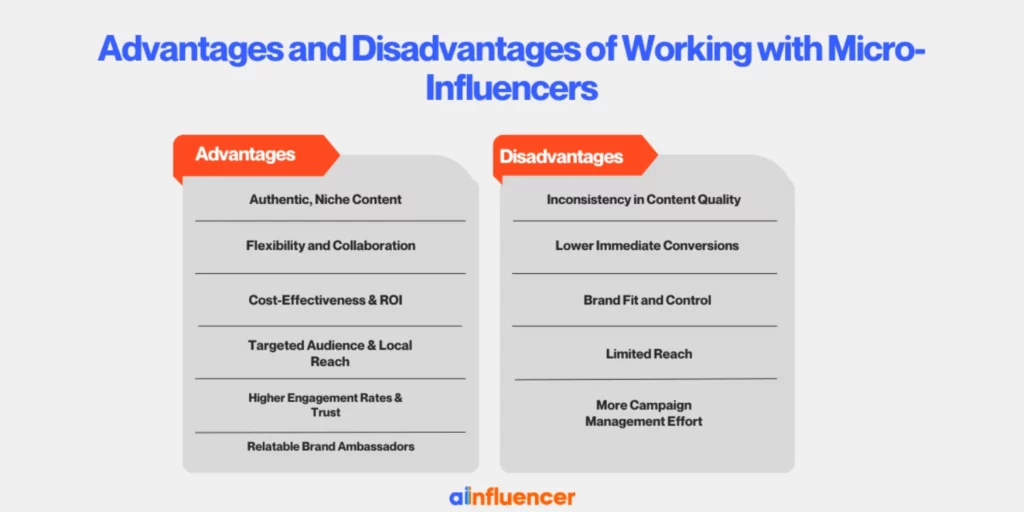
Benefits of Working with Micro-Influencers
Let’s start with the benefits of working with a micro-influencer first:
- Authentic, Niche Content: These influencers focus on specific niches, creating content that feels natural and genuine. Their audience is already interested in the topics related to your product, which makes their endorsements more impactful.
- Flexibility and Collaboration: Small creators like micro-influencers are more flexible and open to collaboration, making it easier to co-create content. They also know their audience well and can offer valuable insights to make your campaign more successful.
- Cost-Effectiveness & ROI: Micro-influencers are more affordable and can deliver better ROI than larger influencers. Brands can work with multiple micro-influencers for the same cost as one macro influencer, leading to more reach and higher engagement.
- Targeted Audience & Local Reach: These influencers offer targeted and local audiences, allowing you to find the perfect match for your product. Many also have a strong local following, making them ideal for regional campaigns, localized promotions, and events.
- Higher Engagement Rates & Trust: Micro-influencers have loyal, engaged followers who see them as authentic, not distant celebrities. Their product recommendations feel more like a friend’s advice, making their influence stronger and more trusted.
- Relatable Brand Ambassadors: Micro-influencers feel like everyday people, making their endorsements more relatable and genuine. Their use of a product is believable, and they can also create user-generated content for your brand.
Challenges of Partnering with Micro-Influencers
While partnering with micro-influencers offers numerous benefits, it also comes with its own set of challenges:
- Inconsistency in Content Quality: Micro-influencers may have varying content quality, which can affect how your brand is presented. Some may produce polished content, while others may create raw, less professional content.
- Lower Immediate Conversions: These influencers may not drive immediate high sales due to their smaller audience size, but they can influence engagement and consideration, leading to long-term conversions.
- Brand Fit and Control: Choosing the right micro-influencer is crucial. Mismatch in values or a lack of control over the influencer’s message can affect your brand’s image, but this can be managed with clear guidelines.
- Limited Reach: Micro-influencers have smaller audiences, so reaching a larger number of people may require working with multiple influencers, which can be more time-consuming than collaborating with one macro influencer.
- More Campaign Management Effort: Managing multiple micro-influencers involves more coordination, negotiations, and communication compared to working with one or two larger influencers.
Even though partnering with these influencers comes with its own challenges, working with them can be highly beneficial for smaller and even larger brands. Trust the creators you’ve chosen to get the best results.
How to find micro influencers?
Are you looking for a way to find the best micro influencers and collaborate with them to spread the word about your brand? Here are different ways to find influencers for your next micro influencer campaign.
- Start with Your Own Community: Your chosen brand promoter is best to be one of your loyal fans! Look through your existing followers or customers, some of them may have a decent following of their own. Additionally, If you have an email list, see if any of your followers have significant social media followings. Partnering with someone who already loves your brand can result in authentic content!
- Use Influencer Search Platforms: There are many tools designed for finding influencers. Platforms like Ainfluencer, Aspire, Upfluence, and Grin allow you to search for influencers based on niche, follower count, location, and engagement rate. These platforms save you time and help you find influencers that match your brand’s needs. Many offer free trials or databases, like Ainfluencer with over 5 million active creators.
- Search Social Media & Hashtags: Another approach is to search directly through social media platforms. Use relevant hashtags to find creators in your niche and check out top posts to spot influencers with around 5K–50K followers. While it may take a little effort, you’ll discover great influencers who are already creating engaging content.
- Keep an Eye on Competitors and Your Niche: Monitor your competitors’ social media to see which influencers they’re working with. If they’ve run campaigns before, these influencers could be a great fit for your brand too. You can also search for relevant keywords like on YouTube or TikTok to find influencers posting reviews. Joining online communities like Reddit or Facebook Groups in your niche can also reveal influencers to work with.
- Influencer Marketplaces: Platforms like Ainfluencer’s marketplace or Brandbassador let influencers list themselves for collaborations. You can post a campaign, and influencers will reach out to you if they’re interested. This approach can help you gather potential partners quickly and easily. Marketplaces also streamline negotiations and payments, making it easier to work with multiple influencers at once.
Once you’ve found potential micro-influencers, make sure to check their quality. Look at their engagement rate (likes/comments relative to followers) – anything above 3-4% is good, and 10% or higher is excellent for micro-influencers. Make sure their content fits your brand’s image and that their followers are original.
Keep in mind that conducting a manual search to find influencers is a time-consuming and tedious process. So the fastest and easiest way that helps you save a lot of time and energy to find influencers is by taking advantage of an influencer marketplace like Ainfluencer.
Ainfluencer: Best DIY Influencer Marketing Platform
Ainfluencer, as a free DIY influencer marketing platform packed with lots of useful features, is the easiest way to reach out to influencers. Actually, this DIY marketplace makes it easy for both influencers and brands to collaborate.
The platform lets you either create ads on the marketplace and encourage influencers to reach out to you or invite targeted influencers yourself. You don’t need to worry about the details while creating your ad since you can eventually negotiate the specifics of your ad with your influencer in our built-in chatbox.
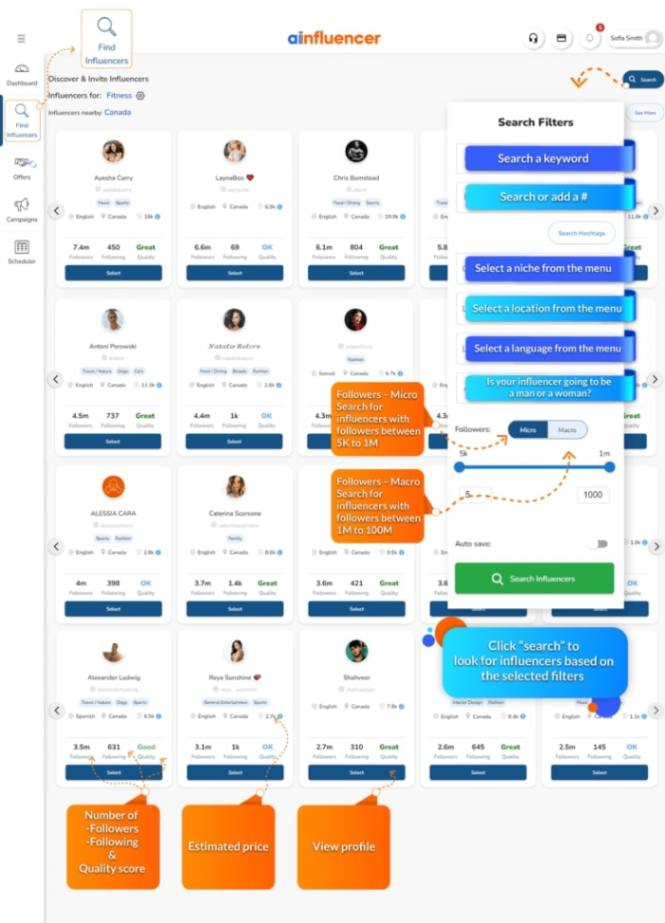
Exploring and inviting influencers is super easy thanks to advanced search features for location, hashtag, gender, language, number of followers, etc.
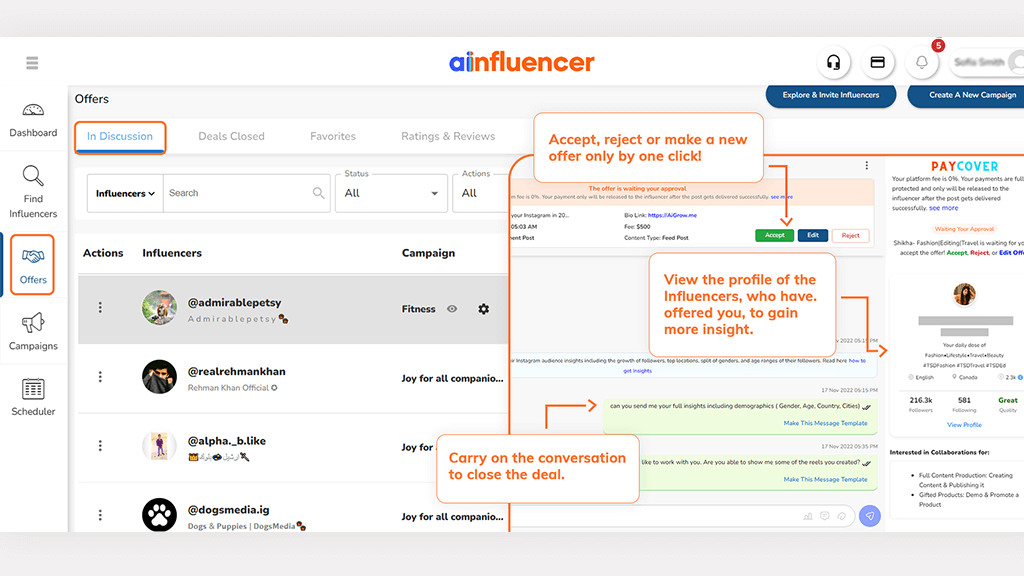
Influencers themselves can also reach out to you with offers. You can check your offers to see which influencers have made offers to compete for your business and choose the desired one.
Once you close the deal, you can stay up-to-date with real-time analytics.
[maxbutton id=”2″ text= “Try Ainfluencer now”]
Pro tip: Influencers can install the Ainfluencer app, which is available on both Android and iOS, to explore brands to work with.
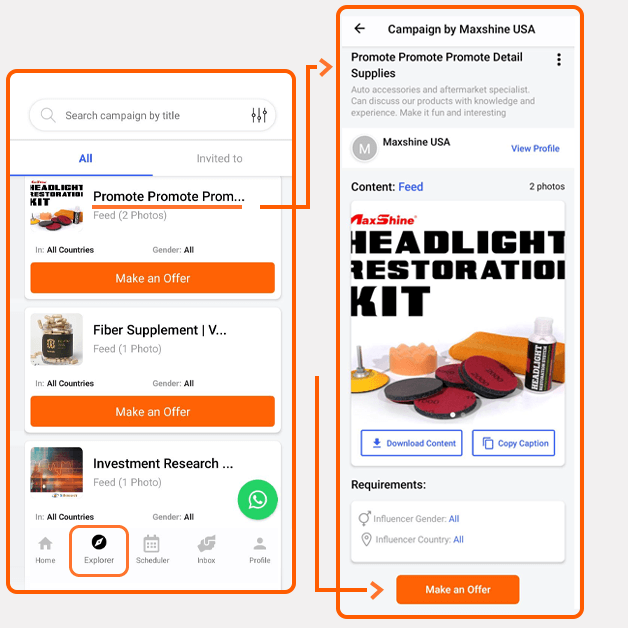
Ainfluencer: Best features to Offer Its Users
Ainfluencer is designed to simplify influencer marketing for brands and creators alike. Here are its top features that make campaign management faster, smarter, and more effective.
With access to over 5 million influencers across TikTok, Instagram, and YouTube, this platform is built for brands of all sizes and niches. Campaign creation is effortless — just set your goals, choose your influencer criteria, and you’re ready to go. You can collaborate in different ways, from content creation and publishing to boosting posts or even barter deals. There are no limits: create as many offers and campaigns as you like, with full access to smart filters that help you find the perfect match.
Communication is simple through a built-in inbox that handles everything from reviewing portfolios and making payments to leaving feedback. You’ll also get valuable insights, like past brand partnerships and audience data, to make smart decisions.
With all the features we’ve mentioned, you’ll never know the full potential unless you try it for yourself. Do yourself a favor and click the Ainfluencer sign-up link to experience a seamless collaboration with influencers.
Why micro influencers?
Here are the specific reasons why micro-influencers are preferred:
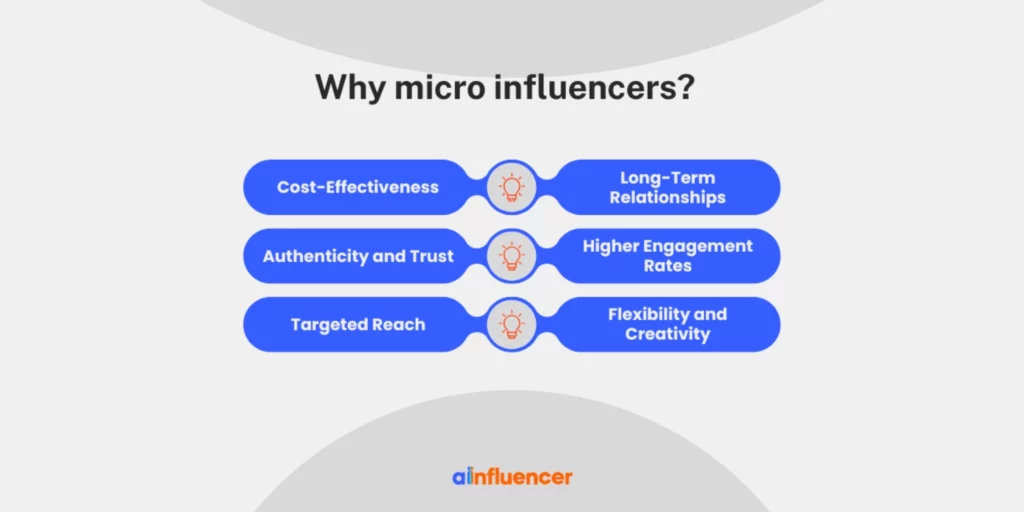
- Cost-Effectiveness: Collaborating with micro-influencers is more budget-friendly than working with macro-influencers.
- Authenticity and Trust: Micro-influencers are perceived as more authentic and trustworthy due to their niche focus and closer audience relationships.
- Targeted Reach: Micro-influencers excel in targeting specific demographics or industries with clarity.
- Long-Term Relationships: Micro-influencers often engage in long-term collaborations, fostering long-term support for a brand.
- Higher Engagement Rates: Micro-influencers have a very high engagement rate due to their smaller, more engaged audiences.
- Flexibility and Creativity: Micro-influencers offer more flexibility in content creation than macro and mega influencers, allowing for more innovative and engaging campaigns.
Therefore, new brands can grow their marketing performance by extending the new reach that micro influencers are responsible for. These individuals work as topic specialists who frequently share social media content about their interests to change their followers’ behavior and lifestyle.
How to use micro influencers to grow your business?
Now that you know how micro influencers marketing can help drive traffic and sales to your business, it’s time to see how to work with micro influencers and take advantage of micro influencer campaigns to grow your brand. Let’s get started.
#1 Clarify your expectations and goals
This step is essential while working on your micro influencers campaign. Think of the following questions and try to find answers before going any further.
- What is the goal of this micro influencers marketing strategy?
- Do you want to increase traffic to your website?
- Are you looking forward to raising brand awareness and brand engagement?
- Do you want to drive sales with a promo code or an affiliate link?
So make sure you spend enough time outlining your goals and defining what metrics will be essential to measuring success.
#2 Select the Right Platform
When choosing a platform for your brand, it’s important to know where your target audience spends their time. For example, Instagram is ideal for visual content like photos and stories, while TikTok is best for short, engaging videos. YouTube, on the other hand, is perfect for longer-form content that allows for deeper storytelling. Tailoring your content to match the platform’s strengths ensures it resonates with your audience and helps maintain their attention.
#3 Find Micro-Influencers to Work with
Want to Boost Your Brand? Start by finding the right micro-influencers. If you’re looking to grow your brand, teaming up with the right micro-influencers is a great place to start. These are everyday content creators with smaller but super engaged audiences. Before reaching out, take a look at their content—does it match your industry or the kind of product you offer? If yes, you’re already on the right track to making a meaningful connection with their followers.
Look for strong engagement—lots of likes, comments, and shares show they have loyal followers. Choose someone who posts regularly to keep their audience interested, and make sure they feel authentic, with a voice that matches your brand values. To save time, use tools like Ainfluencer to find micro-influencers based on engagement, audience, and content type.
#4 Negotiate fees and draft a contract for an influencer agreement
After identifying a few micro influencers you’d like to work with, you need to negotiate fees and create a contract that includes all relevant information.
After being connected with the right micro influencers, it’s time to see how to use them to win customers and grow your business. We’ll show you how to do it now.
#5 Use campaign-specific hashtags
Using campaign-specific hashtags can be a great way to increase brand recognition and engagement. When you ask micro-influencers to include these hashtags in their posts, it becomes easier to track campaign performance—seeing how often the hashtag is used and who’s using it. It also helps increase brand visibility by encouraging user-generated content and creating buzz around your campaign.
Hashtags that are relevant to a campaign also improve brand recognition and boost conversion rates. Therefore, make sure to ask the micro influencer you are collaborating with to use your campaign-specific hashtag.
#6 Use user-generated content (UGC)
Micro influencers are the best fit for brands that work with UGC creators. When making a buying decision, 93% of all consumers are impacted by UGC (User-Generated Content). With UGC, you can increase the conversion rate of your campaign by up to 29%.
People frequently ask their friends and relatives for recommendations while making purchasing decisions. In the absence of those, people turn to social proof in the form of client Stories, reviews, or testimonials.
The great thing is that employing user-generated content works just as well to achieve this as micro influencers’ marketing.
For instance, lifestyle brand GILI Sports is aware of what its target audience of watersports lovers is concerned with. For this reason, the business continually features UGC on both its website and its social media channels to make sure that potential customers understand that GILI boards offer the ideal segue into a life of adventure.
However, GILI goes one step further on its Instagram page. To show off the lifestyle that its products can enable prospective customers to experience, it reposts user-generated content.
#7 Place sponsored posts
Sponsored posts are the kinds of posts that influencers share on their profiles to encourage engagement and strengthen a brand image. For instance, the influencer might produce videos or other content about your product to promote your brand, drive traffic to your website, increase users’ interest in your offer, etc. Sponsored posts can be used to launch a successful micro influencer campaign.
#8 Ask micro influencers to review your product or service
Actions speak louder than words, especially when it comes to product reviews from micro-influencers. These reviews can significantly build consumer trust. When influencers share their honest opinions, it boosts credibility because their followers often trust their recommendations. Positive reviews can also drive sales by showcasing the true value of your product.
For example, you could team up with a beauty influencer to review your new lip-liner product and share their experience with their followers.
#9 Start guest blogging
Another way to make the most of micro influencer marketing is guest blogging. This way helps you reach micro influencers’ blog audience as well. So make a list of each micro influencer’s blog and then look to see if they have any guest blogging guidelines.
To get started, search for influencers with blogs that align with your niche. Once you find the right fit, create valuable content that provides useful information to their readers while promoting your brand. This approach will not only help you reach new audiences, but it will also build credibility through trusted voices in your industry.
#10 Monitor Campaign Performance
How do you know if your campaign is working? In Order to understand what’s effective and what isn’t, keeping track of your campaign performance is essential to win . Key metrics to track include engagement rates (likes, comments, shares), clicks and conversions, and reach and impressions. Social media analytics tools like Instagram Insights make it easy to track these metrics and optimize your campaign accordingly.
What Makes You A Micro Influencer?
Although influencer marketing is the right expensive strategy for brands to promote their brand awareness on Instagram, micro influencers best fit with small business marketing to better share a huge opportunity for brands to extend their reach in the niche area.
The thing that makes you a micro influencer is that you are not a typical celebrity or public figure to be famous enough to increase your followers at a glance; you are a topic expert that helps the audience to be engaged around a particular passion or niche. That is the accomplishment of a micro influencer.
For instance, a makeup micro influencer with only several thousand followers can generate more social media engagement by building engaging content types based on their followers’ interests and also take brands’ product promotion to the next level.
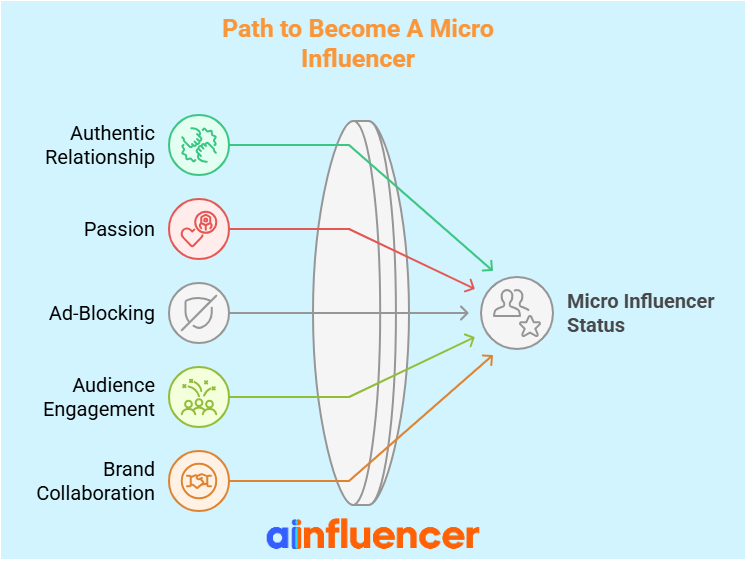
#1 Authentic Relationship
Micro influencers are real people who can create a genuine following and a trusted, loyal community in recommendations from new or strange brands’ product advantages when using them. So, authentic relationships and trust are among the best benefits of working with micro influencers because none of them will agree to work with a product they do not believe in.
#2 Passion
Passion is the major thing that motivates a micro influencer to advertise a particular brand or product. When micro influencers are not as famous as macro influencers, they definitely work for their interests and niche to promote their business account. This passion makes their social media content more amazing, authentic, and awesome, attracting more followers and gaining trust.
#3 Ad-Blocking
The use of ad-blocking technologies is growing, but recent stat shows ad-blocking online advertising is annoying people as they act as a constant interruption with too many ads on web pages. Influencers seem highly effective and necessary for online advertising rather than ad-blocking because influencers are people who interact with their audience, and every user chooses to follow an influencer profile or not, and there is no obligation.
#4 Higher Audience Engagement Rates
High levels of engagement and superior marketing performance indicators are frequently observed in micro influencer campaigns. Why? Micro influencers and their followers have strong relationships. When their followers contact them, they reply quickly with personalized responses.
As a result, their target audience trusts them, their ideas, and the goods and services they promote.
#5 Willing To Work With New or Small Brands
Influencers tend to become particular about the brands for which they produce content as their following grows, restricting campaigns and sponsorships to reputable companies with a lot of social proof.
Micro influencers, on the other hand, are more open to collaborating with new brands, products, and services. They’re still developing their fan base, just like your business is.
Conclusion
Micro influencers are more appropriate ones to tell stories to their followers daily. Then they are more successful about some particular topics or in sharing what they know and helping others learn with them.
As a result, they receive more compliments and respect from their audience when facing their content or viewing their videos that keep creating highly engaging marketing campaigns.