It’s a fact that Influencer marketing trends are evolving fast. They are blending AI-powered precision with human storytelling that punishes fake content and rewards real value. Brands that win in 2026 will treat creators as long‑term partners, not just rented channels, and will emphasize performance, co‑creation, and niche communities rather than celebrities.
Influencers will remain mainstream and part of every influencer marketing strategy. But how they create communities and collaborate with brands will change. What can we learn about influencer marketing’s future from what we have seen till today? Let’s go through them and be prepared for the year to come.
What Makes Today’s Influencer Marketing Different?
Influencer marketing is no longer just an experimental action; it is a core growth engine expected to reach over 32 billion dollars in 2026, with social media already overtaking paid search as the world’s largest ad channel.
However, marketers are shifting from throwing big budgets at big names to considering ROI, micro‑influence, and channel diversification. This is mainly because of platform shocks like the TikTok super-fast growth. The important point is that current trends in influencer marketing reward brands that are both data‑driven and creative.
8 Influencer Marketing Trends You Shouldn’t Ignore
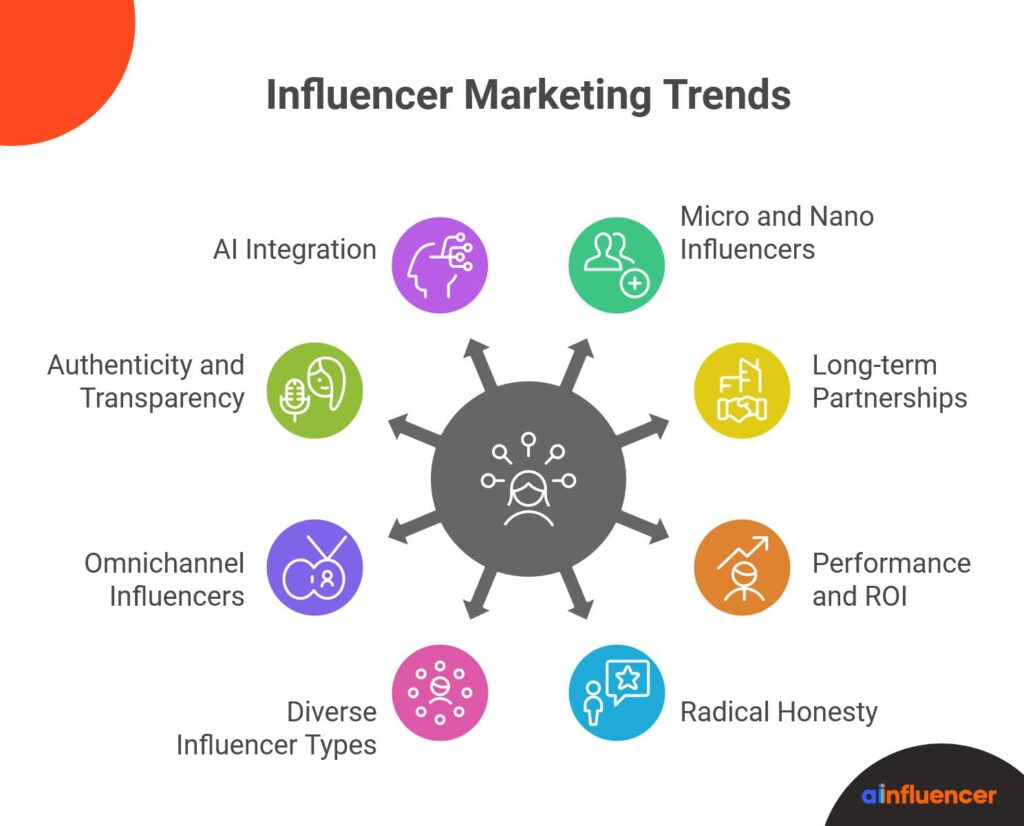
Influencer marketing trends today are less about follower numbers and more about building durable, high‑trust collaborations. Here are 8 influencer marketing trends that show up again and again across the latest benchmark reports and expert predictions:
1. Rise of Micro and Nano Influencers
Nano influencers now make up around three‑quarters of Instagram’s influencer base, and brands are deliberately shifting away from mega influencers to smaller, more targeted creator sets.
This shift is driven by cost pressure and performance. Marketers see better engagement, more relevance, and cleaner ROI from smaller creators with smaller but more enthusiastic communities.
This change in direction has been enabled thanks to tools like Ainfluencer and its influencer-finding features. You can easily find influencers and connect with them with human-written influencer outreach templates and start the collaboration you desire.
2. Long‑term Partnerships Over One‑off Posts
The shift to long-term relationships is one of the biggest recent developments in influencer marketing. Rather than using rented reach, brands claim to be focusing on long-term influencer collaborations that transform artists into genuine brand advocates. Over time, this partnership will enable brands to gain a deeper understanding of the product, storytelling will become more complex, and viewers won’t see another random #ad.
3. Performance and ROI
Influencer marketing trends in 2026 will be mostly about performance. Sales, sign‑ups, live‑shopping revenue, and full‑funnel lift. Benchmark data shows marketers are less focused on pure awareness and more on measurable objectives like sales and user‑generated content they can reuse.
Budgets will be decided based on clear ROI, which is why UTMs, affiliate codes, and post‑click analytics will be the main factors in the future, and you need to learn how to track influencer marketing results very soon.
4. Radical Honesty
Nowadays, influencers openly call out over‑hyped products, push more mindful shopping, and make sustainability and quality part of their content. Brands that use this honesty by inviting balanced reviews and transparent disclosures are seeing stronger trust and longer‑term loyalty than brands still pretending everything is perfect.
You can also go through some of the top influencer marketing campaign examples and see how this approach has made many success over time.
5. Employees, B2B Experts, and Virtual Wildcards
There will be some changes in influencer types in the coming years. B2B influencer marketing, industry experts, and employee‑generated content are stepping into the spotlight. Employees on LinkedIn, technical creators on YouTube, and niche professionals in communities are being treated like influencers in their own right. Virtual and AI‑generated influencers are also experimenting with the space, giving brands more control and creative freedom, even if their long‑term effectiveness is still being tested.
6. Omnichannel Influencers
The future of influencer marketing does not end with just feeds. Consumers say they are more likely to buy from brands that collaborate with creators beyond social media content. Think about IRL events, multi‑channel ad campaigns, brand trips, and creator‑fronted storefronts.
Influencers now pop up in retail media, email sequences, connected TV ads, and even in‑store experiences, turning them into full‑funnel collaborators rather than just social media individuals.
7. Authenticity and transparency
The increasing need for transparency and authenticity is one of the major trends in influencer marketing that cannot be disregarded. Customers are more eager than ever before and are no longer passive consumers of content.
People want real and honest communication from influencers they follow in a world that is overrun with advertisements and paid postings.
8. AI
AI is one of the most important influencer marketing trends in 2026. Roughly two‑thirds of marketers say AI already improves campaign outcomes, especially in discovery, optimization, and reporting. This can even get more impactful considering influencer rates in 2026.
But almost half of consumers feel uncomfortable with brands using AI‑generated influencers, reinforcing that humans still own the front of the camera while AI quietly does the backend job.
Fashion Influencer Marketing Trends
Now that we know about the overall trends in influencer marketing, let’s talk about a specific area, for example. Fashion has always been the loudest stage for creators, so it is no surprise that fashion influencer marketing trends mirror the biggest shifts. Here are some of the changes you can expect in the fashion industry:
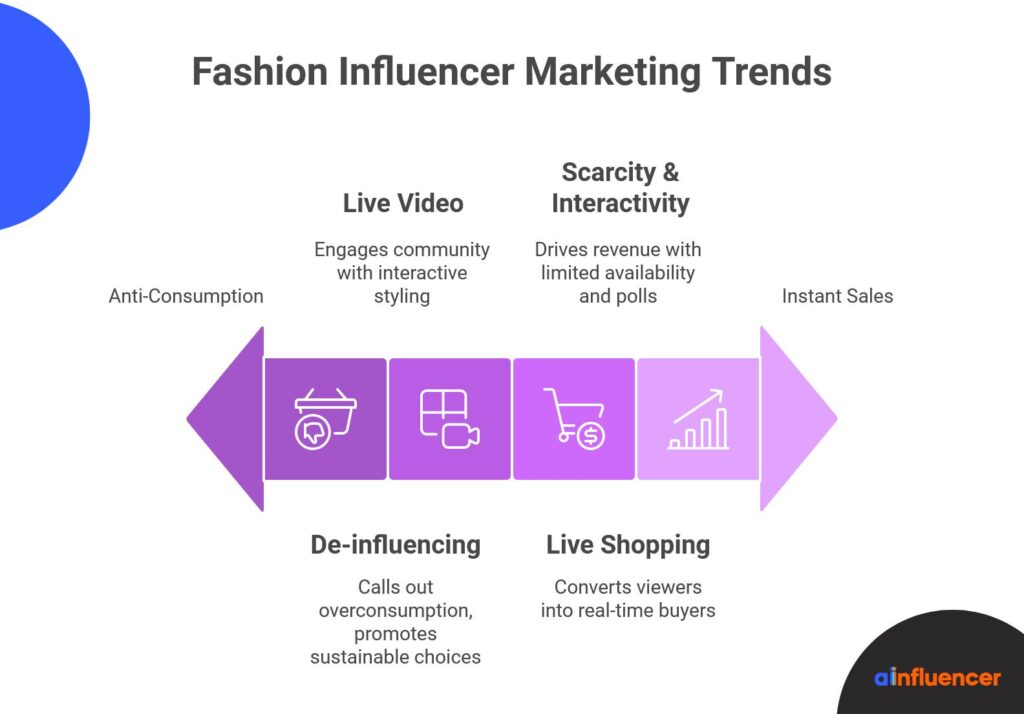
- De‑influencing is hitting fashion too, with creators calling out overconsumption and pushing capsule wardrobes, rental platforms, pre‑loved fashion, and “buy better, wear longer” narratives.
- Live video try‑ons, styling challenges, and community‑driven series are replacing static outfit posts as the default content format.
- Live shopping sessions on platforms like Douyin, TikTok, and Instagram Live are turning creators into real‑time stylists and sales associates with instant conversion.
- Brands that combine scarcity, interactivity like polls, Q&As, and incentives see powerful, trackable revenue spikes.
Affiliate Influencer Marketing Trends and Practices
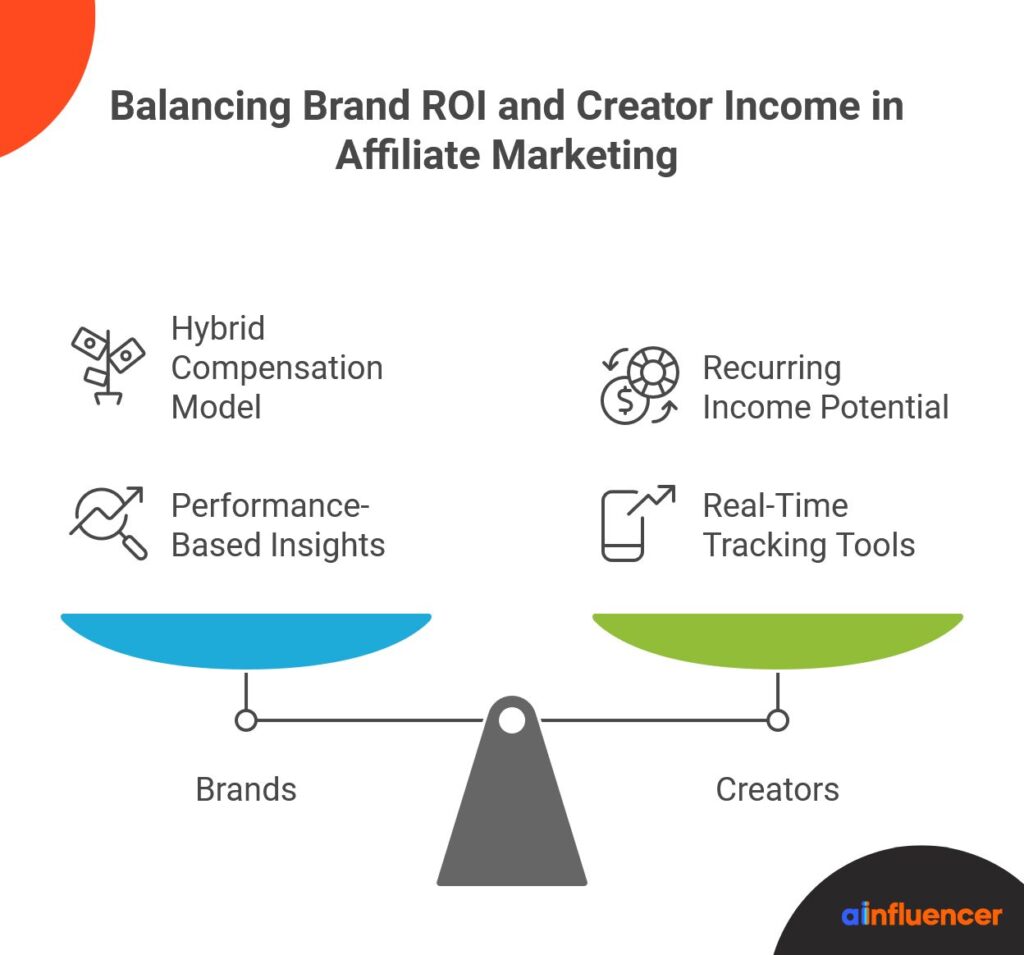
Affiliate influencer marketing trends are turning simple influencers into performance partners. When done right, this creates a win‑win situation. A predictable ROI for brands and recurring income for creators.
What modern affiliate programs look like:
- Brands are shifting from flat‑fee deals to hybrid models. This means smaller guaranteed fees plus affiliate or revenue share tied to sales or qualified leads.
- Creators increasingly expect dashboards, real‑time tracking links, and transparent commission structures, just like traditional affiliates.
- Brands use affiliate performance to figure out which hooks, formats, and offers actually move product, not just spark comments.
Where Are Influencer Marketing Trends Heading in 2026?
Now let’s recap the main points and see where we are heading. Influencer marketing trends 2026 are shaped by two forces: efficiency and humanity. Expect fewer bloated campaigns and more precise, story‑driven narratives in the future.
| Area | 2025 reality | Influencer marketing trends 2026 focus |
| Budget | Cautious growth, higher ROI | Rigid performance mindset tied to revenue |
| Creator selection | Follower count + basic fit | Topic relevance, values, and niche authority first |
| Content formats | Short‑form dominance + some live shopping | Full‑spectrum video + audio + IRL experiences |
| Platform strategy | Instagram, TikTok, YouTube | Diversified mix, hedging platform risk, and leveraging new apps |
| Data & AI | Partial AI use, fragmented analytics | Integrated AI for discovery, prediction, and reporting |
| Relationship model | Campaign‑based majority | Long‑term ambassador programs are the default |
Conclusion
Influencer marketing trends are getting sharper, more honest, and more results‑based, but the core hasn’t changed. People buy from people they trust. The brands that treat influencers as real partners, help them with data and creative freedom, and design for performance without killing personality are the ones that will still be winning in 2026 and beyond.
FAQs
1. What Are The Latest Influencer Marketing Trends?
Current influencer marketing trends include:
– Micro- and nano-influencers,
– Short-form video dominance,
– Long-term brand and creator partnerships,
– AI-powered influencer discovery,
– Strong focus on authenticity and community engagement rather than follower count.
2. Which Platforms Are Leading Influencer Marketing Trends?
Short-video platforms are leading current trends, especially TikTok and Instagram. It must be said that long-form and community-based content on platforms like YouTube also remains influential.
3. How Is AI Impacting Influencer Marketing Trends?
AI is changing influencer marketing through smarter influencer discovery, fake-follower detection, campaign performance prediction, and automated reporting. Brands can use AI tools to make data-driven decisions faster.
4. What Industries Benefit Most From Influencer Marketing Trends?
The usual industries, such as fashion, beauty, fitness, gaming, travel, finance, and e-commerce, benefit the most. However, B2B influencer marketing is also going to be a trend in 2026.