Nano influencers are the smallest tier of paid creators, with roughly 1,000 to 10,000 followers, and the most misjudged. Brands either dismiss them as too small to matter or oversell them with engagement numbers that nobody can source. The published data sits in between. Here is how four common assumptions compare with what the sources show:
| What people assume | What the data shows |
|---|---|
| A few thousand followers cannot move sales | In Open Sponsorship’s analysis of 1,527 creator campaigns (January 2025 to June 2026), nano creators’ tracked views equalled about 19.9% of their follower count, against 1.1% for mega creators. Views are not sales, but their reach is not limited to their followers. |
| Nano engagement is always 8% to 10% | Published figures vary: Sprout Social’s Instagram average for nano creators is 2.19%, Brandwatch says 3.5% or higher, and a Favikon study of more than 255,000 creators puts top nano performers at 3.4%+. |
| They will work for free product | Some do, but Brandwatch says many charge $10 to $100 per Instagram post, and Open Sponsorship’s median was $134 per deliverable. |
| Only tiny brands use them | Influencer Marketing Hub’s 2026 survey found about 51% of marketers planned to increase their use of nano creators. |
The rest of this guide covers who counts as a nano influencer, what they cost, when they beat larger creators and when they do not, how to find and work with them, and how to become one. They belong in every influencer marketing strategy as one tier of a mix, not as a cure-all.
Who Are Nano Influencers?
Nano influencers are social media creators with roughly 1,000 – 10,000 followers who have built niche communities on platforms like Instagram, TikTok, and YouTube. Their feeds feel more like group chats than advertising billboards, which makes their recommendations land like advice from a friend instead of an ad.
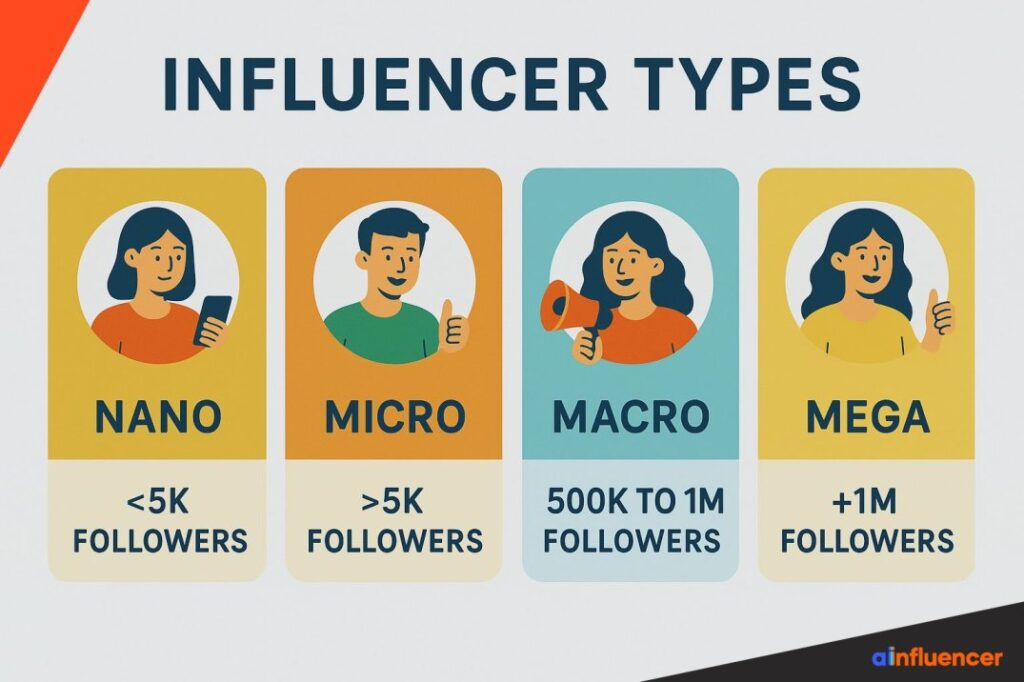
On Instagram, Sprout Social’s published average engagement rate for nano creators is 2.19%, the highest of any tier in its table, while Brandwatch cites 3.5% or higher. Figures vary widely by source and platform, so compare each creator with others of the same size.
Unlike mega or macro influencers, nano influencers rarely look like a polished celebrity. Their content is often shot on phones, with everyday backdrops and casual captions, and that relatability is exactly why their audiences listen, comment, and buy.
Definitions differ. Influencer Marketing Hub uses 1,000 to 10,000 followers and notes that creators below 1,000 usually lack consistent reach, while those above 10,000 start to price like micro creators. Brandwatch says some definitions place the ceiling at 5,000. Above that line, see our guide to working with micro influencers.
Importance of Nano Influencers for Businesses
We know that audiences are more skeptical of obviously paid ads and placements. Nano influencers cut through that skepticism because they show products in real life, with real opinions, to people who genuinely know them.
Brands also care because nano influencers usually show the highest engagement rates across tiers in published benchmarks, though the exact figures differ by source. That means more comments, saves, DMs, and clicks per follower, which can improve campaign ROI for the same or a smaller budget.
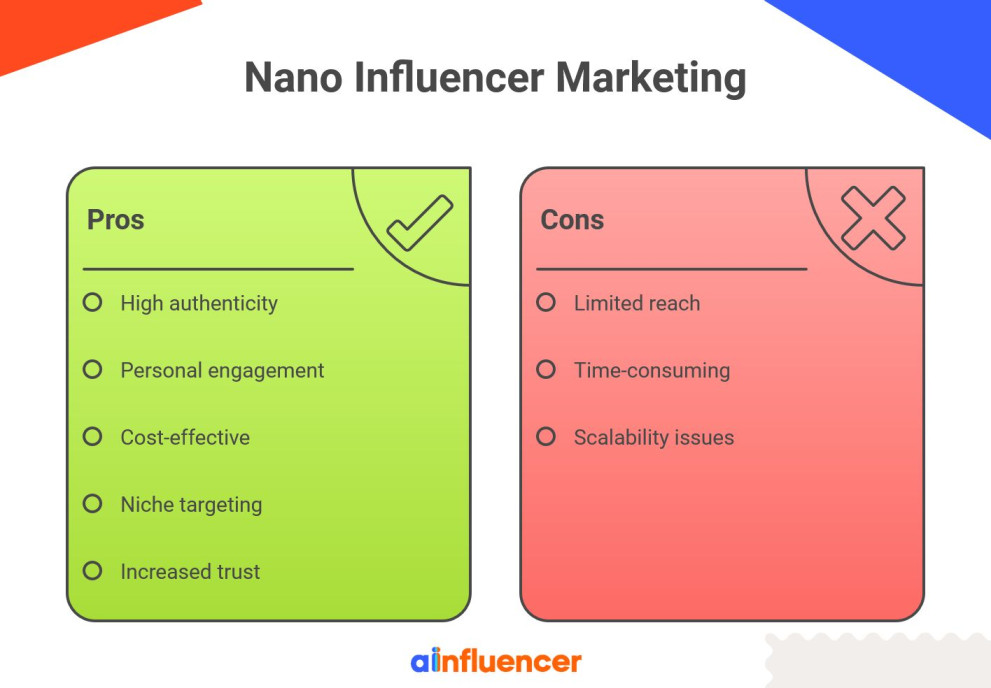
These are important details that businesses consider while measuring ROI & KPIs for their campaigns and other expenses. Here are some benefits of nano influencers in general:
- High authenticity: They are regarded as trustworthy and relatable by the audience.
- Personal engagement: They frequently engage directly with followers in a close manner.
- Cost-effectiveness: Compared to larger influencers, nano-influencers are more affordable.
- Niche targeting: They are perfect for particular market niches because of their targeted audience.
- Increased trust factor: They build a strong brand affinity, and their suggestions seem sincere.
Nano Influencers vs Macro Influencers
Here we want to show you a comparison between these two types of influencers and how they can help you out in different situations:
| Aspect | Nano influencers | Macro influencers |
| Follower range | 1,000-10,000 followers. | 100,000 to 1 million followers. |
| Engagement rates | Usually higher: 2.19% on Instagram per Sprout Social, 3.5% or higher per Brandwatch. | Lower: 0.86% per Sprout Social (50K to 500K followers). |
| Content style | Casual, raw, “friend next door” vibes. | Polished but less personal. |
| Best for | Local campaigns, niche products, community-led launches. | Wider awareness with viral content and clear messaging. |
| Cost | Often $10 to $100 per Instagram post (Brandwatch); median $134 per deliverable (Open Sponsorship). | Shopify cites $1,000 to $50,000 per post. |
This was an overall comparison of nano influencers vs macro influencers. It must be said that both have their benefits and can help businesses in different contexts. It’s your duty as a business owner to figure out which one suits you the most and helps your business.
How to Become a Nano Influencer?
Becoming an influencer is less about chasing follower counts and more about building a focused, engaged community around a clear niche.
- Pick a topic where you can show up consistently, like budget travel, minimalist fashion, or student productivity, and design your content around it.
- Post consistently with a mix of entertaining, educational, and relatable content so people have reasons to follow and stay.
- Be genuine with your audience and avoid any early advertisements.
- Engage like it is your job. Reply to comments, ask questions in captions, host polls, and give shout-outs to followers.
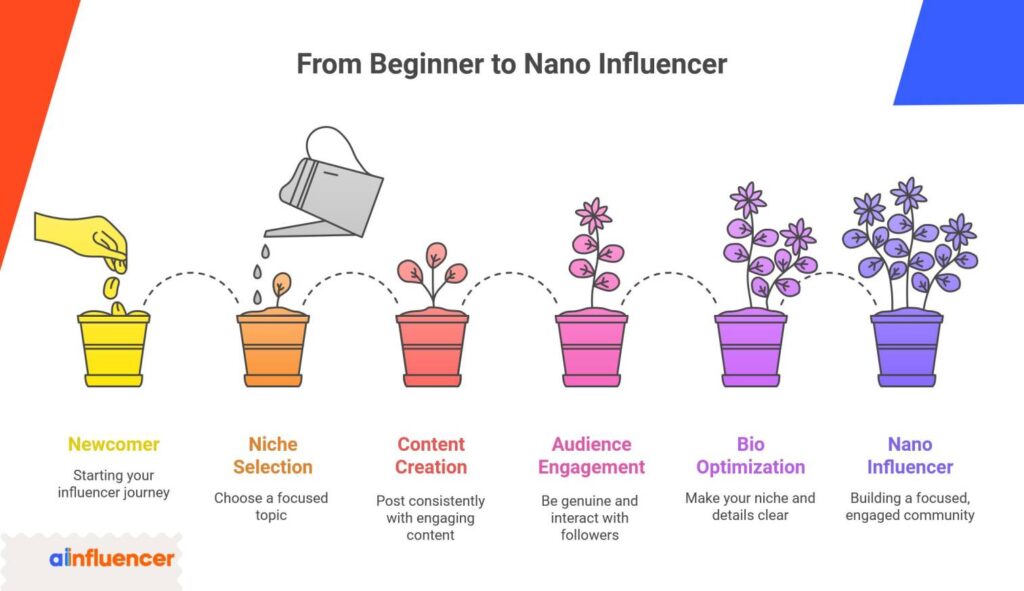
As your engagement grows, optimize your bio and highlights to make your niche, location, and contact details obvious to brands scouting for the best nano influencer in your space.
Nano Influencer Examples and Ideas
Because their audiences are niche, nano influencer examples span almost every vertical, from local food bloggers to booktalk creators. For example, a nano creator can dedicate their feed to reviewing independent coffee shops in one city or testing makeup for sensitive skin.
Brands should utilize nano influencers creatively, such as sending packages to local parenting creators for a new kids’ snack. A simple campaign featuring a few nano influencers in a single city can cover a niche community more authentically than a single macro ad.
How Much Do Nano Influencers Cost?
There is no single rate, and the sources measure different things:
| Reported by | Figure | What it covers |
|---|---|---|
| Influencer Marketing Hub | $10 to $50 | Typical nano rates for Instagram posts in 2026 |
| Brandwatch | $10 to $100 | What many nano influencers charge per Instagram post; some accept free product instead |
| Open Sponsorship | $134 median | Per completed deliverable across 1,527 campaigns, counting only deals with a fee of $50 or more |
| Influencer Marketing Hub 2026 survey | Under $500 | About 80% of reported UGC creator cost ranges |
Open Sponsorship’s dataset also reports a cost per engagement of $3.11 for nano creators, $3.05 for micro and $5.00 for mega. It comes from one platform’s own campaigns, so treat it as one data point. Pay can be a flat fee, product, a commission or a mix. Our influencer rates guide lists prices by tier, and our influencer marketing agency pricing guide covers what agencies add.
When Are Nano Influencers Not the Right Choice?
Nano creators are not a fit for every goal:
- Mass awareness. One nano creator reaches a small audience, so a launch needs many of them or a larger creator.
- Tight timelines. Managing ten or twenty small contracts takes more work than one large deal.
- Consistent production quality. Content is often shot on a phone, which suits authenticity but varies in polish.
- Big-ticket purchases. Small audiences rarely carry a high-consideration product alone.
If you need more reach per creator, compare the tiers in our micro vs macro influencers guide.
How to Find Nano Influencers?
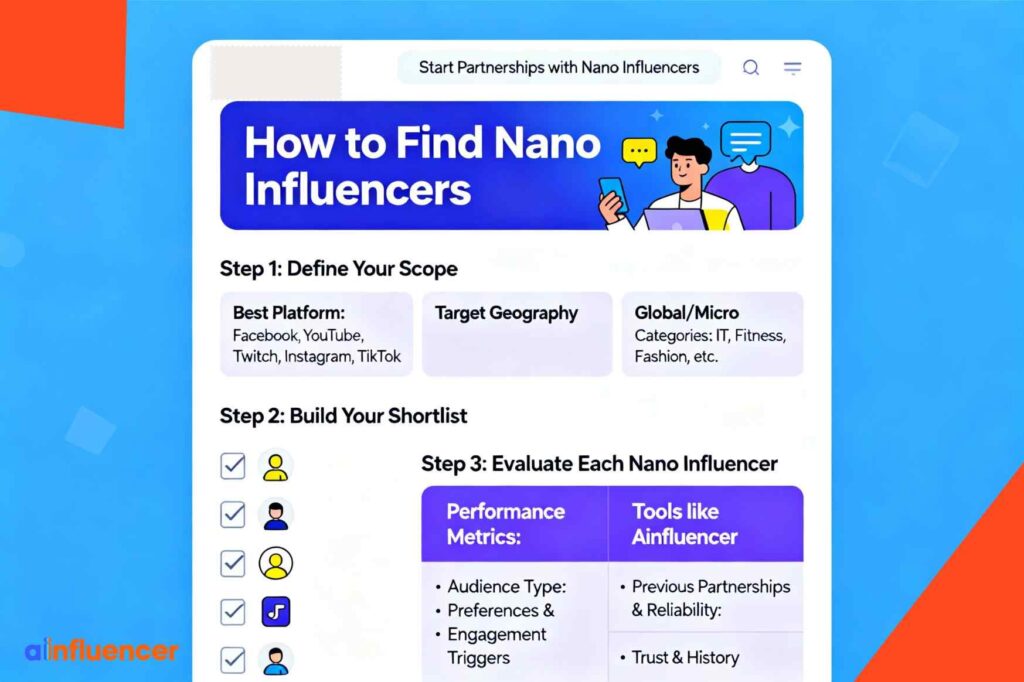
Now that you know the benefits of nano influencers and how to find them, it’s time to start your partnership. But how would you start that? It must be said that collaboration starts with a simple, human outreach message and a clear message. The following steps will help you in this process:
To narrow your search, start by answering these three questions:
- Which social media is most appropriate for reaching your intended audience? Facebook, YouTube, Twitch, Instagram or TikTok?
- Which geographical area do you wish to make more visible?
- Which global and micro categories do you work in? IT, Fitness, or Fashion?
After defining the general area and creating a nano influencer list, evaluate them in these three crucial aspects to determine which profiles are the best for you:
- Performance metrics: You can use tools like Ainfluencer to analyze influencers’ metrics and how they can help you with yours.
- Their audience type: What are their preferences, and what makes them engage the most?
- Previous partnerships and reliability: finding out if you can trust them.
After these steps, you’ll be better able to find a group of influencers that fits your marketing plan. For ten ways to source and vet nano creators, see our guide to how to find nano influencers.
How to Collaborate With Nano Influencers?
After finding the best influencers for your goal, you have to start your collaboration. This might seem hard or confusing at the start, but you will get better with each outreach and collaboration you have. Here are some crucial tactics to make the most of your partnerships:
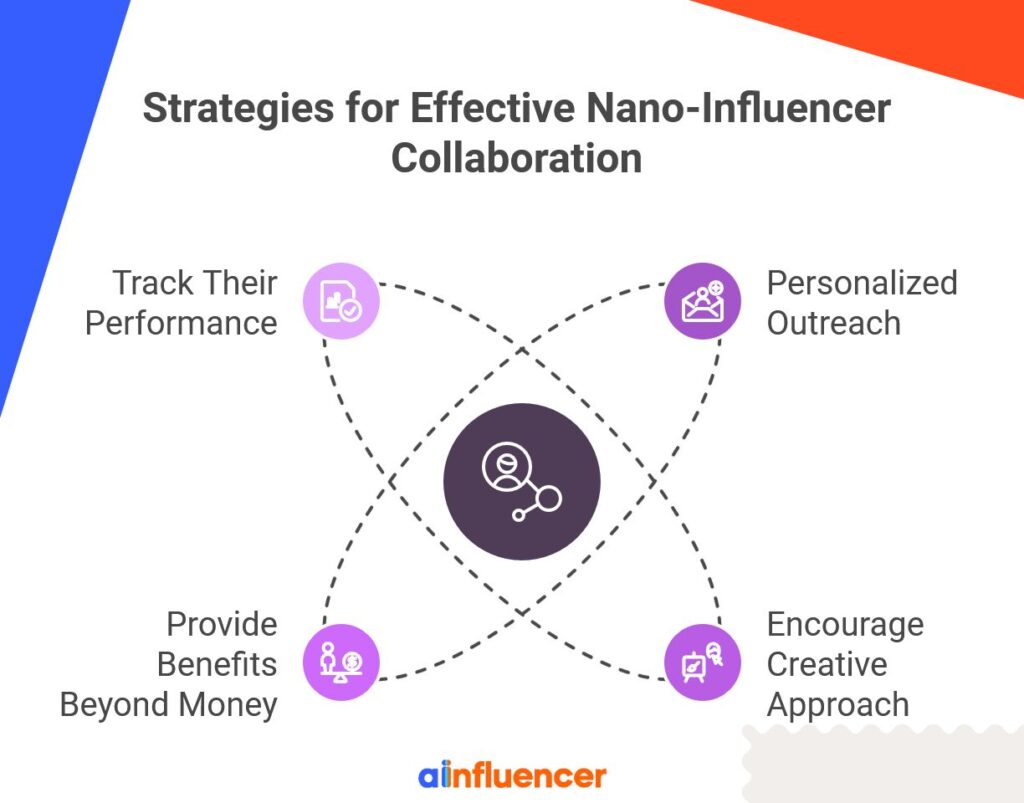
1. Personalized Outreach
Authentic brand interactions are important for nano-influencers. Customize your outreach templates to explain why you like their material and how it fits with your brand rather than sending out generic outreach messages.
2. Encourage Creative Approach
Avoid forcing the influencer content. Allow nano influencers to present your product in a way that appeals to their audience. This is what they do daily, and they know how to please their audience. Trust them.
3. Provide Benefits Beyond Money
Although some nano influencers take free merchandise in return for promotions, collaborations can be strengthened by providing other benefits like early access to new items, exclusive discounts, or affiliate commissions.
4. Track Their Performance
Track important data like engagement rates, click-through rates, and conversions to evaluate the effectiveness of your influencer efforts. Performance can be evaluated with the use of tools like Ainfluencer, Instagram Insights, and Google Analytics. Before you sign anyone, it is worth running an influencer profile audit first.
Conclusion
One thing never changes as platforms change: customers only make purchases from those they can trust. Nano influencers combine the creative resources of a content studio with local-level credibility. This is what most businesses need when they start or try new areas.
For marketers, the key is to build a portfolio of nano-influencers and let their communities carry the message, rather than focusing on finding the one biggest influencer.
And as an influencer, all you need is a targeted niche, genuine connections, and a commitment to continually appear as the most truthful nano influencer in your area of the internet. You don’t need a blue tick and a million followers.
FAQs
1. Why Are Nano Influencers Becoming Popular Among Brands?
Brands are increasingly turning to these influencers because they deliver higher engagement rates, appear more trustworthy, and are more cost-effective than larger ones. Their followers often see them as peers rather than celebrities, and this helps brands to build the connection they need.
2. Are Nano Influencers Effective for Marketing?
Yes. They often get more comments, shares, and genuine conversations around promoted content, and this is despite their smaller audience size. Their recommendations can strongly influence purchasing decisions within their niche.
3. Which Platforms are Best For Nano Influencer Campaigns?
Instagram and TikTok are the most popular platforms for this matter, and this is because of their visual nature and large community participation. They can also be useful on LinkedIn, YouTube, and Pinterest, but it depends strongly on the niche.
4. What Kinds of Brands Benefit Most From Working With Nano Influencers?
Brands that target niche communities such as beauty, wellness, local businesses, fashion, fitness, or food often see better results with this type of influencer. It is mainly because their audiences value recommendations from relatable, real-life creators.
Nano Influencer Quick Answers
What is a nano influencer? A social media creator with roughly 1,000 to 10,000 followers who focuses on a niche and knows many followers personally.
How many followers do you need to be a nano influencer? At least about 1,000, because creators below that usually lack consistent reach, and up to 10,000. Some definitions stop at 5,000.
How much do nano influencers charge? Often $10 to $100 per Instagram post according to Brandwatch and Influencer Marketing Hub, with a $134 median per deliverable in Open Sponsorship’s 2026 data. Some accept product.
Are nano influencers better than micro influencers? Not always. They usually show higher engagement per follower, but smaller reach, so many brands use both. See our guide to how to use micro influencers.
How many nano influencers should a brand work with? For a first test, ten to twenty lets you compare results without a large commitment. Keep the creators whose cost per result beats your target.
Can I earn money as a nano influencer? Yes, through gifted product, small flat fees, affiliate commissions or UGC work. Build a clear niche, reply to your followers and make it easy for brands to contact you.