With tens of millions of influencers out there, can brands really ignore influencer marketing? Probably not. In the U.S. alone, 78% of marketers plan to work with influencers, which shows just how important this channel has become.
But to get real results, brands need more than just influencer partnerships; they need a clear influencer marketing strategy. A strategy helps you define your goals, choose the right creators, plan your campaigns, and measure what actually works.
Still not sure? In this guide, we’ll break down the benefits of having a solid influencer marketing strategy. We’ll walk you through the steps to build one from scratch, and we’ll finish by looking at proven strategies that brands use today.
TL; DR
- An influencer marketing strategy is a partnership plan that defines a brand’s goals, KPIs, content type, influencer type, platform, and tracking results.
- A well-defined strategy gives the brands a clear direction and prevents wasting budget.
- To build a successful influencer strategy, define your goal (s), target audience, budget, platform, influencer, campaign & content type.
- Don’t forget to vet influencers and choose those with higher engagement rates and content that matches your brand.
- Performance-based influencer marketing, full-funnel strategy, micro-influencer-first strategy, brand ambassadorships, and creator-led approach are some of the proven influencer marketing strategies.
What Is an Influencer Marketing Strategy?
An influencer marketing strategy is a plan brands use to partner with social media influencers to reach target audiences, increase brand awareness, and drive sales.
Your influencer marketing strategy should include: your goals, target audience, the right influencers, influencer marketing campaign types, and measuring ROI and KPIs.
You also need to define the right platform for executing these strategies, like Instagram, TikTok, YouTube, and LinkedIn. This will depend on your target audience and campaign goals.
According to studies, 86% of marketers have used influencer marketing in 2025, up from earlier years. Additionally, 73% of the brands work with at least ten influencers per campaign.
That’s the reason why you need to include influencer marketing in your marketing efforts with a strong strategy.
Benefits of an Influencer Marketing Strategy
Having an influencer marketing strategy isn’t about doing more campaigns; it’s about doing them with purpose. Instead of guessing or reacting, a strategy gives you direction, focus, and better results. Here’s why it matters:
#1 It Gives You a Clear Direction
When you have a strategy, you know why you’re using influencer marketing and what success looks like. You’re not just “trying influencers to see what happens.”
For example, if you’re a skincare brand, you don’t randomly pay influencers to post. This can be your goal: “Increasing product trials among women aged 25–35.”
Now every influencer, platform, and content type supports that goal.
#2 It Helps You Reach the Right Creator
A good strategy starts with knowing who you’re trying to reach, not just an influencer with a lot of followers.
As Neal Schaffer, a well-known social media and influencer marketing expert, author, and consultant, puts it:
“Perhaps the biggest advantage of using influencers is that you have the opportunity to choose people who are part of your target market, or who appeal to your target market.”
For a fitness app, it might be best to work with micro or nano influencers who talk about home workouts and busy lifestyles, rather than a mega influencer with a broad audience.
#3 It Prevents Wasting Budget
Without a clear strategy, you may have to spend money on influencers that don’t really convert or fit your brand. If you want to spend smarter, you need an influencer marketing plan.
For instance, considering influencer marketing rates in 2026, it’s more affordable to partner with 15 smaller creators instead of paying one expensive macro influencer. In fact, they can consistently bring traffic and sales for the same budget.
#4 It Makes Results Easier to Measure
When you plan, you decide what to track before the campaign starts: clicks, signups, sales, engagement, or your influencer marketing campaign ROI.
You give each influencer a unique link or discount code, so you can clearly see which creators actually drive purchases.
#5 It Reduces Risks and Mistakes
What’s more, having a well-thought-out influencer strategy helps you avoid common issues like brand safety problems, unclear expectations, or legal trouble.
We are talking about clear disclosure rules and content guidelines that prevent influencers from misrepresenting a product, for example.
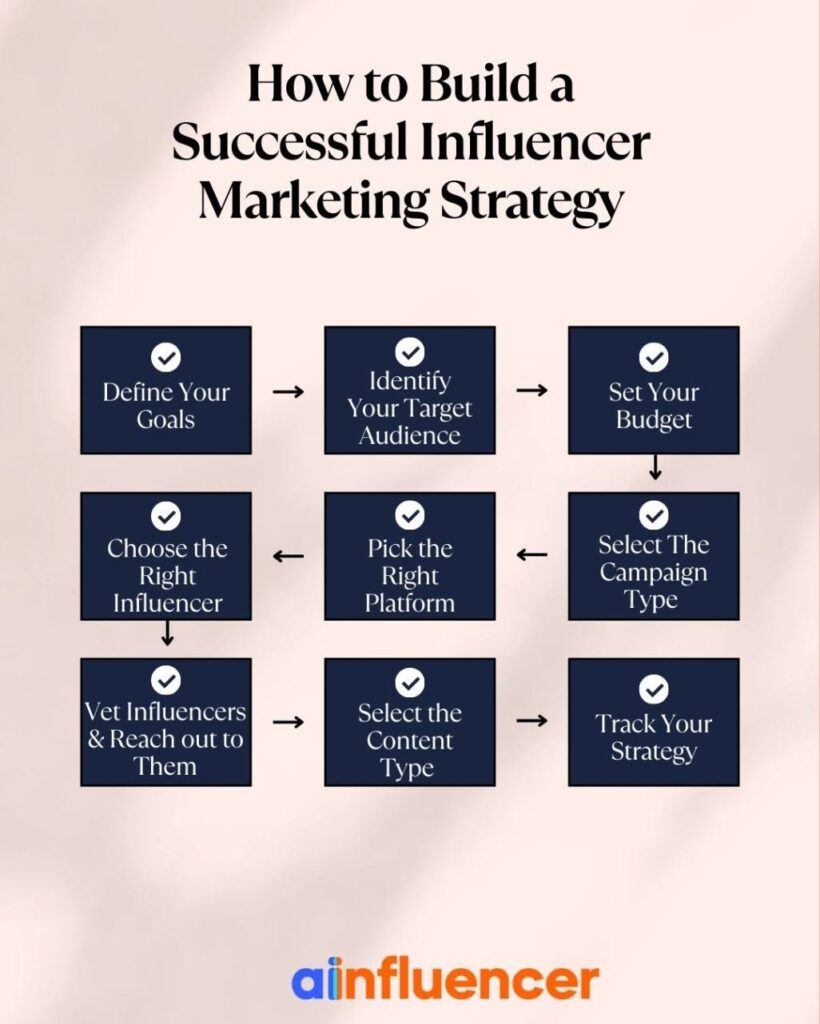
How to Build a Successful Influencer Marketing Strategy in 9 Steps
Now, let’s walk you through nine steps to create a successful influencer marketing strategy:
Step 1: Define Your Influencer Marketing Goals
The foundation of any good influencer marketing strategy is knowing what you want to achieve. Here are some common influencer marketing goals you can choose before reaching out to creators or picking platforms:
- Brand Awareness: More people know your brand exists,
- Reach: Getting your content in front of as many relevant eyes as possible,
- Engagement: Increasing likes, comments, shares, saves, or mentions,
- Traffic: Driving visitors to your website or landing page,
- Conversions: Sales, sign‑ups, downloads, or leads,
- Community Growth: Growing your social channels or user group.
Whatever you choose, your goals must match your bigger business objectives and overall marketing strategy.
For example, if your company’s priority is increasing sales this quarter, your influencer goal shouldn’t be just “getting more likes.”
When you have a clear goal, it makes every choice that follows, including influencers, content style, platforms, and KPIs, much easier and more effective. By “a clear goal,” we mean that it should be:
✅Specific,
✅Measurable,
✅Relevant to business success,
✅Time‑bound (e.g., 30 days, 90 days).
Moreover, you need to decide how you’ll measure your goals. And that’s where influencer marketing KPIs come in. Without KPIs, your goals are just wishes. You won’t know if your campaign is worth the investment.
| Goal | KPI |
| Brand Awareness | Impressions, reach, new followers |
| Engagement | Likes, comments, shares, saves, mentions |
| Traffic | Click-throughs, website visits, landing page views |
| Conversions / Sales | Promo code usage, affiliate link clicks, and purchases |
| Community Growth | New subscribers, group members, repeat interactions |
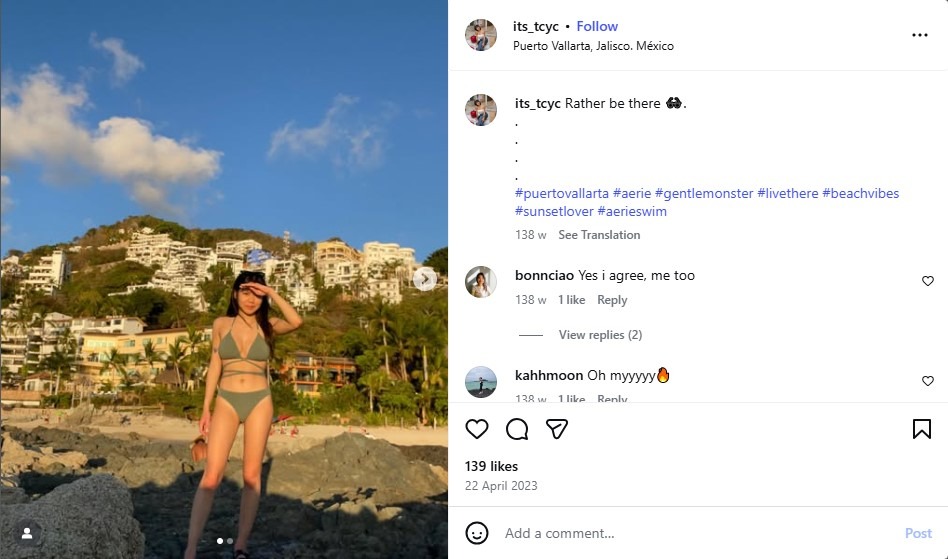
For example, Airbnb started an influencer campaign, LiveThere, in 2023. Rather than just posting ads, Airbnb encouraged travelers and creators to share authentic travel experiences using the hashtag #LiveThere.
The hashtag was used over 40,000 times on Instagram, driving major social engagement and global awareness.
Step 2: Identify Your Target Audience
Once you’ve defined your influencer marketing goals, the next step is to figure out exactly who you want to reach. This means the group of people most likely to care about your product, follow your influencers, and take action on your campaign.
Just like setting goals, defining your target audience helps you choose the right influencers, platforms, and content.
More importantly, if you don’t know your audience, you risk working with influencers who reach people not interested in your brand.
How to Identify Your Target Audience?
Here’s how you can find your target audiences:
- Start with demographics: Age, gender, location, income level, and education are all you need to know about your audience.
Imagine you’re a plant-based protein snack brand. This can be your ideal audience: women aged 18-35 living in urban areas with disposable income and interest in fitness and healthy eating. - Research about their lifestyle, interests, values, and behaviors: What does your audience care about? What motivates them?
- Learn about their behaviours and habits: This means how your audience behaves online. Which social platforms do they use most? Do they follow certain types of influencers?
- Identify their pain points and needs: This is very important. Understand their challenges so you can create content that resolves their problems.
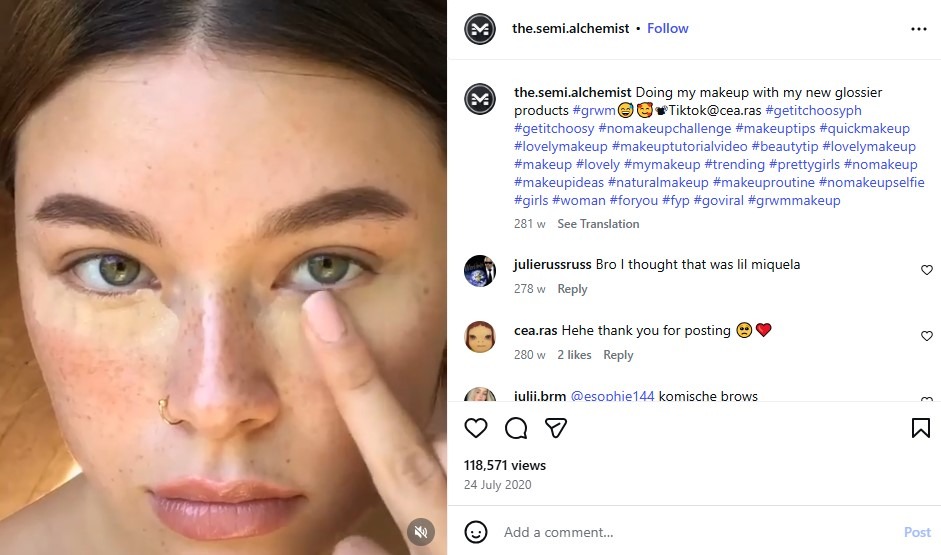
For example, Glossier’s target audience is young women interested in skincare and minimalist makeup. That’s why they usually partner with young beauty influencers to promote their products.
Step 3: Set Your Budget
How much money you’re willing to spend is the next thing you need to include in your strategy. Your budget will influence which influencers you can work with, the type of content you can create, and how long your campaign can run.
First, let’s see what factors influence your budget:
- Influencer type: This is about micro vs. macro influencers and celebrity creators. For instance, a mega influencer is the most expensive type, with higher reach and lower engagement.
- Content type: Videos, reels, or TikTok trends usually cost more than simple static Instagram posts. Besides, some influencers charge extra for professional editing, photography, or multiple revisions.
- Campaign duration: This is another factor that defines your influencer marketing budget. Longer campaigns definitely cost more because influencers post multiple times.
- Extra costs: There are other costs you should consider, including product gifting, shipping, photography, video production, influencer tracking tools, etc.
The good news is that even if you don’t have a big marketing budget, influencer marketing is still possible. Just focus on micro and nano influencers. They often charge little or just expect free products, and their engagement is usually higher than that of celebrities.
It’s also smart to choose a collaboration type like product seeding. You send free samples, and many small creators happily post if they love the product.
Step 4: Select The Influencer Marketing Campaign Type
Now, it’s time to determine what type of influencer marketing campaign you want to run. As you know, different campaign types work better for different goals.
So, picking the wrong type can waste money and fail to reach your audience. Here are some popular influencer marketing campaign types:
1. Product Seeding
Let’s start with product gifting, which is the most affordable influencer program type. You send free products to influencers and ask them to try them.
If you’re looking for brand awareness and authentic content, you’d better run seeding campaigns. Product gifting not only has a lower cost but also generates organic buzz.
Even studies suggest that gifted collaborations deliver higher engagement (2.19%) vs paid partnerships (1.94%).
2. Sponsored Posts
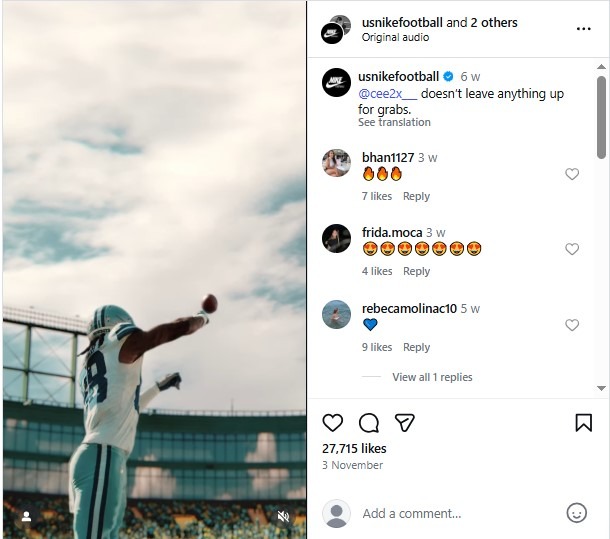
While paid partnerships generate lower engagement than product gifting campaigns, they’re still the baseline type most brands use. In this type, influencers create content promoting your product or service for payment.
It can include feed posts, Reels, Stories, or TikTok videos. Paid partnerships are ideal for brands that want brand awareness, reach, and engagement. They’re also popular because they’re easy to plan, predictable, and measurable.
3. Giveaways
Influencer giveaways or contests are another common type of influencer campaign. Creators host giveaways for their followers featuring your product. They can drive interaction, user-generated content, and brand exposure.
Run contests if you want to grow your followers, reach new audiences, and generate higher engagement.
4. Affiliate Campaigns
Did you know that nearly 50% of brands prefer commission‑based partnerships vs flat fees? It’s because this type of partnership is easy to measure ROI. Besides, it’s pay-for-performance.
Affiliate collaborations are perfect for a brand seeking conversions, sales, and leads. Many brands like Sephora, Lululemon, and Target have their own affiliate platforms.
5. Brand Ambassadorships
Long‑term ambassador programs are among the most successful types of influencer marketing campaigns. 26% of influencer marketing ROI is attributed to ambassador partnerships.
The benefits? They can build trust, maintain consistent content, and strengthen audience relationships. Therefore, think about brand ambassadorships if you need brand loyalty, consistent messaging, and long-term awareness.
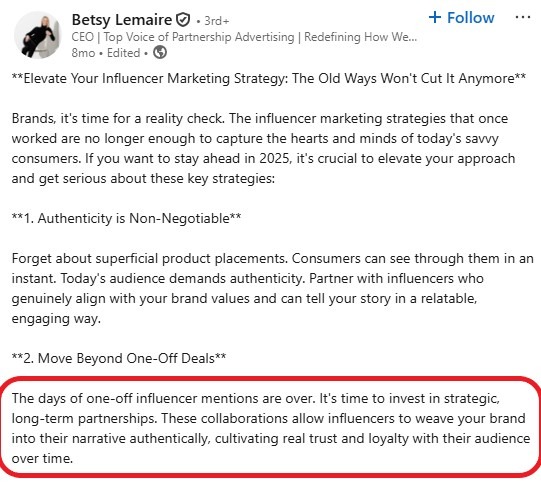
Betsy Lemaire, CEO and top voice of partnership advertising on LinkedIn, says:
“The days of one-off influencer mentions are over. It’s time to invest in strategic, long-term partnerships. These collaborations allow influencers to weave your brand into their narrative authentically, cultivating real trust and loyalty with their audience over time.”
6. Social Media Takeovers
Looking for engagement, community building, and awareness? Then, try takeovers. Influencers temporarily take over your social media account to create content.
The best part? You’ll have fresh content. You’ll also leverage the influencer’s style and audience. One notable example of an Instagram takeover is when Finnair lets its own flight attendants take over their IG account and share personal stories.
7. Co-Creation
This is when a brand collaborates with influencers to create a new product, collection, or exclusive content. Driving excitement, influencer advocacy, and press coverage are some of the co-creation advantages for businesses.
A great example of a co-creation campaign is when MAC Cosmetics collaborated with beauty influencer Patrick Starrr for a lipstick collection in 2017.
Step 5: Pick the Right Platform
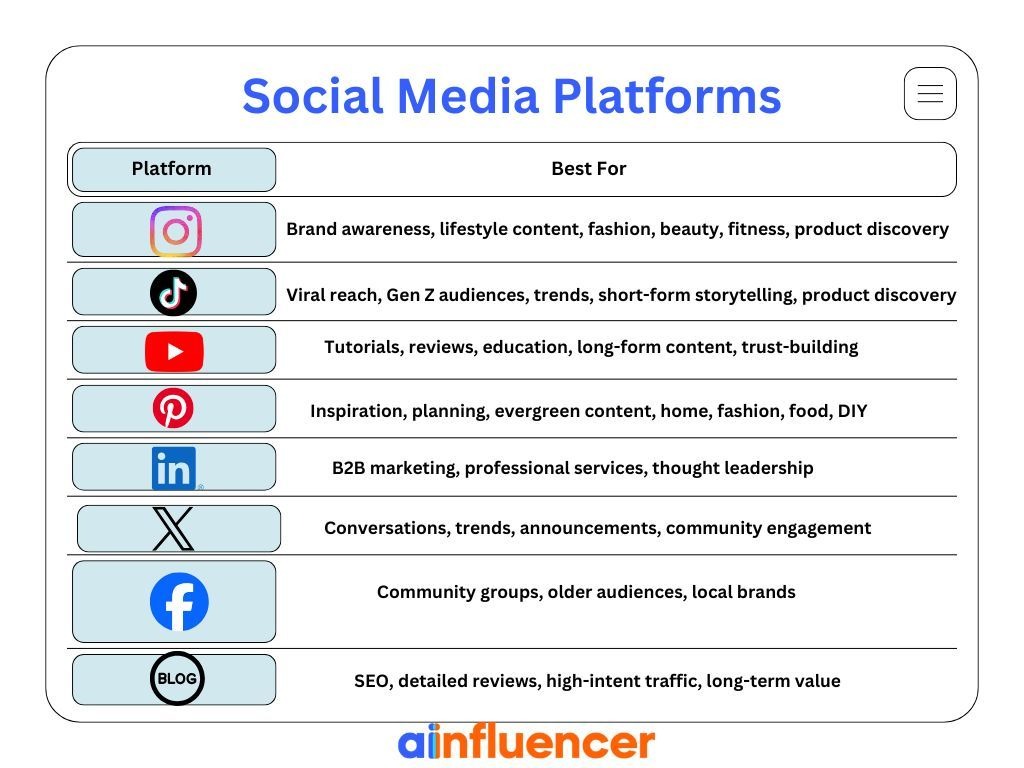
Choosing the right platform is not about following trends or being “everywhere.” It’s about showing up where your audience already spends time and where your content can perform best.
Each platform has a different type of audience and content format. For example, what works on TikTok may fail on LinkedIn. That’s why platform choice should always come after you define your goals and target audience, not before.
To choose the right platform (s), first, ask how old your audience is and how they discover your products. If your audience is Gen Z, TikTok and Instagram are usually better choices than Facebook or LinkedIn.
Keep in mind that different platforms support different goals. For a brand prioritizing sales and conversions, channels with links, reviews, and buying intent (YouTube, Instagram, Pinterest) are the best choices.
Step 6: Choose the Right Type of Influencers
Choosing the right influencers is one of the most important parts of your strategy. You’re not supposed to pick a big name with millions of followers. You need to find influencers whose audience matches your brand.
Remember, the right influencer feels natural talking about your product. Their followers trust them, listen to them, and engage with their content.
There are four main types of influencers based on their follower count:
- Nano influencers (1K–10K followers): They’re small, affordable, and open to influencer campaign types like product gifting. High engagement and strong trust make brands work with them.
- Micro-Influencers (10K–100K followers): This type creates a great balance between reach and trust, making them ideal for conversions, niche targeting, and community building.
- Macro-Influencers (100K–1M followers): Bigger brands seeking larger reach and more professional content can partner with macro influencers. While they’re more expensive than micro creators, they still have targeted audiences.
- Mega-Influencers (1M+ followers): Celebrities usually have the highest reach and visibility. However, they’re pricy, and as a result, great for global awareness, big campaigns, and established brands, like Nike or Adidas.
What matters is not the follower count, it’s the engagement rate. Do people like, share, and comment on an influencer’s post?
Moreover, you should make sure their followers are your target audience and their content style fits your brand. You might wonder how (where) you can find your ideal influencer.
How to Find the Right Influencers?
Here are practical ways brands actually find creators:
- Look at your existing customers: Your customers may already be influencers, even small ones. You might be a clothing brand that notices customers tagging you regularly. Pick those with 5K–20K followers and strong engagement. These can become perfect nano-influencer partners.
- Search on social media: This method is a bit time-consuming, but it works if you’re a small brand. Just use hashtags related to your niche. Look at who your audience already follows, and check posts where your competitors are tagged.
- Use influencer marketing tools: This saves time if you’re running larger campaigns. Influencer marketing platforms like Ainfluencer allow you to filter creators by niche, location, and engagement. They also let you see audience data and past brand work.
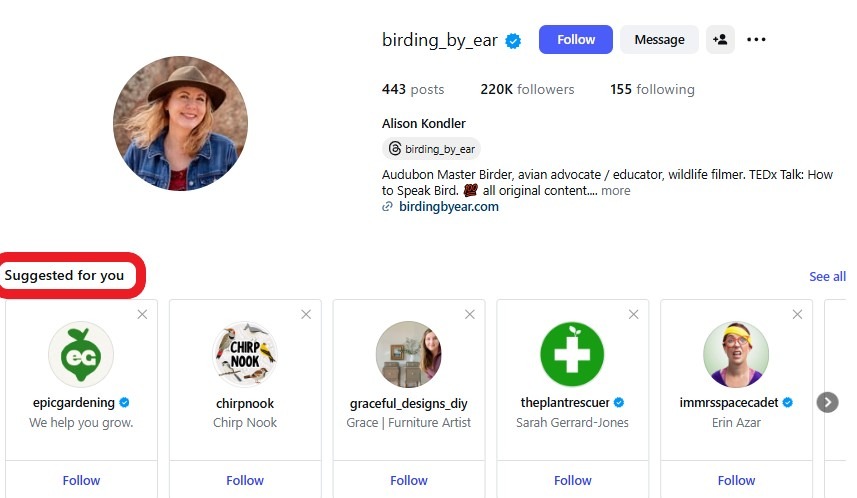
- Try influencer lookalikes: Have you used “suggested for you” on Instagram? This feature enables you to find similar accounts to an influencer you follow.
Step 7: Vet Influencers & Reach out to Them
Before you reach out to an influencer, you should make sure they’re a good fit for your brand, your goals, and your audience. This is called the “vetting process”. Here’s how to vet a creator:
#1 Check Their Engagement (Not Just Follower Count)
High followers don’t always mean influence. So, look at their comments, likes, and shares. A good engagement rate is anything above 2–3%. It’s best to stay away from creators with an engagement rate below 1%.
#2 Review Their Content Carefully
Scroll through their feed and ask:
- Does their content match your brand tone?
- Have they promoted competing products too often?
- Does their style feel authentic or overly sponsored?
#3 Check Audience Fit
If possible, look at the audiences’:
- Age range
- Location
- Interests
If not possible, ask them. Many influencers can share screenshots of their audience insights.
#4 Look at Their Past Brand Collaborations
Past partnerships usually show how they work with brands. Then, check:
- How they disclose ads (#ad, #sponsored),
- How naturally they talk about products,
- Whether brands reposted or continued working with them.
After you vet an influencer, it’s time to reach out to them. A good outreach message includes:
- A short intro to your brand,
- Why you chose them specifically,
- What you’re offering (payment, gifting, affiliate commission),
- What kind of collaboration you’re proposing.
There are different influencer outreach templates you can use, such as:
Hi [Name],
I’ve been following your content for a while — especially your recent post about [specific topic]. We love how naturally you talk about [niche or interest].
We’re [brief brand intro], and we’d love to explore a collaboration with you. The idea would be [short campaign idea], and we’re happy to discuss compensation or product gifting.
Let me know if you’re interested, and I’d be happy to share more details.
Best,
[Your Name]
Note that you may not hear back from the influencers. It’s ok! Wait 5-7 days, then send a polite follow-up message. You don’t really have to spam or pressure. Look for another creator.
Step 8: Select the Content Type
Fortunately, there are various content formats across social media platforms. That makes it easy to pick the one that works for your goal. If you reach out to the right influencer, but they post the wrong content, it can still fail. Let’s dig deeper into the common influencer content types:
1. Short-Form Videos (Reels, TikToks, Shorts)
75 % of people watch Instagram Reels and YouTube Shorts daily (Ijipr), and 73 % of consumers use short-form videos to research products or services (Arma and Elma).
This data highlights one thing: Shorter is usually better! Short videos are perfect for brand awareness, product discovery, and showing results or transformations. Tools that help create videos with AI have made it much faster for brands to produce short-form content at scale without a dedicated production team.
For example, many beauty brands use Instagram Reels where creators show skincare routines or makeup tips in under 30 seconds. These short videos help products go viral quickly.
2. Static Posts (Photos or Carousels)
Static image posts still play an important role in influencer marketing, especially for product visuals and brand storytelling.
For instance, on Instagram, images average about a 0.45% engagement rate. This is slightly lower than carousels (0.55%) and short videos (0.50%).
That said, static posts can be effective when they’re visually strong and relevant to the audience, even if short-form video tends to attract more interactions overall.
3. Stories
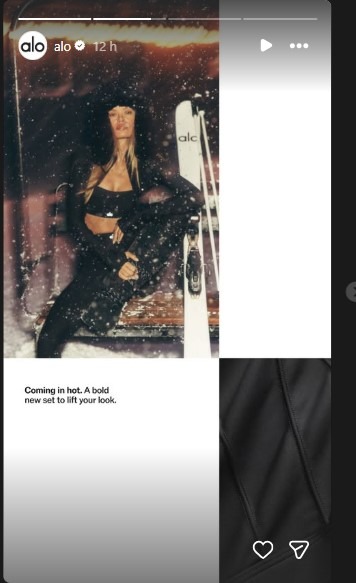
Stories are casual, temporary, and feel personal. Brands often use Instagram Stories with swipe-up links to promote flash sales or new launches.
They’re best for behind-the-scenes content, limited-time offers, or driving quick clicks.
4. Long-Form Videos (YouTube, TikTok Series)
While short videos are super popular, they are not ideal for any purpose. If you need to explain, demonstrate, or review something in depth, long-form videos work best.
Interestingly, longer videos tend to generate much more watch time per view. Clips over 60 minutes see an average watch time of around 16 minutes and 40 seconds. This is much higher than short videos.
5. Reviews and Testimonials
Real feedback feels honest and reduces buyer hesitation. When an influencer shares their honest opinion about a product or service after using it, they actually build trust.
This is the most effective content type for tech brands. You’ve seen many tech brands use YouTube influencers to review their products, for instance. And yes, they work well with longer videos.
6. Tutorials & How-To Content
Think of this type as the influencer being a guide for your audience. Tutorials are educational, practical, and often very engaging because people love content that helps them solve a problem or learn a skill.
The best part? They really work! When viewers see how easy or useful a product is, they are more likely to buy it.
Step 9: Track Your Influencer Marketing Strategy
Finally, it’s time to track your influencer marketing results. Without tracking, you won’t know if your efforts are working, which content performs best, or how to improve future campaigns. In short, tracking:
- Measures ROI: You need to know whether the money, time, and effort spent on influencers is generating real results, whether it’s more sales, leads, website traffic, or brand awareness.
- Shows which influencers perform best: Not every influencer delivers the same results. Tracking helps you see who truly drives engagement, conversions, or awareness, so you can make smarter partnerships in the future.
- Improves future campaigns: By analyzing past performance, you can refine your strategy, pick better content types, optimize posting times, and better target your audience.
How to Track Your Influencer Marketing Strategy?
In this step, you need to measure the KPIs you set in the beginning. Engagement metrics, reach and impressions, conversion and sales, and content performance.
To do so, you can use analytics tools, like those Instagram, TikTok, Facebook, and YouTube provide. Or, try third-party tools, such as Hootsuite or Sprout Social.
If you want to track traffic and sales from each influencer, set up UTM links and discount codes. However, not all value is in numbers. Audience sentiment and trust matter too. So, look at comments, messages, or reviews.
5 Best Influencer Marketing Strategies
The world of influencer marketing is full of different strategies that brands use. However, some of them have been tested over time and proven to deliver real results. In this section, we’ll look at those strategies along with real-world examples.
1. Full-Funnel Influencer Marketing
A full‑funnel influencer marketing strategy means using influencer content for every stage of the customer journey.
You partner with influencers from the very first moment someone hears about your brand, right through to when they buy and even become repeat customers.
This strategy is effective because influencers do more than create hype. In fact, they guide audiences through real decision paths toward action.
Studies show that nearly eight in ten consumers trust influencer recommendations. Besides, 61 % have made a purchase based on someone they followed in the past six months.
To perform the full-funnel strategy successfully, you can define the stages in your campaign. For example, awareness, consideration, conversion, and more. Then, match them to the right influencers and content format.
For the awareness stage, it’s best to collaborate with influencers who can deliver a large reach with shareable posts and trends. Influencers whose audiences value expertise and trust their opinions are the best options for the consideration purpose.
A clear example of this strategy is Steve Madden on TikTok. This shoe brand collaborated with agencies and creators in a coordinated way. They combined influencer-created content with ads throughout the customer journey.
Creator content helped people first notice the brand and build awareness among fashion-focused audiences. Next, the brand used paid search and promotional content to encourage users to take action and make purchases.
The results were amazing: $4.08 iROAS, a 54 % lower cost per acquisition, and an $0.63 average cost per click (CPC). This highlights that the strategy not only built awareness but also delivered measurable performance outcomes.
2. Micro-Influencer–First Strategy
This is simple. Instead of focusing most of your budget on big celebrity influencers, you put micro‑influencers at the center of your influencer marketing strategy.
Small creators often drive higher engagement rates (3–6 %) than larger accounts (1 – 2 %). To put it simply, a micro‑influencer’s audience is more likely to like, comment, react, and follow through on calls to action like clicking a link or using a promo code.
That’s what big brands like Gymshark are doing. While Gymshark later worked with bigger names, it started with micro creators (like Lex Griffin and Matt Ogus) who posted workouts, outfit posts, and training tips featuring the brand.
Let’s say the brand achieved higher trust, stronger engagement, and authentic content using smaller influencers. Then, it teamed up with macro influencers who brought broader visibility and helped with big campaigns or product launches.
3. Long-Term Ambassador Strategy
Giles Palmer, founder of Brandwatch, once said:
“Influencer marketing isn’t a short‑term solution — it needs to be grounded in a long‑term strategy and real commitment to building relationships with influencers”.
And, it’s true! Trust takes time. When an influencer talks about a brand just once, their followers might notice it, but they often move on quickly.
When the same influencer talks about a product or brand repeatedly, their audience begins to connect that creator directly to your brand identity.
More importantly, this approach makes planning easier. You don’t need to constantly search for new influencers every few weeks or months. Build a group of ambassadors you trust and work with them.
Even studies prove this. Brand ambassador programs generate about 300 % higher engagement rates compared to short, one‑off collaborations.
Patagonia is not the only notable brand that works with its brand ambassadors. Add Lululemon, Gymshark, Nike, and more to this list.

4. Performance-Based (affiliate/CPA) Strategy
The affiliate or CPA (Cost Per Action) strategy is one of the most powerful influencer marketing strategies. This approach works especially well for brands that sell products online and want to see clear, measurable ROI.
In a performance‑based strategy, each influencer gets a trackable link or code that’s unique to them. It actually encourages influencers to create content that drives action, not just likes or comments.
The good news is that sellers often earn between $5 and $20 in revenue for every $1 spent on affiliate commissions.
To make the most of this strategy, you need to set clear action goals. Decide what “action” means for you: is it a purchase, a newsletter sign‑up, a download, or something else?
Has anyone not heard of Amazon’s influencer affiliate program? It’s definitely a great example of the performance-based strategy. The program works with different types of influencers. Additionally, 58 % of affiliate marketers use it, making it the largest affiliate network.
5. Creator-Led Content Strategy
Sometimes, you can let influencers do more than just post your product. In other words, you give them the freedom to lead the creative process.
The idea is simple: influencers understand their own followers better than anyone else. So when they create natural, engaging content, their audience pays attention and trusts what they say.
This strategy goes beyond traditional influencer marketing, where a brand often writes the script and tells creators exactly what to say.
The creator-led strategy is powerful because people are tired of hard-selling commercials. They’re looking for real stories. Just make sure to choose those influencers who are good at producing strong organic content in your niche.
Did you know that Red Bull works with athletes and adventurers who document their real experiences? These ambassadors are often content producers themselves. Red Bull gives them room to storyboard, shoot, and edit clips in their own ways.
Fabio Wibmer (cyclist & YouTuber), Maja Kuczyńska (indoor skydiving athlete), and Dom Tomato (freerunner & urban athlete) are some of the brand’s ambassadors.
Final Words
Having an influencer marketing strategy gives your brand a clear direction. It helps you plan each step of your efforts and, in the end, understand how to evaluate and measure the results.
The foundation of any good strategy is a realistic goal that matches your brand and budget. Your goal should also be specific and measurable so you can clearly see what worked.
In this article, we showed you how to build your own influencer marketing strategy. We also shared proven strategies that brands have used successfully. Use these steps and examples to create a strategy that fits your brand.
If you would rather have parts of that plan executed for you, the same steps map onto a set of influencer marketing skills for Claude Code and AI agents, from discovery through to reporting.
FAQs
Here are a few common questions about influencer marketing strategies:
1. What Are the Four M’s of Influencer Marketing?
The four M’s of influencer marketing are Market (who you want to reach), Message (what you want to say), Media (how you want to deliver your message), and Measurement (what worked and didn’t work).
2. What Are the Three R’s of Influencer Marketing?
The three R’s in influencer marketing include:
- Reach: how many people the influencer can expose your brand to,
- Relevance: how well their content and audience match your brand,
- Resonance: how strongly their audience engages with their posts.
3. How Much Does Influencer Marketing Cost?
Influencer marketing costs can range from free product collaborations to thousands of dollars per post, depending on the influencer’s size, platform, and content type.