TikTok Influencer Marketing Agencies
TikTok influencer marketing agencies don’t just help brands go viral; they build revenue engines powered by creators, TikTok Shop, and Spark Ads. The right influencer marketing agency transforms short-form content into scalable customer acquisition systems.
Going viral is easy to chase but hard to monetize. In today’s hyper-competitive landscape, brands need more than views; they need scalable, high-converting creator campaigns that drive measurable sales.
With influencer marketing spend surpassing $10 billion in the U.S., choosing the right TikTok partner is a strategic decision, not a trend play. In this guide, you’ll find 15 TikTok influencer agencies that deliver measurable growth, not just impressions.
Top TikTok Influencer Marketing Agencies
Below, we have gathered 15 top TikTok influencer marketing agencies that most brands choose; they all show good results in each campaign, as their case studies are also mentioned. Check out all and to find your suitable agency.
If TikTok is one channel in a wider plan rather than the whole plan, our ranked list of the best influencer marketing agencies compares twenty firms across every platform and region.
1. Ainfluencer
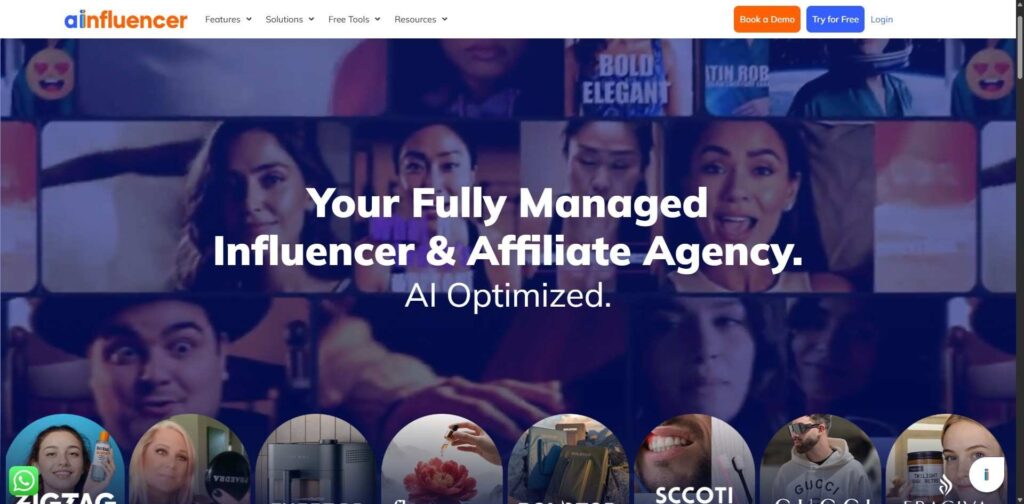
Ainfluencer is a next-generation TikTok influencer marketing agency and AI-powered marketplace built to eliminate the inefficiencies of traditional influencer outreach.
Designed for modern eCommerce brands, Amazon sellers, and DTC companies, Ainfluencer streamlines the entire influencer campaign lifecycle from creator discovery to payment processing within a single platform.
What makes Ainfluencer stand out is its automation-driven infrastructure. Instead of lengthy agency retainers and manual negotiations, brands can launch campaigns quickly, connect directly with vetted influencers, and scale collaborations with measurable performance tracking.
Key points:
- Industry and Client Fit: Amazon sellers, DTC brands, ecommerce businesses, startups, and SMBs seeking scalable influencer campaigns across Instagram and TikTok.
- Strategic Approach: AI-powered influencer matchmaking, performance-driven creator selection, direct brand–creator negotiation, and data-backed campaign optimization.
- Service Scope: Influencer discovery, campaign management dashboard, in-platform messaging, secure escrow payments, performance analytics, and ROI tracking.
- Best For: Brands looking for a cost-efficient, automation-driven alternative to traditional influencer marketing agencies while maintaining full campaign control.
2. Ubiquitous
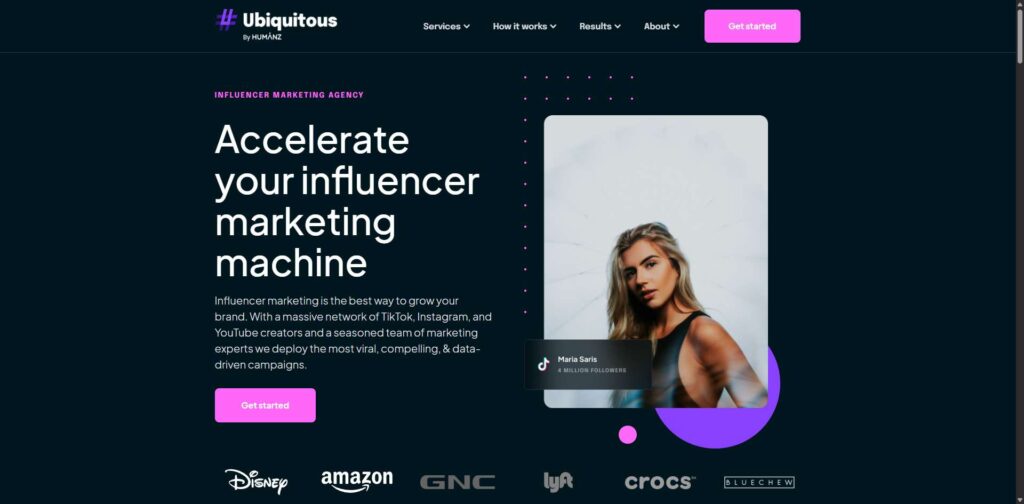
Founded in Los Angeles, Ubiquitous is a TikTok influencer marketing agency with 85+ team members and a vetted network of 4,000+ creators, reaching a combined 4 billion followers.
The agency specializes in performance-driven creator campaigns built around structured testing and measurable Influencer marketing ROI.
In a flagship campaign for Litter Robot, Ubiquitous generated more than 66 million views while improving effective CPM through its median view pricing model and performance optimization framework.
Key Points:
- Industry and Client Fit: DTC brands, ecommerce, consumer goods, fintech, gaming.
- Strategic Approach: Median-based creator pricing, structured testing roadmaps, performance optimization.
- Service Scope: Campaign strategy, creator sourcing, paid amplification, and analytics reporting.
- Best For: Mid-market and enterprise brands seeking scalable TikTok performance campaigns.
3. Viral Nation
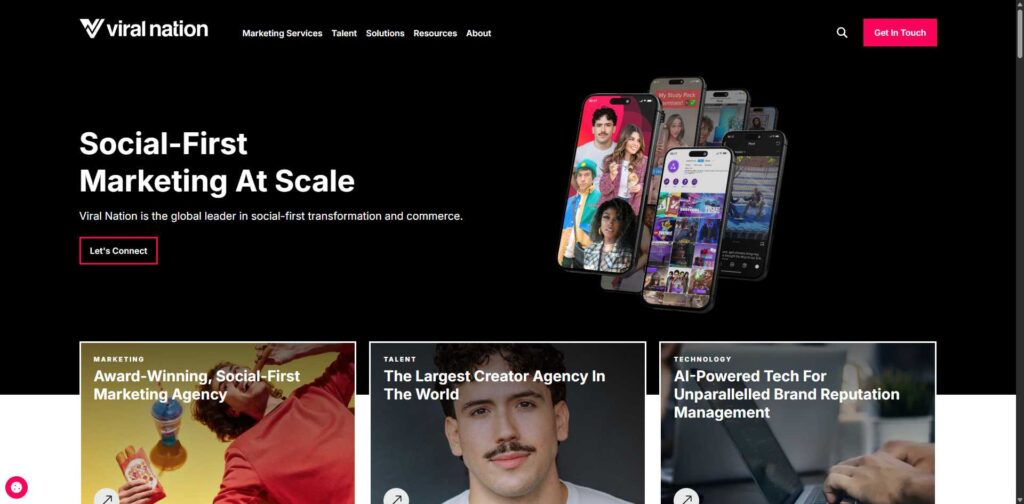
Another top TikTok influencer marketing agency, founded in 2014 and headquartered in Toronto, Viral Nation operates across more than 30 countries and manages over $ 100 million in annual creator spend.
The agency combines AI-powered creator vetting with advanced attribution systems and proprietary influencer tracking tools to drive measurable performance outcomes.
Across campaigns, Viral Nation reports an average 7 times return on investment increase and a 42 percent reduction in customer acquisition costs through its AI-driven brand safety and media amplification strategy.
Key Points:
- Industry and Client Fit: Consumer goods, retail, education, technology, global brands.
- Strategic Approach: AI-powered brand safety screening, creator-led commerce scaling, full funnel attribution.
- Service Scope: Influencer campaigns, affiliate programs, paid media, attribution tracking.
- Best For: Enterprise brands requiring global scale and advanced brand protection systems.
4. House Of Marketers
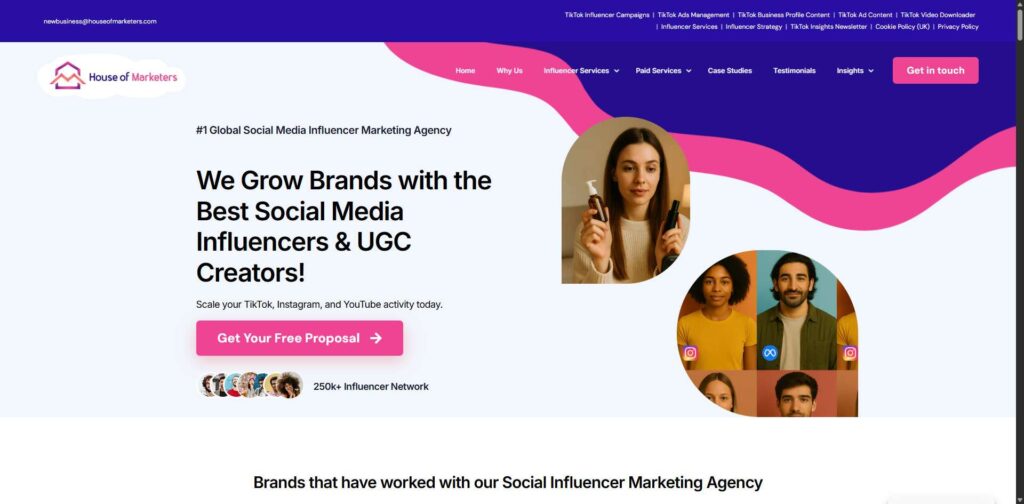
House of Marketers is a London-based TikTok-exclusive agency founded by former TikTok employee Inigo Rivero.
The agency manages a global network of more than 50,000 creators and focuses entirely on Gen Z and millennial audience growth strategies.
In a high-performance campaign for Jodel, they recruited more than 60 micro influencers, generated 85,644 installs at a 2.29 euro cost per install, and scaled campaign spend from 8,000 euros to over 196,000 euros while maintaining efficiency.
Their scaling model reflects a strategic approach to Micro vs. Macro-Influencers, prioritizing volume and performance efficiency over vanity reach.
Key Points:
- Industry and Client Fit: Mobile apps, entertainment, consumer brands, hospitality.
- Strategic Approach: TikTok native ideation, micro influencer scaling, ROI focused reporting.
- Service Scope: Influencer campaigns, paid ads management, and brand channel growth.
- Best For: Brands targeting Gen Z through TikTok-driven acquisition strategies.
5. The Social Shepherd
The Social Shepherd is a multi-award-winning social media agency headquartered in the United Kingdom with more than 70 specialists across Bath, New York, and Miami, known as one of the top TikTok influencer marketing agencies.
The agency integrates high-end creative production with performance-driven paid media execution.
For Beyblade, they generated more than 30,000 new TikTok followers, 393,000 organic video views, and achieved an 8.21 percent engagement rate within six months through combined organic and paid activation.
The campaign was structured around the best influencer marketing KPIs, including engagement rate, audience growth, and conversion intent.
Key Points:
- Industry and Client Fit: Retail, FMCG, travel, lifestyle, home, and interiors.
- Strategic Approach: Creative and performance hybrid model, organic and paid integration.
- Service Scope: Organic TikTok growth, paid ads, influencer partnerships, and content production.
- Best For: Brands seeking creative execution and paid media scaling within one agency.
6. The Influencer Marketing Factory
Headquartered in Miami and New York, The Influencer Marketing Factory is an official TikTok influencer marketing agency partner operating across more than 30 countries.
Known as one of the top TikTok influencer marketing agencies, employs over 50 full-time professionals and specializes in ROI driven influencer campaigns aligned with business KPIs and conversion metrics.
In campaigns for Sony Music, the agency delivered nearly 80 percent TikTok follower growth through structured creator partnerships and optimized audience targeting strategies.
This campaign stands among strong influencer marketing campaign examples focused on measurable audience expansion.
Key Points:
- Industry and Client Fit: Music, fintech, beauty, consumer goods, enterprise brands.
- Strategic Approach: KPI aligned strategy development, authentic storytelling, user generated content optimization.
- Service Scope: Campaign strategy, influencer sourcing, performance analytics, paid amplification.
- Best For: Established brands seeking official TikTok Partner expertise.
7. NoGood
Founded in 2017 with offices in New York, Los Angeles, and Miami, NoGood operates as a growth-focused TikTok influencer marketing agency and early ByteDance partner in the United States.
The agency employs between 50 and 100 specialists and structures campaigns around experimentation and rapid creative validation.
Through its 30 60 90-day multi-funnel framework, NoGood helps brands rapidly test organic and paid TikTok content combinations to reduce customer acquisition costs and scale validated creative.
Key Points:
- Industry and Client Fit: SaaS, fintech, healthcare, AI, B2B, consumer brands.
- Strategic Approach: Testing first growth methodology, organic and paid synergy, rapid iteration.
- Service Scope: TikTok creative strategy, performance marketing, growth experimentation.
- Best For: Brands focused on rapid growth and influencer marketing for startups seeking measurable CAC reduction.
8. The Goat Agency
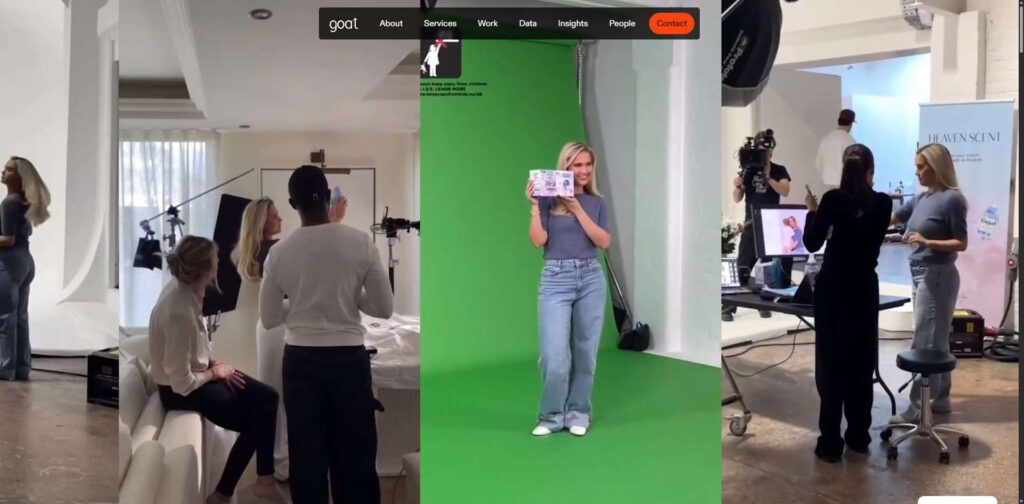
Established in 2015, The Goat Agency operates globally with more than 650 influencer marketing specialists across 37 markets and six continents.
Headquartered in London and New York, the agency integrates creator partnerships with data-driven media amplification.
For ODEON Cinemas, The Goat Agency grew TikTok followers from 4,000 to 100,000 within six months and delivered a 14.7 times return on ad spend through creator-led content distribution.
Key Points:
- Industry and Client Fit: Gaming, fashion, retail, automotive, food, and beverage.
- Strategic Approach: Proprietary Ibex AI creator discovery, full funnel influencer campaigns.
- Service Scope: Influencer strategy, creator sourcing, media amplification, performance tracking.
- Best For: Global brands requiring multi-market campaign execution.
9. NeoReach
Based in San Francisco, NeoReach has managed more than 250 million dollars in influencer campaign spend and positions itself as a deep-tech influencer marketing partner.
This TikTok influencer marketing agency integrates advanced tracking infrastructure with large-scale creator activation programs.
During TikTok’s relaunch following its transition from Musical.ly, NeoReach delivered over 179 million reach, 3.2 million engagements, and achieved a 6-to-1 return on investment through coordinated creator campaigns.
Key Points:
- Industry and Client Fit: Fortune 500 companies, retail, gaming, and enterprise brands.
- Strategic Approach: Advanced data API integration, fraud detection, and detailed attribution modeling.
- Service Scope: Influencer sourcing, creative strategy, campaign activation, analytics reporting.
- Best For: Enterprise brands requiring complex tracking and high-budget influencer programs.
10. Obviously
Founded in 2014 and headquartered in New York, Obviously employs between 50 and 200 specialists and has executed over 152,000 influencer collaborations, generating more than 5.1 billion organic impressions.
This TikTok influencer marketing agency focuses on building exclusive influencer communities for brands.
In a campaign for Honest Beauty, Obviously partnered with 22 mid-tier TikTok creators to generate 389,367 views with a 7.5 percent view-to-follower ratio through curated creator matching.
Key Points:
- Industry and Client Fit: Beauty, retail, technology, lifestyle, entertainment.
- Strategic Approach: Exclusive influencer network development, long-term ambassador programs.
- Service Scope: Influencer campaigns, AI-powered reporting, and content licensing.
- Best For: Brands seeking ongoing ambassador-driven influencer ecosystems.
11. Socially Powerful
Socially Powerful operates globally with more than 150 team members across Europe, North America, Asia, and the Middle East.
A TikTok partner since 2018, the agency has generated more than 500 million views across international campaigns.
For IT Cosmetics and L’Oréal, Socially Powerful delivered over 35 million views and 3 million engagements through TikTok creator campaigns supported by paid amplification and storefront optimization.
Key Points:
- Industry and Client Fit: Beauty, fashion, gaming, finance, and e-commerce brands.
- Strategic Approach: AI-powered influencer matching through the ARIA platform, TikTok Shop integration.
- Service Scope: Influencer recruitment, content production, live selling, paid amplification, attribution tracking.
- Best For: E-commerce brands seeking attributable GMV growth through TikTok Shop.
12. NC Media Group
NC Media Group is a global TikTok influencer marketing agency with offices in New York, Singapore, Dubai, and London.
Over eight years, the agency has executed more than 50,000 influencer partnerships and produced over 120,000 pieces of user-generated content. Their focus is on performance-driven creator programs built for measurable growth.
Through high-volume creator activation strategies across DTC and ecommerce brands, NC Media Group supports full-funnel influencer campaigns designed to improve ROI and scale conversion-ready assets for paid media use.
Key Points:
- Industry and Client Fit: DTC brands, ecommerce, fashion, wellness, technology.
- Strategic Approach: Data-backed creator matching, full funnel attribution focus, scalable UGC production.
- Service Scope: Influencer strategy, creator negotiations, content approval, licensing, performance reporting.
- Best For: Brands seeking high-volume creator content paired with measurable revenue growth.
13. InBeat
InBeat is a performance-driven micro influencer TikTok influencer marketing agency that works with the top 2 percent of creators to deliver scalable TikTok and paid media results.
The agency combines influencer content production with paid amplification strategies to maximize conversion efficiency.
For the Unroll Me app, inBeat generated over 100,000 installs per month and reduced cost per acquisition by 75 percent through continuous creative testing and structured UGC production pipelines.
Key Points:
- Industry and Client Fit: Mobile apps, CPG, retail, ecommerce, healthcare.
- Strategic Approach: Micro influencer casting, multi-variation creative testing, paid media optimization.
- Service Scope: UGC production, influencer sourcing, paid campaign management, and performance analysis.
- Best For: Brands focused on lowering acquisition costs through structured creative testing.
14. True North Social
True North Social is a Los Angeles-based digital marketing agency operating with a social-first approach to TikTok campaigns.
The agency combines branded content development with influencer partnerships and paid media execution to improve engagement and conversion performance.
Through branded TikTok campaigns for hospitality and beauty brands, True North Social has helped businesses establish authentic platform presence without relying solely on traditional advertising formats.
Key Points:
- Industry and Client Fit: Hospitality, beauty, lifestyle, retail.
- Strategic Approach: Social-first branded content, influencer trust leverage, ad optimization.
- Service Scope: TikTok content creation, influencer partnerships, paid ads, and analytics reporting.
- Best For: Brands seeking authentic audience engagement through influencer-driven storytelling.
15. MuteSix
Founded in 2014 and headquartered in California, MuteSix is a performance-driven marketing agency and an early TikTok advertising adopter.
The agency holds official TikTok Agency Partner status and integrates TikTok into cross-channel performance strategies for e-commerce brands.
For Naturium, MuteSix increased purchases by 976 percent through structured TikTok creative testing, paid amplification, and TikTok Shop integration, positioning the brand among top performing skincare sellers on the platform.
Key Points:
- Industry and Client Fit: E-commerce, beauty, retail, consumer brands.
- Strategic Approach: Creative testing at scale, full funnel performance optimization, TikTok Shop integration.
- Service Scope: Paid media buying, creative production, influencer amplification, attribution tracking.
- Best For: E-commerce brands seeking aggressive revenue growth through TikTok performance marketing.
Conclusion
The right TikTok influencer marketing agency doesn’t just grow your presence; it builds a predictable pipeline of content that converts.
Each agency offers a different strength; some are performance-driven, others excel at creative storytelling, but the best combine platform expertise, strong creator networks, and a focus on real revenue over vanity metrics.
Choose a partner aligned with your goals and budget, test strategically, and scale what works. With the right team, TikTok becomes a sustainable, high-growth acquisition channel not just a trend.
All 15 Agencies Compared
Industry fit matters more than headcount on TikTok. An agency that has run campaigns in your category already knows which creator formats convert there, and that knowledge is most of what you are paying for.
| Agency | Industries they work in | How they run campaigns |
|---|---|---|
| 1. Ainfluencer | Amazon sellers, DTC brands, ecommerce businesses, startups, and SMBs seeking scalable influencer campaigns across Instagram and TikTok. | AI-powered influencer matchmaking, performance-driven creator selection, direct brand, creator negotiation, and data-backed campaign optimization. |
| 2. Ubiquitous | DTC brands, ecommerce, consumer goods, fintech, gaming. | Median-based creator pricing, structured testing roadmaps, performance optimization. |
| 3. Viral Nation | Consumer goods, retail, education, technology, global brands. | AI-powered brand safety screening, creator-led commerce scaling, full funnel attribution. |
| 4. House Of Marketers | Mobile apps, entertainment, consumer brands, hospitality. | TikTok native ideation, micro influencer scaling, ROI focused reporting. |
| 5. The Social Shepherd | Retail, FMCG, travel, lifestyle, home, and interiors. | Creative and performance hybrid model, organic and paid integration. |
| 6. The Influencer Marketing Factory | Music, fintech, beauty, consumer goods, enterprise brands. | KPI aligned strategy development, authentic storytelling, user generated content optimization. |
| 7. NoGood | SaaS, fintech, healthcare, AI, B2B, consumer brands. | Testing first growth methodology, organic and paid synergy, rapid iteration. |
| 8. The Goat Agency | Gaming, fashion, retail, automotive, food, and beverage. | Proprietary Ibex AI creator discovery, full funnel influencer campaigns. |
| 9. NeoReach | Fortune 500 companies, retail, gaming, and enterprise brands. | Advanced data API integration, fraud detection, and detailed attribution modeling. |
| 10. Obviously | Beauty, retail, technology, lifestyle, entertainment. | Exclusive influencer network development, long-term ambassador programs. |
| 11. Socially Powerful | Beauty, fashion, gaming, finance, and e-commerce brands. | AI-powered influencer matching through the ARIA platform, TikTok Shop integration. |
| 12. NC Media Group | DTC brands, ecommerce, fashion, wellness, technology. | Data-backed creator matching, full funnel attribution focus, scalable UGC production. |
| 13. InBeat | Mobile apps, CPG, retail, ecommerce, healthcare. | Micro influencer casting, multi-variation creative testing, paid media optimization. |
| 14. True North Social | Hospitality, beauty, lifestyle, retail. | Social-first branded content, influencer trust leverage, ad optimization. |
| 15. MuteSix | E-commerce, beauty, retail, consumer brands. | Creative testing at scale, full funnel performance optimization, TikTok Shop integration. |
What TikTok Influencer Marketing Agencies Charge
This is the most asked question on this topic and the one most roundups skip. Agencies rarely publish rates, but they price in four recognisable ways, and knowing which one you are being quoted matters more than the number.
| Pricing model | Fits | The advantage | The catch |
|---|---|---|---|
| Monthly retainer | Ongoing programmes, always on content | Predictable, and the team stays with you | Minimums are often five figures a month |
| Per campaign fee | A launch or a single seasonal push | Scoped and finite, easy to compare | Creator fees are frequently extra |
| Percentage of spend | Larger budgets with paid amplification | Scales with you rather than a flat floor | The incentive is to spend more, not better |
| Performance based | Ecommerce with clean tracking | You pay against results | Rare, and only offered when attribution is trusted |
Two things to establish before any proposal arrives. Whether creator fees come out of the retainer or sit on top of it, because that single answer can double the real cost. And whether paid amplification is included, since on TikTok the difference between a post that reaches the creator’s followers and one that reaches a bought audience is entirely budget.
For what the creators themselves cost, separate from any agency margin, see our data on influencer rates.
How to Choose, and When Not to Hire One at All
Four questions separate agencies faster than any pitch deck.
- Have they run in your category? TikTok formats that work for skincare do not work for B2B software. Ask for two campaigns in your industry, not two logos.
- Do they own creator relationships or search a database? Both are valid, but only the first gets you a creator who answers quickly.
- Who writes the brief? If the agency hands the creator your brand guidelines unchanged, you are paying a markup for an address book.
- How is success measured? Views are not a result. Ask what they would report in month three.
When not to hire one. Below roughly ten creators a quarter an agency retainer costs more than the hours it saves, and you learn less. Run five creators yourself first: you will know your own conversion rate per creator type, which is the number that makes every later agency conversation shorter. Our guide to free influencer marketing tools covers doing that at no cost, and how to audit an influencer profile covers the vetting an agency would otherwise do for you.
Related Reading
This list covers one channel. For the wider view, our ranked list of the best influencer marketing agencies compares twenty firms across every platform and region, influencer marketing platforms covers running it yourself on software instead, and influencer marketing strategy covers the programme the agency would be executing.
FAQs
Is working with a TikTok influencer agency worth it?
If you lack time, creator relationships, or performance tracking expertise, an agency usually delivers faster and more consistent results. They handle creator sourcing, negotiation, testing, and optimization, reducing guesswork and improving ROI compared to DIY outreach.
How do you find the right TikTok creators?
Focus on audience match, engagement quality, and content style, not just follower count. Agencies use data tools and vetting systems to identify creators aligned with your niche and campaign KPIs.
What happens after hiring a TikTok influencer agency?
The agency defines KPIs, confirms budget, sources creators, manages contracts and timelines, and reports performance through structured dashboards. Most campaigns follow a test-and-scale framework.