How to Find Influencers on YouTube
YouTube reaches over 2.7 billion monthly users, making it one of the most effective platforms to build long-term audience trust through video, and an ideal place to find influencers on YouTube.
As over half of U.S. marketers plan to invest even more in YouTube creators, competition for high-performing creators is becoming increasingly fierce.
Here, we created a clear, time-efficient process to find the right YouTube influencers in about 30 minutes, from established creators to niche micro-influencers that consistently deliver stronger engagement and conversion rates.
For the full breakdown by subscriber tier, engagement rate and audience country across 484,113 accounts, see YouTube influencers. It is the quickest way to decide which tier to shortlist before you start searching.
How Many YouTube Creators Are Actually Available
Before the methods, it helps to know what the pool looks like. These are live counts from Ainfluencer’s creator marketplace, taken in October 2026. They describe how many creators you can reach, which is a different question from how many people watch YouTube.
| Subscribers | Accounts available | What to expect |
|---|---|---|
| Under 5,000 | 120,349 | Rarely bookable. Most marketplaces expect around 5,000 at review |
| 5,000 to 10,000 | 43,655 | Tight niches and high trust, at the lowest cost per placement |
| 10,000 to 100,000 | 212,997 | Almost half the pool. Start here |
| 100,000 to 1 million | 90,086 | Real reach and real production values, at real fees |
| Over 1 million | 16,667 | Awareness plays, usually brokered |
Two things follow from this. YouTube is the largest creator pool on the platform, ahead of Instagram at 383,143 and TikTok at 171,437, which is the opposite of what most brands assume. And if your searches keep returning almost nothing, the cause is usually a subscriber filter set too high rather than a shortage of creators.
Best Ways to Find Influencers on YouTube
The following methods will help you find influencers on YouTube quickly and effectively without wasting precious time.
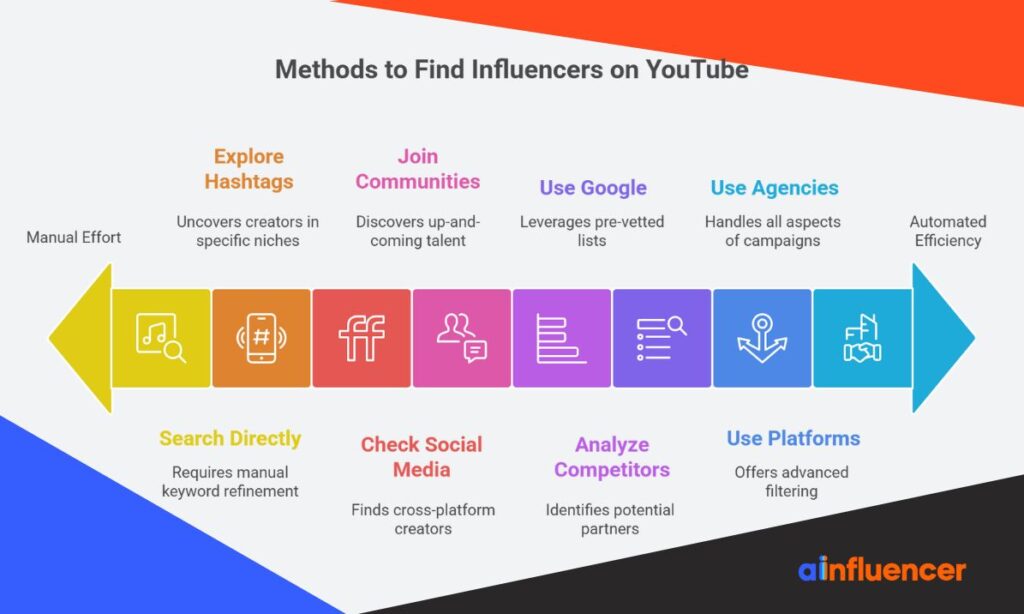
1. Use Influencer Marketing Platforms
Influencer platforms offer the most efficient way to find influencers on YouTube for your campaigns. These specialized tools allow you to search millions of creators using precise filters like niche, audience demographics, engagement rates, and more.
Ainfluencer provides brands with access to thousands of verified YouTube influencers across a wide range of niches, complete with audience demographics, engagement metrics, and direct contact information.
The primary advantage is access to advanced filtering based on content category, audience demographics, engagement metrics, and creator performance history.
Ainfluencer also combines influencer discovery, direct in-platform messaging, and detailed analytics in one dashboard, allowing brands to identify, evaluate, and contact YouTube creators without switching between multiple tools.
2. Search Directly on YouTube Using Keywords
Perhaps the simplest approach to finding influencers on YouTube is searching directly on the platform. Start by entering keywords related to your niche. For instance, if you sell skincare products, try searching “best moisturizers 2025” or “skincare routine.
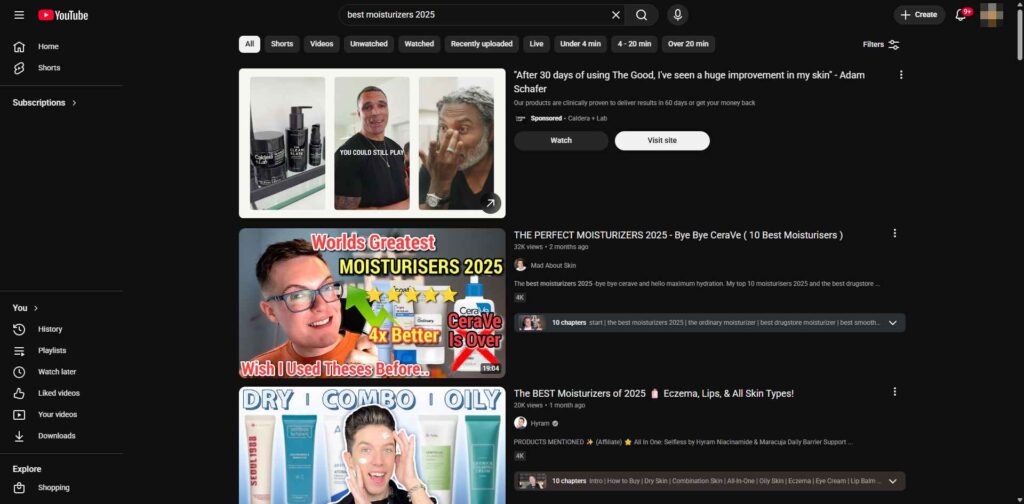
After getting search results, use YouTube’s filters to refine by upload date (to find active creators), view count (for popularity), or rating (for quality). This method requires more manual effort but costs nothing and helps you discover creators genuinely interested in your industry.
3. Explore Hashtags & Trending Content
YouTube’s hashtag system makes it remarkably easy to find influencers on YouTube in specific niches. By searching hashtags relevant to your brand, you’ll uncover thousands of content creators.
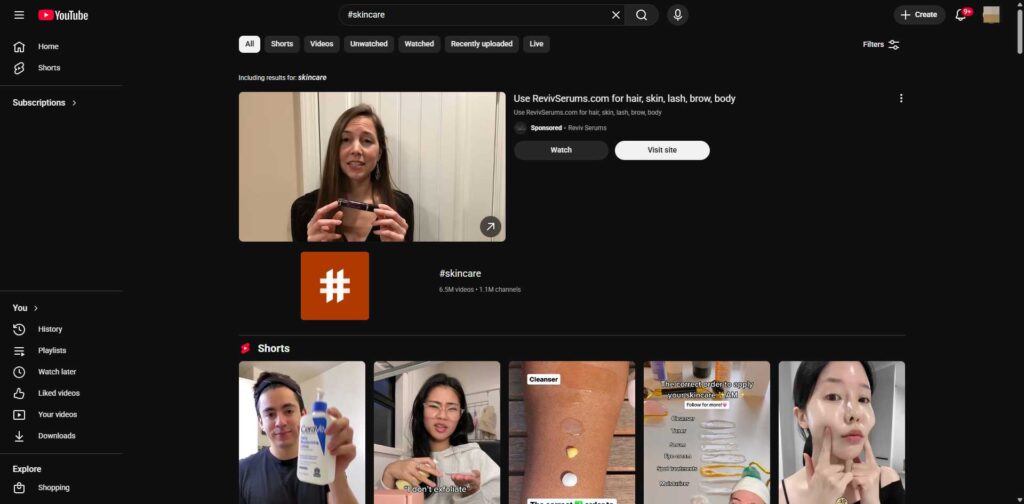
For example, the hashtag #skincare alone reveals 6.5M videos and 1.1M channels.
Additionally, explore YouTube’s Trending tab to discover rising creators in broader categories. Look specifically for “Creators on the Rise” as these emerging influencers often offer better engagement rates and more affordable partnerships.
Tools like Compare Instagram Influencers allow you to benchmark creators against one another to find those with stronger audience engagement.
4. Use Google to Find Curated Influencer Lists
Google searches can lead you to pre-vetted lists of YouTube influencers in virtually any niche. Try specific queries like “top tech YouTube influencers 2025” or “best beauty YouTubers UK”.
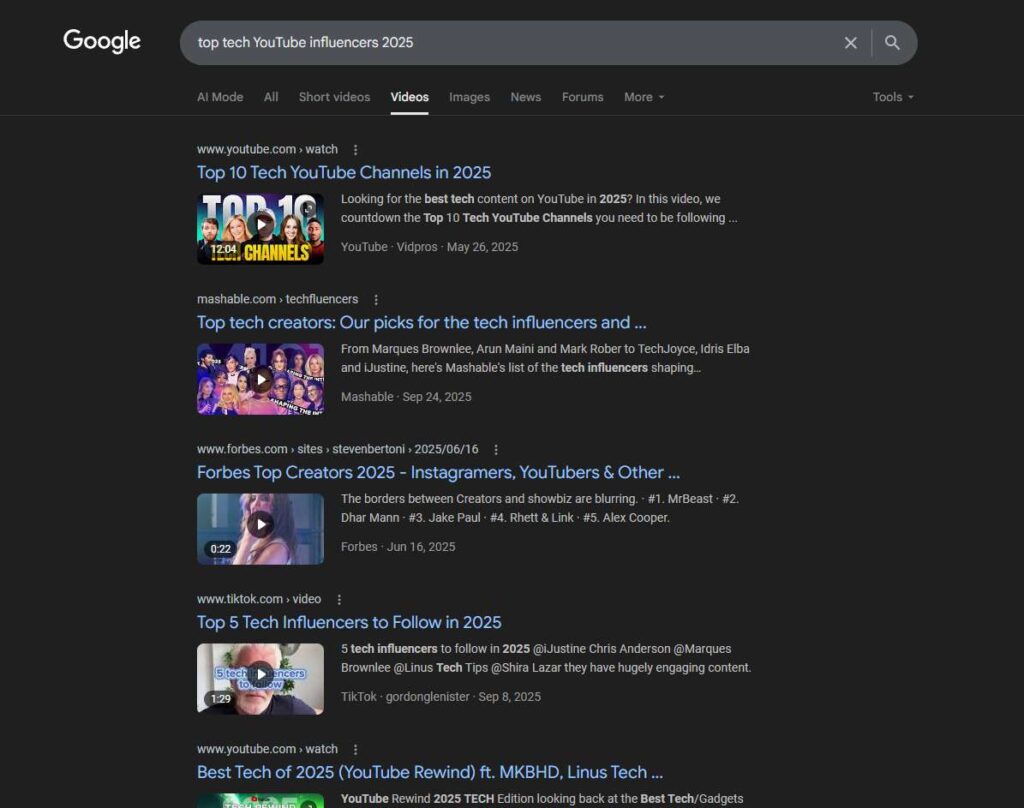
This method leverages others’ research efforts, saving you significant time. For best results, check how recent these lists are and verify the influencers still produce relevant content before reaching out.
5. Check Social Media for Cross-Platform Creators
Many YouTube creators maintain active profiles on other platforms, making it easier to find influencers on Instagram who also produce long-form YouTube content.
By searching relevant hashtags plus “YouTuber” on these networks, you can discover creators who might not appear in YouTube searches.
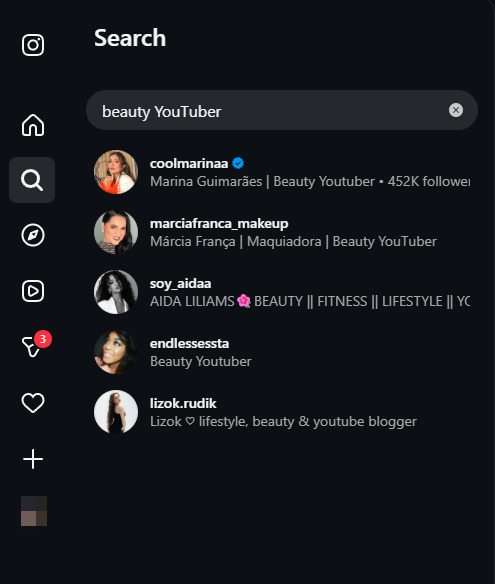
This cross-platform approach is particularly effective for finding micro-influencers who maintain smaller but highly engaged YouTube audiences alongside their presence on other platforms.
When you explore cross-platform creators, leverage tools such as the Instagram Engagement Checker and Fake Follower Checker to better understand an influencer’s authenticity and audience quality.
6. Join Influencer Communities & Forums
Forums like Reddit (r/YouTubers, r/SmallYoutubers) and Facebook groups dedicated to content creators can be goldmines for discovering up-and-coming talent. These communities often attract passionate creators actively seeking brand partnerships.
This approach is especially valuable for finding micro influencers on YouTube who haven’t yet reached mainstream visibility but maintain dedicated niche audiences.
7. Analyze Competitors’ Influencer Partnerships
Visit competitor websites for sections labeled “Ambassadors” or “Creators” to uncover long-term partnerships and find brand ambassadors who already resonate with your target audience.
Study which YouTubers your competitors work with to identify potential partners. Tools like Brandwatch and Sprout Social can track competitor campaigns and analyze their effectiveness.
Check the Facebook Ads Library using competitor names to uncover sponsored content and visit competitor websites for sections labeled ‘Ambassadors’ or ‘Creators’ to find their influencer partners.
8. Use Influencer Marketing Agencies or Marketplaces
If you lack time or expertise, partnering with agencies specialized in YouTube influencer marketing can be highly effective. These agencies handle everything from finding suitable influencers to negotiating deals and measuring results.
Though more expensive than DIY approaches, agencies like The Influencer Marketing Factory can optimize campaign reach through strategic content planning and audience targeting while providing real-time insights into evolving YouTube trends.
That last route is worth pricing properly before you take it. Our breakdown of YouTube influencer marketing agencies covers the fourteen worth shortlisting, the four pricing models they quote, and the point at which an agency margin stops paying for itself.
Narrowing the Search: Category, Country and Size
The eight methods above tell you where to look. The harder question is how to narrow a search down to creators you can actually use, and it comes down to three filters applied in this order: category, country, then size. Get them backwards and you will spend the day looking at large channels whose audience is in a country you do not sell to.
Finding YouTube Creators by Category
Category is the first filter and the least reliable one, because it is usually self-reported or inferred. Treat any category tag in a creator database as a starting point and never as a fact. It is common for a large share of a database to sit in one broad catch-all bucket while the specific niches hold almost nothing, which makes a category filter look precise when it is doing very little work.
Three ways to narrow by category that do not depend on a vendor’s tags:
- Search YouTube the way a buyer would. Search the problem your product solves rather than your category name. A kitchen brand finds more by searching meal prep for one than cooking channel
- Mine one good creator’s collaborations. Find a single creator who fits, then look at who else the brands in their sponsored videos have worked with. Brands repeat categories, and this is the fastest route to a shortlist of ten
- Use the recommendation sidebar. Open a fitting video and work down what YouTube suggests next. The algorithm’s view of which channels serve the same audience is better than most category taxonomies
Whatever route you take, confirm by watching three videos before the channel goes on a list. That is the only category check that survives contact with reality.
Finding YouTube Creators in a Specific Country
This is where most shortlists quietly fail, because there are two different locations and people filter on the wrong one.
| What it is | Why it matters | |
|---|---|---|
| Creator location | Where the person lives | Affects language, timezone, payment and whether they can receive your product |
| Audience location | Where their viewers are | This is the one that decides whether a placement converts. A creator in London with a mostly Indian audience will not sell your UK-only product |
Filter on audience country, then check creator location second. The gap between the two is wider on YouTube than on other networks: across 483,898 YouTube creator accounts in our marketplace the largest audience market is India at 33.7%, ahead of the United States at 27.5%, with Brazil at 9.3%. If you sell only in North America or Europe, a meaningful share of any unfiltered list is reach you cannot convert. The full breakdown is in YouTube influencers.
For a city or region rather than a country, the practical route is different: search YouTube for the place name plus your category, check the channel’s About tab and recent videos for local references, and ask for the creator’s own analytics screenshot before booking. Most tools will not filter reliably below country level, and the ones that claim to are inferring it.
Which Size Tier to Search For
Search the tier that will say yes and perform, not the biggest one you can afford. The evidence points the same way twice.
- Engagement falls as channels grow. Across more than 440,000 accounts, creators between 1,000 and 10,000 subscribers record 5.82% engagement against 3.22% above a million, so the small end is roughly 1.8 times more engaging
- Brands are already there. Of 204,281 brand offers we counted, 77% went to creators under 100,000 followers, and the 10,000 to 100,000 band alone took 47.8%
- The supply is there too. 78% of YouTube creator accounts sit under 100,000 subscribers, so this is the deepest part of the market to search in, not a compromise
A workable default: search 10,000 to 100,000 subscribers first, add a small number of 100,000 to 500,000 channels for a flagship placement, and only go above that when the goal is reach at a launch moment rather than efficiency. Micro influencers covers running that properly, and if you would rather have creators come to you than search at all, a marketplace inverts the problem: YouTube influencer marketing platforms compares the four categories of tool on exactly that point.
How to Vet YouTube Influencers Effectively
After identifying potential YouTube partners, the critical next step is vetting influencers to ensure alignment, compliance, and ROI.
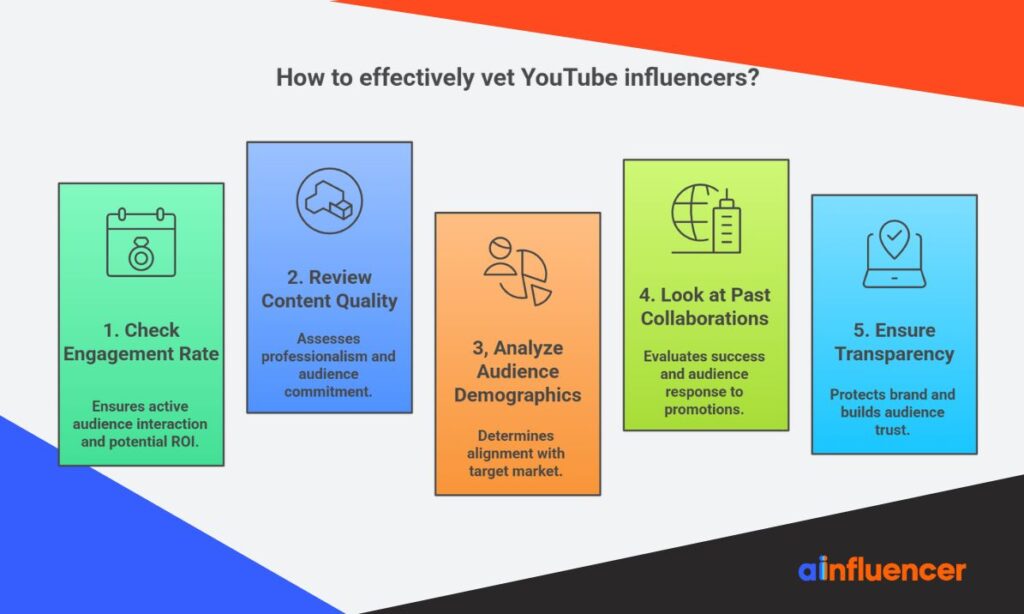
#1 Check Engagement Rate & Average Views
You can use tools like Ainfluencer’s Free YouTube Audit Tool to analyze a creator’s engagement, consistency, and overall channel health before outreach.
Engagement rate reveals how actively an audience interacts with a creator’s content. On YouTube, a good engagement rate falls between 3-7%, while anything above 10% is considered exceptional. Indeed, smaller creators often achieve higher engagement.
Micro-influencers with 1K-5K followers average 5.6% engagement rates versus just 1.97% for those with over 1M followers.
To calculate engagement rate, use this formula: Engagement Rate (%) = (Likes + Comments + Shares + Subscribers) ÷ Total Views × 100. Nevertheless, don’t fixate solely on subscribers; a channel with fewer subscribers but higher average views per video might deliver better results.
#2 Review Content Quality & Consistency
Quality content remains a creator’s biggest asset. Examine their video production value, including lighting, audio clarity, and editing professionalism.
Simultaneously, check their consistency; regular posting schedules indicate reliability and audience commitment. Creators who maintain content calendars typically demonstrate better long-term performance.
#3 Analyze Audience Demographics
Understanding audience demographics helps determine audience-brand alignment. Request data about age ranges, gender distribution, geographic locations, and interests.
If your campaign needs regional reach, use geo-specific queries and some other methods to find local influencers whose audiences match your store locations.
Obviously, these details should match your target market profile. In essence, robust creator-follower relationships manifest in quality conversations within comment sections, a valuable indicator of authentic audience connection.
#4 Look at Past Brand Collaborations
Examine how naturally creators incorporate sponsored content. Search for previous brand partnerships to evaluate how their audience responds to promotions.
Accordingly, low engagement on sponsored posts might indicate audience resistance to commercial content or poor integration techniques. Successful past collaborations demonstrate both capability and reliability.
#5 Ensure Transparency & Ad Disclosures
The FTC requires clear disclosure of material connections between creators and brands. This includes not just payment but any free products, services, or perks. Proper disclosures should:
- Appear at the beginning of videos, not buried in descriptions.
- Use clear language like “advertisement,” “ad,” or “sponsored.”
- Be visible in both audio and visual formats.
- Avoid vague terms like “sp,” “spon,” or “collab.”
Ultimately, transparent creators protect both themselves and your brand from legal complications while building audience trust. Furthermore, many agencies won’t work with creators who don’t properly disclose partnerships.
A Vetting Checklist You Can Run in Three Minutes
Every method below produces a list. The list is not the hard part; deciding who on it is worth paying is. These are the checks in the order that eliminates people fastest.
| Check | What good looks like | What should stop you |
|---|---|---|
| Upload cadence | A recent, regular schedule | A six month gap, or a sudden burst after a long silence |
| Views against subscribers | Recent videos pulling a consistent share of the subscriber count | A large subscriber count with a few hundred views per video |
| Comment quality | Specific comments about the content | Generic praise and emoji, repeated across videos |
| Sponsorship density | Sponsored videos spaced out among organic ones | Back to back sponsorships, where yours will not register |
| Disclosure | Clear paid-promotion labels | Sponsored content with no disclosure anywhere, which is a legal risk you inherit |
| How fast they reply | A reply within a day or two during negotiation | A week to answer a message, which predicts a week after you pay |
That last row is the most undervalued. The most common reason a paid collaboration ends in a refund is a creator who accepted and then went quiet, and the warning sign was almost always already there in how long they took to reply.
Mistakes to Avoid When Finding YouTube Influencers
Even seasoned marketers make critical errors when searching for YouTube partners. To find influencers on YouTube who deliver genuine results, you must avoid these common pitfalls that can derail your campaign before it begins.
1. Relying on Vanity Metrics Like Subscriber Count
The most expensive mistake in influencer marketing is chasing follower numbers at the expense of quality engagement.
Brands often pay premium rates for creators with millions of followers, yet overlook creators with 50,000 followers who deliver 8-12% engagement with audiences that actually purchase products.
The math speaks for itself: a creator with 100,000 engaged followers generates more business impact than one with 2 million passive subscribers.
2. Ignoring Audience-Brand Mismatch
Cultural misalignments create expensive disasters that damage both brand reputation and creator authenticity.
When lifestyle brands partner with hardcore gaming creators or family-friendly brands collaborate with creators known for adult humor, the results are predictably catastrophic.
Always check for red flags: creators who have never organically mentioned your product category, audiences with demographics unlike your customer base, or content styles that conflict with your brand voice.
3. Overlooking Past Sponsored Content Saturation
YouTube-branded integrations grew 54% year-over-year in early 2025, totaling more than 65,000 creator videos and 19 billion views. As a result, creators with excessive sponsored content often experience audience fatigue and declining engagement.
Examine potential partners’ content history to evaluate whether their audience remains responsive to promotions or has grown numb to constant sales pitches.
4. Skipping Legal Compliance & Disclosures
FTC violations create legal risks, audience trust issues, and platform penalties that can destroy campaigns. Proper disclosures must appear at the beginning of videos (not buried in descriptions), use clear language like “advertisement” or “sponsored,” and be visible in both audio and visual formats. Henceforth, transparent creators protect both themselves and your brand from legal complications while building audience trust.
Three Things to Know Before You Contact Anyone
| What it means for your outreach | |
|---|---|
| One creator can be several listings | Each channel is treated separately, with its own audience data. Contact the channel you actually want, not the person’s largest one |
| Lead times are longer | A scripted and edited integration is not a same-week job. Offer a publish date that reflects that, because every deadline on a deal counts from it |
| A fee alone undersells the placement | A video keeps being found for years. Pairing a fee with an affiliate commission on the description link matches how the placement actually earns, and creators prefer it |
If you are working through a marketplace rather than cold outreach, how to find and invite creators covers the search filters and invitations, and how to work with YouTube creators covers briefing a video and pairing it with commission.
Final Words
Find influencers on YouTube without turning it into a time-consuming process. With a clear strategy and structured search methods, brands can identify high-quality creators in as little as 30 minutes while improving overall campaign performance.
The key is focusing on audience fit and engagement rather than subscriber count, as micro influencers often deliver stronger trust and interaction. By combining smart YouTube searches with influencer discovery tools and proper vetting, you can build authentic creator partnerships that drive real results and scale with confidence.
FAQs
How much does it cost to work with YouTube influencers?
YouTube influencer pricing depends on average views, niche, and content type rather than subscriber count alone.
Typical ranges are:
– Nano influencers (1K to 10K): $50 to $300 per video.
– Micro influencers (10K to 100K): $300 to $2,000 per video.
– Mid-tier creators (100K to 500K): $2,000 to $10,000+ per video.1
High-value niches and long-form reviews usually cost more. Many brands start with a small paid test before scaling.
Are long-term YouTube influencer partnerships better than one-off campaigns?
In most cases, yes. Long-term partnerships build stronger trust and drive higher engagement and conversions than one-off videos.
A common approach is to test creators with one campaign, then turn top performers into 3 to 6 month partners for better ROI.
How do I contact YouTube influencers if they don’t reply?
If emails go unanswered:
– Check the About tab for business contact info.
– Review video descriptions for updated details.
– Reach out via Instagram or X.
– Personalize your message and clearly state deliverables and budget.
Clear, specific outreach messages get significantly higher response rates.