These days, what’s becoming important for any brand is how to create an influencer marketing campaign that actually drives revenue. Therefore, any brand needs to plan deliberately, partner with creators who match their audience, and measure the metrics that show impact.
Influencer-driven purchases are on the rise. In this guide, we provide clear, step-by-step instructions on how to build, launch, and optimize campaigns that scale.
How to Create an Influencer Marketing Campaign That Drives Results
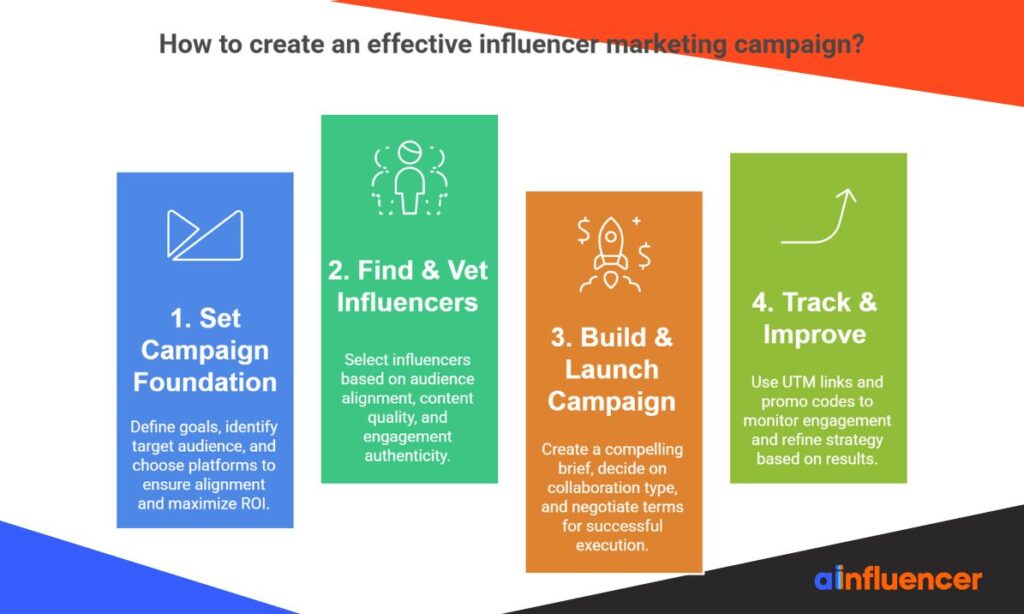
Creating any types of influencer marketing campaign starts with one clear goal: finding an influencer whose audience genuinely matches yours, giving them a tight but flexible brief, and tracking the few metrics that prove impact.
1. Set the Foundation for Your Campaign
Building a solid foundation for your influencer marketing campaign is critical to achieving exceptional results. With brands utilizing influencer-driven campaigns achieving up to 18x influencer marketing ROI for every dollar spent, proper planning becomes non-negotiable.
Define Your Campaign Goals & KPIs
Successful influencer campaigns begin with clearly defined objectives aligned with your broader business goals. Without specific goals, it’s impossible to measure success or determine if your efforts are making an actual impact.
Start by asking: “What is the single most important outcome I need right now?” Your answer might fall into one of these categories:
- Brand awareness: Getting your name recognized
- Engagement: Sparking meaningful interactions
- Conversions: Generating leads and sales
- Content creation: Acquiring authentic user-generated content
After establishing your objectives, select appropriate KPIs to track progress. For instance, if your campaign focuses on increasing positive customer sentiment by 25%, include KPIs around brand sentiment score and engagements like positive comments, likes, and saves.
Specifically, brands with clearly defined goals are 4× more likely to succeed with their influencer marketing initiatives. This strategic direction guides your campaign from concept to completion.
Identify Your Target Audience
Before selecting influencers, you must understand exactly who you want to reach. Target audience identification involves gathering data and creating detailed profiles of your ideal customers.
Consider these three crucial layers when defining your influencer target audience:
| Audience Layer | Key Questions | Importance |
| Demographics | Age? Location? Gender? | Avoids wasting budget on irrelevant audiences |
| Psychographics | Interests? Motivations? Values? | Creates relevant messaging |
| Behavioral Patterns | How do they engage? Comment? Share? | Indicates true engagement level |
Notably, understanding your audience is vital for driving engagement, conversions, and revenue. To identify your target audience effectively, conduct market research through surveys, focus groups, and social listening to collect data on demographics, interests, pain points, and behaviors.
Subsequently, this analysis helps you uncover crucial demographic and psychographic insights to determine whether your products can potentially appeal to an influencer’s followers. Remember, the key to creating a successful influencer marketing campaign isn’t asking “Which influencer?” but “Which audience?”
Choose the Right Social Media Platforms
Selecting appropriate platforms for your influencer marketing campaign directly impacts its effectiveness. Each platform offers distinct advantages based on your goals, target audience, and budget.
- First, consider where your target audience spends their time. If you’re a clothing company targeting the 18-24 age range, Instagram might be ideal. Conversely, for reaching retirees or parents, Facebook could be more effective.
- Next, think about content format requirements. If you want influencers to share photos or videos with followers, Instagram or TikTok works well. For text-based content like blog posts, LinkedIn or Medium might be preferable.
- Undoubtedly, platform selection should align with your specific objectives. For instance, TikTok delivers exceptional results for discovery and awareness, particularly among younger audiences, while Instagram excels at product showcases through visual storytelling.
Overall, the foundation of your influencer marketing campaign depends on these three pillars working together harmoniously. Your clearly defined goals inform audience targeting, which in turn guides platform selection, creating a cohesive strategy that maximizes your chances of success.
2. Find & Vet the Right Influencers
Selecting the right influencers serves as the cornerstone of your campaign success. After all, partnering with authentic voices that resonate with your target audience can make or break your influencer marketing efforts.
Types of Influencers
Understanding the different influencer tiers helps you decide which type best fits your influencer marketing campaign goals:
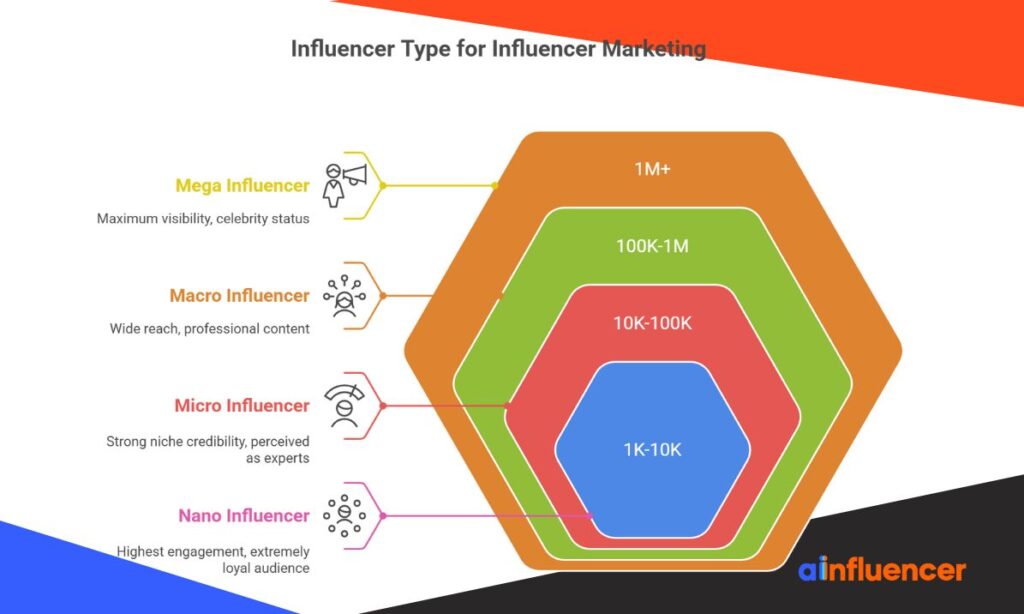
Interestingly, smaller-scale influencers often deliver stronger results. Nano-influencers achieve engagement rates up to 10.3% compared to mega-influencers. For those learning how to create a successful influencer marketing campaign, this insight proves valuable, especially since many brands prioritize reach over engagement.
How to Evaluate Influencer Fit
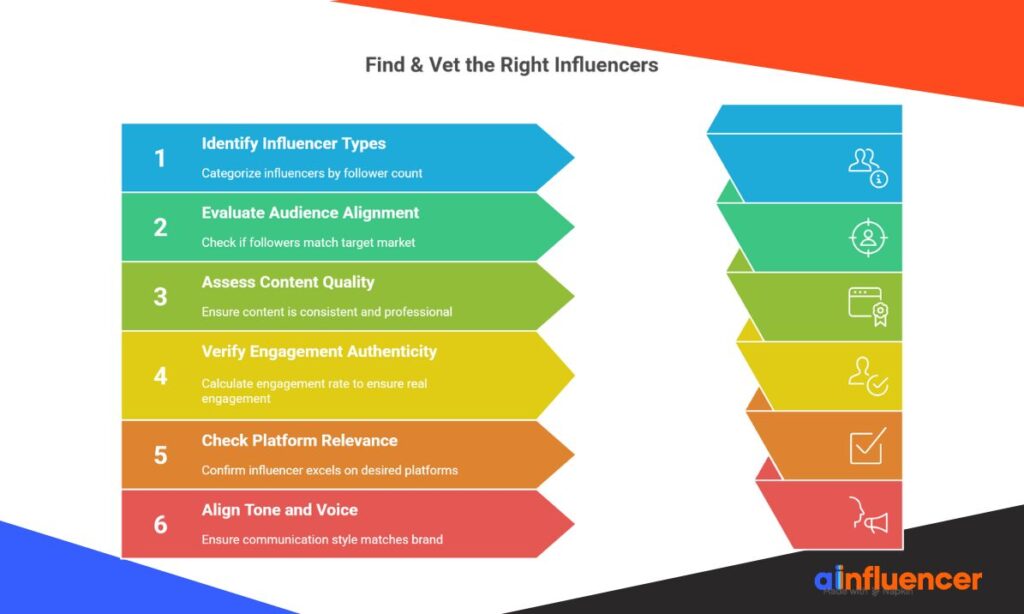
Once you’ve identified potential influencers, evaluate them thoroughly based on:
- Audience alignment: Check if their followers match your target market demographically and psychographically. The geography, gender, and age of their subscribers should align with your product needs.
- Content quality: Examine their previous content. Is it consistent, thoughtful, and professionally produced? Quality influencer content can be repurposed into marketing assets.
- Engagement authenticity: Calculate their Engagement Rate using the formula: (likes + comments + shares) ÷ follower count × 100. Healthy rates range from 2-5% for large accounts and 5-10% for micro-influencers.
- Platform relevance: Ensure they excel on platforms where you want to create your influencer campaign.
- Tone and voice: Their communication style should match your brand values and image.
Avoiding Fake Influencers & Red Flags
As you create your influencer marketing campaign, watch for these warning signs:
- Suspicious growth patterns: Authentic influencers build audiences gradually; sudden follower spikes without viral content indicate purchased followers.
- Engagement inconsistency: If someone has 100,000 followers yet receives only 50-100 likes per post, something’s amiss.
- Generic comments: Real engagement includes specific questions and thoughtful responses, not just “Amazing post!” or random emojis.
- Bot followers: According to studies, the average influencer purchases nearly 23% of their followers, with engagement metrics often off by 55%.
- Too many sponsored posts: A profile filled exclusively with paid content suggests the influencer lacks an authentic connection with their audience.
To protect your investment, request analytics screenshots before the partnership. Legitimate influencers willingly share this data, helping ensure your influencer marketing campaign connects with real, engaged audiences.
3. Build & Launch Your Campaign
Now that you’ve selected the right influencers, it’s time to execute your influencer marketing strategy. This phase transforms your planning into action through clear communication, strategic collaboration, and measured flexibility.
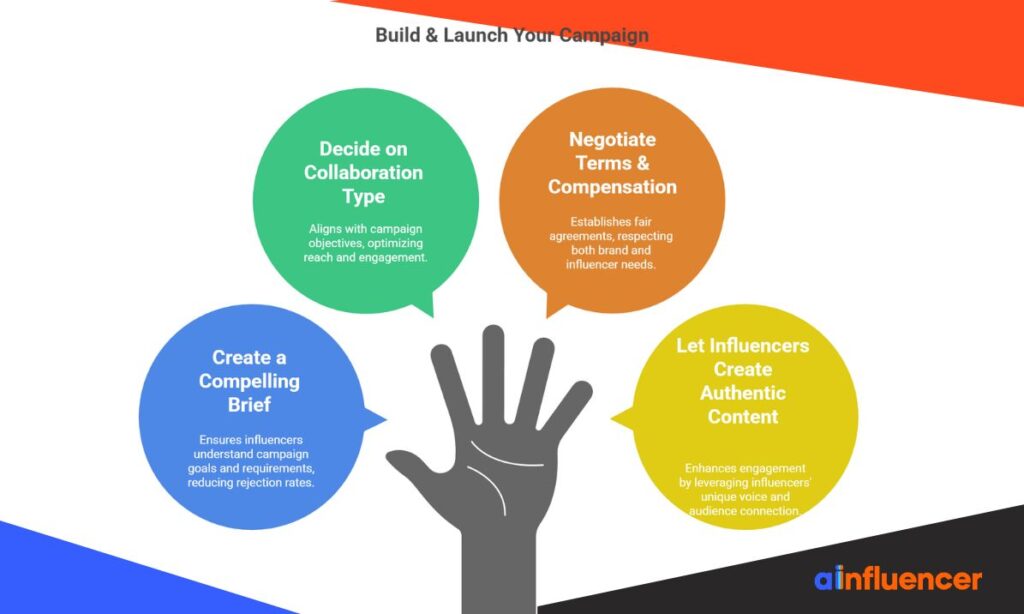
Create a Compelling Campaign Brief
A well-crafted brief serves as your campaign roadmap. According to research, 62% of content creators have turned down potential brand partnerships, with 35% declining because the brief they received was unclear or not a good fit.
Your campaign brief should include:
- Campaign overview and goals.
- Content requirements and guidelines.
- Posting schedule and deadlines.
- Brand messaging and key talking points.
- Product information and usage instructions.
- Payment terms and conditions.
First, outline your campaign objectives clearly so influencers understand what success looks like. Moreover, provide examples of past successful content to inspire their creativity without limiting it.
Decide on Collaboration Type
Different collaboration formats serve various campaign goals:
| Collaboration Type | Best For | Description |
| Sponsored Posts | Brand awareness, content generation | Influencers create paid content featuring your product |
| Product Gifting | Reviews, starting relationships | Free products in exchange for honest feedback |
| Social Takeovers | Adding a personal touch | Influencers temporarily manage your brand accounts |
| Brand Ambassadorship | Long-term relationships | Ongoing partnerships (80% of influencers’ preferred choice) |
Indeed, your campaign objectives should guide your collaboration type selection. For local promotion, gifting to nano-influencers might work best, whereas for broad awareness, sponsored posts with macro-influencers could be more effective.
Negotiate Terms & Compensation
During negotiation, consider these compensation options:
- Product seeding (most cost-effective approach).
- Commission-based affiliate models.
- Flat-rate payments for specific deliverables.
When discussing terms, always ask the creator about their rate first to establish a starting point. Be transparent about your budget limitations. If influencers truly connect with your brand, they’ll likely work within your constraints.
Additionally, clearly define content usage rights. Without a written agreement, U.S. copyright law gives influencers ownership of content they create.
Let Influencers Create Authentic Content
Finally, provide guidelines without stifling creativity. While it’s vital to communicate your expectations, remember that you selected these influencers for their unique voice and audience relationship.
Give them creative freedom to craft content that resonates with their followers. Studies show that authenticity drives engagement. Audiences can easily spot forced or overly scripted content.
4. Track, Measure, & Improve
The success of your influencer marketing campaign depends on accurate measurement. Tracking performance with influencer tracking tools helps you identify what’s working and worth your investment.
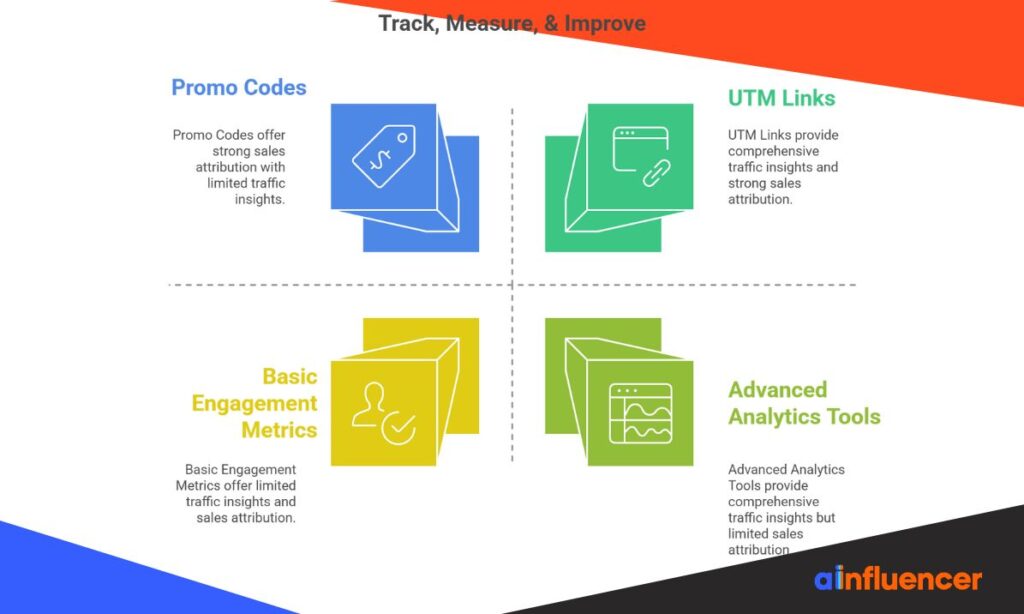
Use UTM Links & Promo Codes
UTM parameters attach to URLs and tell you exactly where website traffic originates. These digital breadcrumbs help track which influencers drive the most visitors through Google Analytics. The average ROI for influencer marketing is 5€ for every 1€ spent, yet this becomes visible only through proper tracking.
Promo codes offer an excellent clickless tracking alternative, particularly useful when:
- Tracking links aren’t feasible (podcasts, videos)
- You need platform-agnostic measurement
- You want to incentivize purchases
| Tracking Method | Best For | Limitations |
| UTM Links | Website traffic analysis | Requires clicks |
| Promo Codes | Direct sales attribution | Limited traffic insights |
Monitor Engagement & Conversions
Beyond basic metrics like likes and comments, focus on:
- Click-through rates show content effectiveness
- Conversion rates reveal actual customer actions
- ROAS (Return on Ad Spend) with 4:1 is considered good
Refine Your Strategy Based on Results
Examine your data regularly to identify patterns. Did video content on TikTok generate more engagement than static posts? Did certain influencers deliver exceptional results? Double down on what works, and adjust or eliminate underperforming elements.
How to Create an Influencer Marketing Campaign: Basics for Beginners
Influencer marketing has evolved from a niche tactic to a cornerstone of digital strategies. Before diving into how to create an influencer marketing campaign, you need to understand what makes this approach so powerful.
What is Influencer Marketing?
At its core, influencer marketing is a collaboration between brands and individuals who have built trusted relationships with their social media followers. Unlike traditional advertising, these partnerships leverage the influencer’s credibility to promote products or services through authentic storytelling.
Influencer marketing works because it taps into established trust. Rather than viewing a faceless advertisement, consumers see recommendations from people they follow and admire. According to recent data, 69% of consumers trust influencer recommendations over direct brand messaging. This trust translates directly to purchases, with almost half of all consumers (49%) buying products at least once a month based on influencer posts.
The industry continues to expand, projected to reach approximately $33 billion by 2025. For brands learning how to create a successful influencer marketing campaign, this represents enormous potential for connecting with consumers in meaningful ways.
Why it Works in 2026
The effectiveness of influencer marketing in 2026 stems from several factors that have solidified over time:
- Growing consumer trust – As traditional advertising becomes less effective, influencer recommendations fill the gap with authentic content that resonates with audiences.
- Impressive ROI – Brands earn an average of $5.78 for every $1 spent on influencer marketing, with top campaigns achieving up to $18-$20 per dollar invested. This outperforms traditional digital advertising by 11x.
- Budget increases – Consequently, 81% of UK brands plan to increase their influencer budgets in 2026, recognizing the strategy’s effectiveness.
| Influencer Size | Follower Count | Key Benefits |
| Nano | Under 10,000 | 10.3% engagement rate, highest authenticity |
| Micro | 10,000-50,000 | Strong niche credibility, cost-effective |
| Medium | 50,000-100,000 | Balance of reach and engagement |
| Macro | 100,000-500,000 | Wider reach, professional content |
| Mega | 1M+ | Maximum visibility, celebrity status |
Furthermore, the preference for smaller-scale influencers continues to grow, with brands increasingly partnering with micro and nano influencers who deliver stronger engagement and authenticity. This shift reflects a deeper understanding of how to create successful influencer campaigns in 2026.
Influencer vs. Creator: Key Differences
When planning how to create an influencer marketing campaign, start by distinguishing influencers from creators.
- Higher engagement from smaller partners: Nano and micro influencers typically generate 2–3× higher engagement rates than macro and mega influencers, making them ideal for niche targeting and conversions.
- Creator-led content performs better: User-generated and creator-style content delivers 4–8× higher engagement than traditional brand-created ads, especially on TikTok and Instagram Reels.
- Stronger long-term value: Brands that work with creators on ongoing partnerships report 30–40% lower cost per acquisition (CPA) compared to one-off sponsored posts.
- Trust drives action: 61% of consumers trust creator recommendations more than branded content, reinforcing why authenticity is critical when scaling campaigns.
Running campaigns from a seat in someone else’s account? Ainfluencer for Social Media Managers covers what a team member can and cannot do, the daily inbox, the Scheduler, approval and reporting.
Wrapping Up
How to create an influencer marketing campaign begins with clear goals, precise audience targeting, and partnerships with creators who genuinely fit your brand. When executed well, influencer programs deliver strong ROI; brands report up to $18 for every $1 spent.
Launch with defined KPIs, track attribution with UTM links and promo codes, and give creators authentic creative freedom within clear guidelines.
Start small, measure continuously, and scale what works. Follow these fundamentals, and you’ll turn trusted voices into predictable, repeatable growth.
ّFAQs
How much should I budget for an influencer marketing campaign?
Your budget depends on your goals, platform, and influencer size. Nano and micro influencers may work for product gifting or a few hundred dollars per post, while larger creators can charge thousands. Start small, test performance, then scale the partnerships that deliver strong ROI.
Which KPIs should I track to know if the campaign is working?
For the best influencer marketing KPIs focus on metrics tied to your goal. Track reach and impressions for awareness, engagement rate for content quality, and clicks, conversions, CPA, or ROAS for sales-driven campaigns. Use UTM links and promo codes to measure results accurately.
How do I handle legal, disclosure, and content-rights issues with creators?
Yes. Always use a written agreement that defines deliverables, timelines, content rights, and payment terms. Influencers must also clearly disclose sponsored content using labels like “#ad” to stay compliant with platform and FTC guidelines.