The Benefits of Social Commerce in 2026
Shopping now happens where people already spend their time: inside TikTok, Instagram, and Facebook. This guide breaks down the real benefits of social commerce for brands and creators, backed by 2026 data, plus how to start turning content into sales.
Social commerce has quietly rewritten how people shop. For years, social media and online stores lived in separate worlds: you discovered a product on Instagram, then hunted for it on a website to buy. That gap is closing fast. This channel, buying and selling directly inside social platforms, has become one of the fastest-growing segments of retail, and it is reshaping how brands find customers and how creators earn. Below we cover what it is, the data behind its rise, and the concrete benefits it delivers, so you can decide how to use it.
What Is Social Commerce?
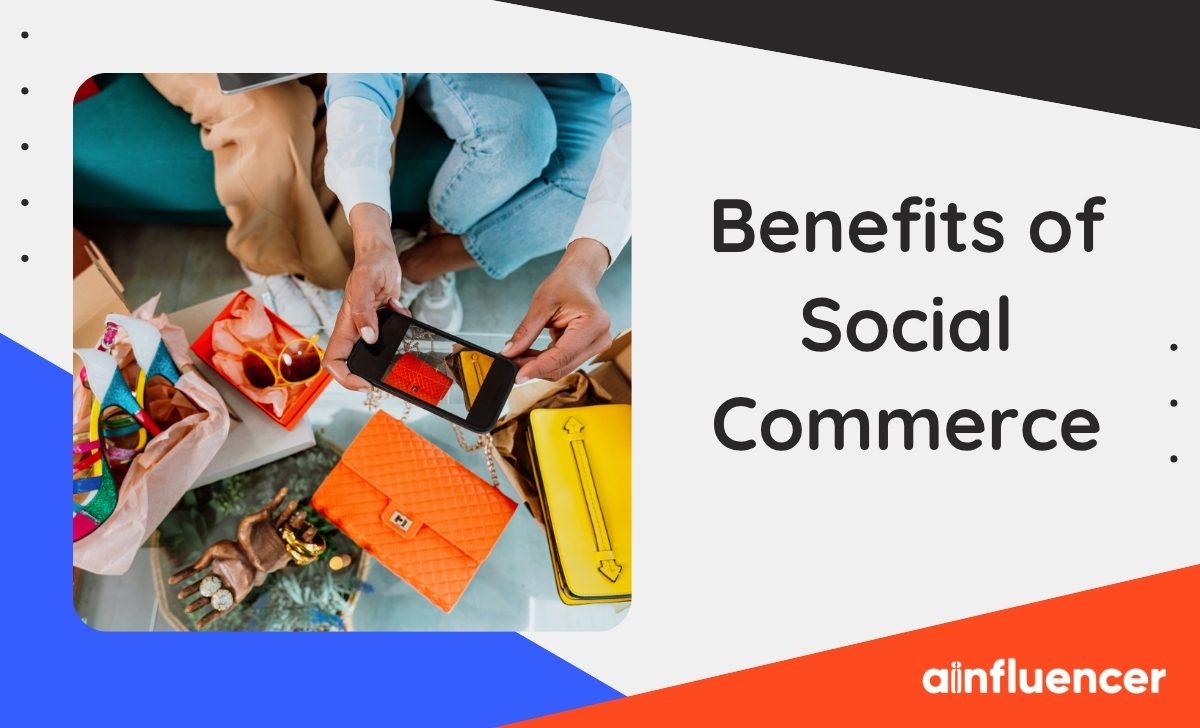
Social commerce is the integration of shopping directly into social media platforms, letting people browse, discover, and buy products without ever leaving apps like TikTok, Instagram, and Facebook. Unlike traditional eCommerce, where shoppers arrive already knowing what they want, it thrives on discovery, inspiration, and impulse. Users encounter products through creator content, algorithm-driven feeds, and livestream shopping, then check out in a few taps.
It is closely tied to creator marketing, since most in-app purchases start with a trusted recommendation. If you are new to the wider space, our guide to the different types of influencer marketing sets useful context for how social selling fits in.
How it differs from traditional eCommerce
The core difference is intent. Regular eCommerce captures existing demand: someone searches, lands on your store, and buys. This channel creates demand: a creator’s try-on video or a livestream sparks a purchase the shopper was not planning. That shift from search-led to discovery-led selling is exactly why the model is growing so fast, and why it rewards brands that show up with authentic content.
Why It Matters Now
The numbers make the case on their own. The global market is worth roughly $2.1 trillion in 2026 and growing at about 29% a year, far faster than the rest of eCommerce. In the US, sales are set to cross $100 billion for the first time, and more than half of US social buyers, around 51%, will shop on TikTok this year. TikTok Shop alone is projected at over $23 billion in US sales, a 48% jump that would make it bigger than Target or Best Buy in eCommerce terms.
Just as important, shopping is now a reason people open these apps: over a quarter of users visit specifically to find products to buy, and 82% of social users research or discover new products on their accounts. Video leads the way, capturing about 43% of these sales, which is why short-form and livestream content convert so well.
The Key Benefits of Social Selling
Here are the concrete advantages this channel offers brands and creators, and why it deserves a dedicated strategy rather than a side experiment.
Reaches customers where discovery already happens
With 5.2 billion social users worldwide spending over two hours a day in-app, the channel puts your products in front of buyers during the exact moments they are browsing for inspiration. Instead of waiting for shoppers to search, you meet them in the feed, which is why it excels at reaching new audiences that traditional search would never surface. A strong Instagram presence plugs straight into this discovery engine.
Shortens the path from discovery to purchase
Every extra step between seeing a product and buying it costs sales. By keeping browsing and checkout inside one app, social commerce removes the friction of bouncing to an external site. That is why live shopping converts at up to 30%, versus the 2 to 3% typical of traditional eCommerce, the real-time, interactive format builds trust and urgency in the moment.
Builds trust through creators and social proof
People buy from people they trust, and 58% of adults have purchased a product because of an influencer endorsement. Reviews, comments, try-ons, and creator demos give shoppers the social proof they need to buy with confidence. That trust is the engine of social selling, so partnering with the right voices matters, which is where learning to collaborate with the right influencers pays off.
Delivers richer first-party data and targeting
Because discovery, engagement, and checkout happen in one place, social platforms capture first-party signals that sharpen recommendations and retargeting. Brands can see which content drives sales, tie creator posts to SKU-level revenue, and optimize in real time, provided they measure well. Our guide to tracking influencer marketing performance shows how to connect content to conversions.
Improves ROI through performance partnerships
The channel pairs naturally with creator partnerships you can pay on results, not just impressions. That performance model keeps acquisition costs efficient as you scale, and it is why brands are shifting budget toward performance based influencer marketing and affiliate-style creator deals. That performance model keeps costs efficient as you scale.
Turns customers into a community
Comments, shares, and creator communities turn one-time buyers into repeat customers and advocates. Unlike a checkout page, a social feed keeps the conversation going after the sale, fueling user-generated content that feeds the next wave of discovery. Building a steady stream of user-generated content compounds this loyalty loop.
Benefits at a Glance
| Benefit | What it delivers | Backed by |
|---|---|---|
| Discovery | Reaches new buyers in-feed | 82% research products on social |
| Conversion | Fewer steps to purchase | Up to 30% livestream conversion |
| Trust | Social proof drives confidence | 58% bought via an influencer |
| Data | First-party signals and attribution | SKU-level creator tracking |
| ROI | Pay-on-performance efficiency | Creator-led commerce growth |
| Loyalty | Community and repeat sales | UGC fuels ongoing discovery |
Key insight: discovery beats search here
Traditional eCommerce captures demand that already exists; social selling creates it. The brands winning in 2026 treat it as its own discipline, pairing shoppable content with creators who turn scrolls into sales, rather than bolting shopping onto a generic social feed.
Where It Happens
Each platform plays a different role, so your channel mix should match where your audience already shops.
- TikTok Shop: The fastest-growing channel, projected at $23 billion+ in US sales in 2026, and the leader in video-first discovery and livestream selling. Pair it with a TikTok influencer marketing strategy.
- Instagram: Strong for shoppable posts, Reels, and higher average order values, ideal for fashion, beauty, and lifestyle brands.
- Facebook: The largest buyer base by volume, with hundreds of millions of Shops users, especially effective for audiences over 35.
- Pinterest and YouTube: High-intent discovery, with Pinterest users planning purchases and YouTube driving consideration through reviews and demos.
Turn Content Into Sales With Creators
The single biggest lever here is creator partnerships, and TikTok Shop creator earners grew 146% year over year, a clear signal of where the growth is. Ainfluencer makes that easy: it connects brands with a 5M+ creator network across Instagram, TikTok, and YouTube, with AI-powered matching, built-in chat, escrow payments, and a $0 platform fee. You can recruit on-brand creators, run a Shopify affiliate program with influencers, and track every sale in one place.
Want a done-for-you way to turn creator content into in-app revenue, with none of the enterprise overhead?
Explore fully managed affiliate marketingHow to Get Started
You do not need a huge budget to begin. Follow this simple pipeline to launch and scale.
- Pick the right platform. Start where your audience already shops, TikTok and Instagram for Gen Z and millennials, Facebook for older buyers, then build a plan around your wider influencer marketing strategy.
- Set up shoppable content. Enable in-app shops, tag products in posts and Reels, and make checkout as frictionless as possible.
- Partner with creators. Recruit trusted voices whose audience matches your brand; learn to create a full influencer marketing campaign around your launch.
- Test livestream and UGC. Run selective live shopping events and lean on user-generated content, since both convert far above static posts.
- Measure and optimize. Tie every creator post to revenue, double down on what converts, and track results with clear influencer marketing ROI benchmarks. To skip the setup, a fully managed affiliate program handles recruitment and tracking for you.
Challenges to Keep in Mind
The channel is powerful, but it is not frictionless. Being honest about the hurdles helps you plan around them.
- Trust gap: About 26% of consumers say they do not trust influencer marketing, and 64% distrust creators who fail to disclose brand relationships, so transparency and authentic partnerships are essential.
- In-app purchase friction: Some shoppers still prefer buying through established retailers, so a smooth checkout and clear fulfillment matter.
- Attribution: Connecting creator content to actual revenue takes the right tracking; without it, budgets get wasted.
- Platform and safety risk: Product safety and policy enforcement vary by platform, so vet partners and follow each platform’s rules.
Is It Worth It?
For most brands and creators, yes. It meets shoppers where they already are, shortens the path to purchase, and turns trusted content into measurable sales, all while growing far faster than the rest of eCommerce. The winners treat it as a dedicated discipline: shoppable content, the right platforms, creator partnerships, and tight measurement.
This channel is not a bolt-on to your store, it is a new front door. The brands that win pair authentic creator content with frictionless checkout, then measure everything and scale what converts.
Turn scrolls into sales
Ainfluencer connects your brand with a 5M+ creator network across Instagram, TikTok, and YouTube, with AI matching, built-in chat, escrow payments, and a $0 platform fee, everything you need to win at social selling.
Frequently Asked Questions
What is social commerce, in simple terms?
Social commerce is buying and selling products directly inside social media apps like TikTok, Instagram, and Facebook, without leaving the platform. Shoppers discover products through creator content and feeds, then check out in a few taps.
What are the main benefits of social selling?
The biggest wins are reaching customers where discovery already happens, shortening the path from discovery to purchase, building trust through creators and social proof, richer first-party data, better ROI through performance partnerships, and turning customers into a loyal community.
How does it differ from regular eCommerce?
Traditional eCommerce captures existing demand: shoppers search and land on your store. Social commerce creates demand through discovery, inspiration, and impulse inside social feeds. It is discovery-led rather than search-led, which is why authentic creator content matters so much.
How big is the market in 2026?
Estimates vary by definition, but the global market is roughly $2.1 trillion in 2026, growing around 29% a year. In the US, sales cross $100 billion for the first time, with TikTok Shop projected at over $23 billion.
How do I start selling through social commerce?
Pick the platform where your audience shops, set up shoppable content and in-app checkout, partner with trusted creators, test livestream and UGC formats, and measure everything so you can scale what converts. A tool like Ainfluencer handles creator recruitment and tracking in one place.
Key Takeaways
- The market is a roughly $2.1 trillion global opportunity in 2026, growing far faster than traditional eCommerce.
- Its core benefits are discovery, faster conversion, creator-driven trust, richer data, better ROI, and community loyalty.
- Livestream shopping converts at up to 30%, versus 2 to 3% for traditional eCommerce.
- Creator partnerships are the biggest growth lever, so authentic, well-measured collaborations win.
- Ainfluencer connects brands with a 5M+ creator network to turn social content into measurable sales.