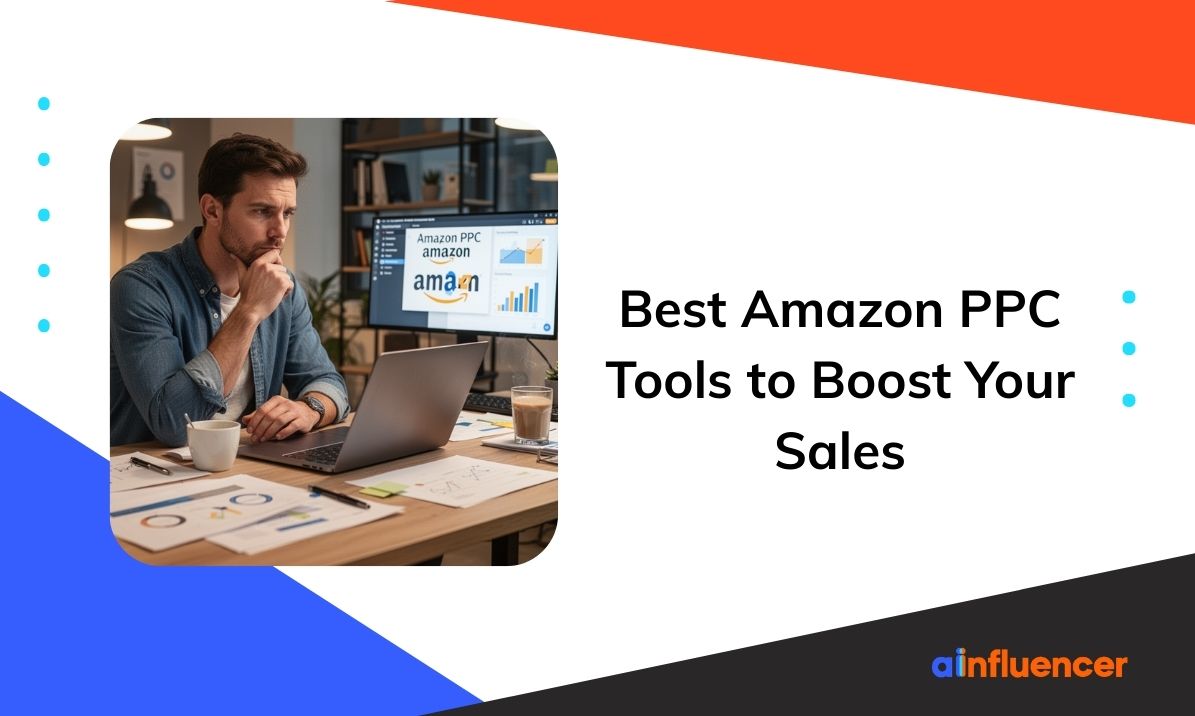
The 12 Best Amazon PPC Tools for 2026
Using the best Amazon PPC tools has become essential for sellers competing in an increasingly competitive marketplace.
With rising CPCs, tighter margins, and smarter competitors, manual campaign management is no longer sustainable. The right software can automate bid optimization, uncover high-converting keywords, control budgets in real time, and systematically reduce ACoS while scaling revenue.
In this guide, we break down the 12 best Amazon PPC tools, comparing their automation models (AI vs. rule-based), pricing structures, scalability, and ideal use cases.
The Best Amazon PPC Tools To Reach Better Sales
Below, we have gathered some of the best Amazon PPC tools to help Amazon sellers boost their sales and reach the top sellers.
Whether you’re launching your first product or managing six-figure ad spend, you’ll find the platform that fits your growth stage, budget, and goals.
1. Jungle Scout
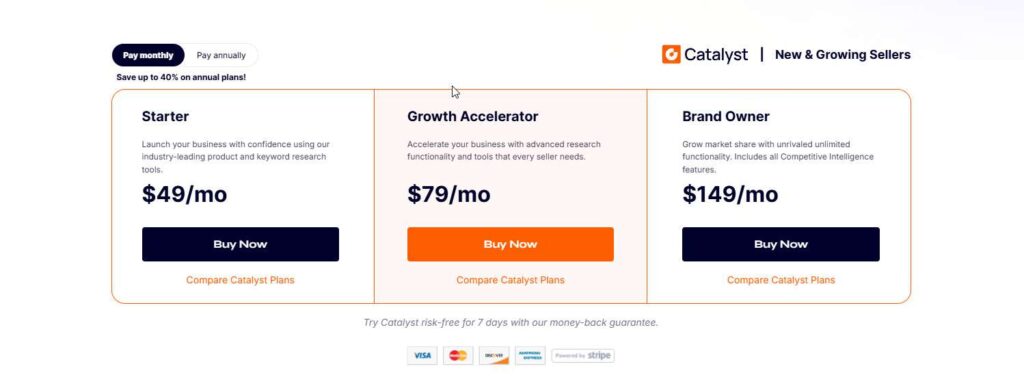
Jungle Scout is one of the best Amazon PPC tools designed to support Amazon sellers at every stage of growth.
It offers two platforms: Catalyst, which helps smaller sellers research, launch, and validate products efficiently, and Cobalt, which provides established brands with advanced analytics, category-level performance insights, and a fully integrated advertising platform.
Cobalt can track up to 20,000 ASINs simultaneously, giving brands detailed visibility into their market share, competitor activity, and advertising ROI.
Key Features:
- Native Amazon Advertising platform for performance correlation.
- Tracks up to 20,000 ASINs (Cobalt).
- Competitive Intelligence with revenue-driving keywords.
- Advertising Analytics aggregating Seller Central and Campaign Manager data.
- Keyword Scout for high-traffic terms.
- Review Automation.
| Pros | Cons |
| Accurate sales estimates (20% better than competitors). | Higher pricing. |
| Easy-to-use interface. | No free trial (7-day money-back guarantee only). |
| Comprehensive features (research + ad optimization). | Complex data for beginners. |
2. Helium 10
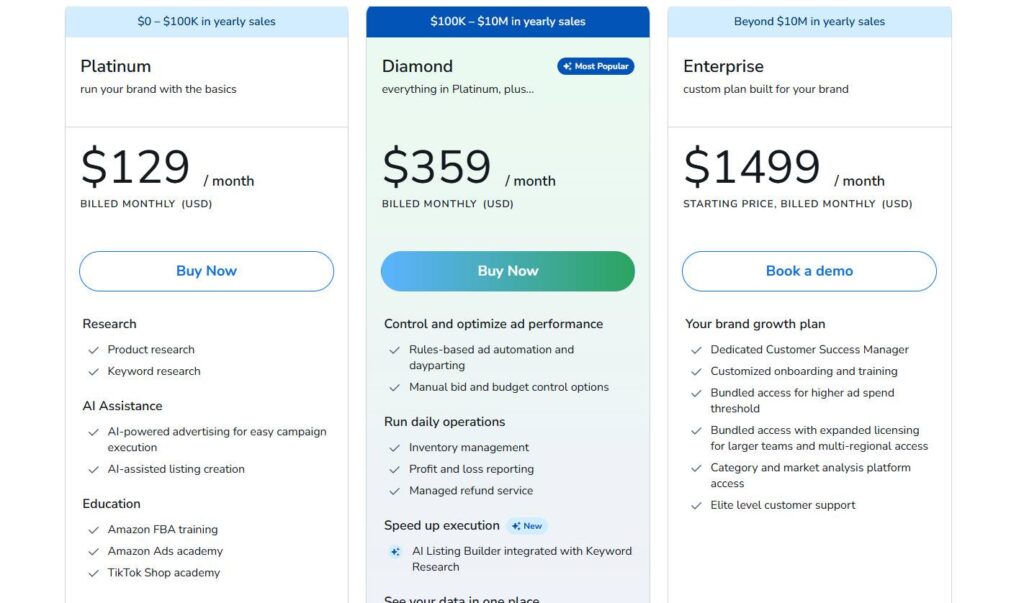
Helium 10 is an all-in-one platform trusted by over 2 million Amazon sellers. It consolidates more than 30 tools covering product research, listing optimization, and advertising management, eliminating the need for multiple subscriptions.
Its AI-powered PPC automation, educational resources, and multi-marketplace support make it suitable for both new sellers looking to learn and experienced sellers managing complex campaigns.
Key Features:
- Helium 10 Ads for AI-driven PPC campaigns.
- Dayparting to schedule ads during peak times.
- Real-time keyword and bid adjustments.
- Search Query Performance Analyzer.
- Chrome Extension for Amazon/Walmart product data.
- Reverse ASIN lookup (Cerebro) and keyword expansion (Magnet).
| Pros | Cons |
| All-in-one platform saves money. | Steep learning curve. |
| Accurate data for product validation. | Higher pricing. |
| Responsive support and regular updates. | The Platinum plan has limited PPC insights. |
3. Perpetua
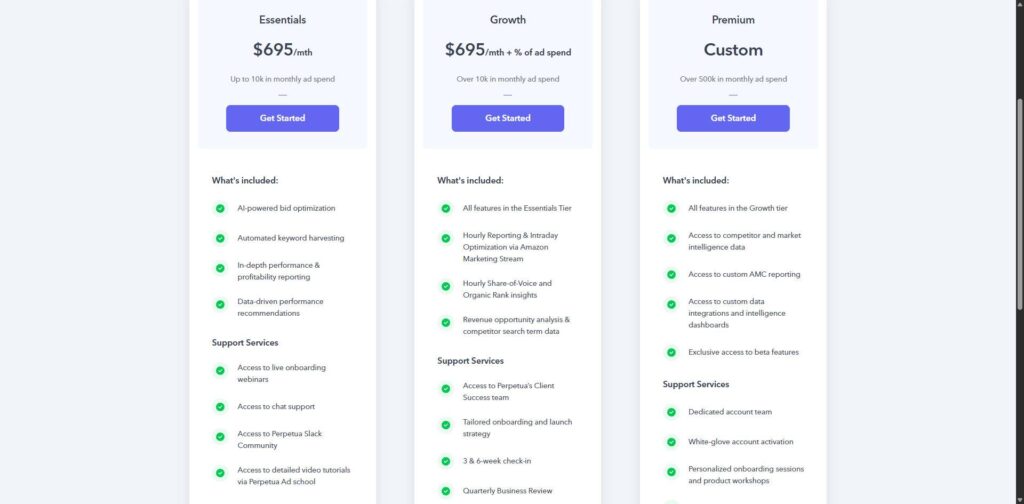
Perpetua is a goal-based Amazon advertising platform that lets brands set high-level objectives, such as maximizing efficiency, sales, or visibility, instead of manually managing bids.
It supports Sponsored Products, Sponsored Brands, Sponsored Display, and Amazon DSP campaigns, while providing automated intraday optimization, hybrid AI-human bid control, and multi-marketplace reporting, helping mid-market brands save time and improve campaign performance.
Key Features:
- AI bid optimization based on strategic objectives.
- Automated intraday bid adjustments.
- Hybrid human + AI bid control.
- Multi-marketplace reporting and automation.
| Pros | Cons |
| Goal-based AI improves efficiency. | Minimal override options. |
| Improves ACoS by 20 to 35%. | Expensive at high ad spend. |
| Cross-marketplace support. | Delayed data by two days. |
4. BidX
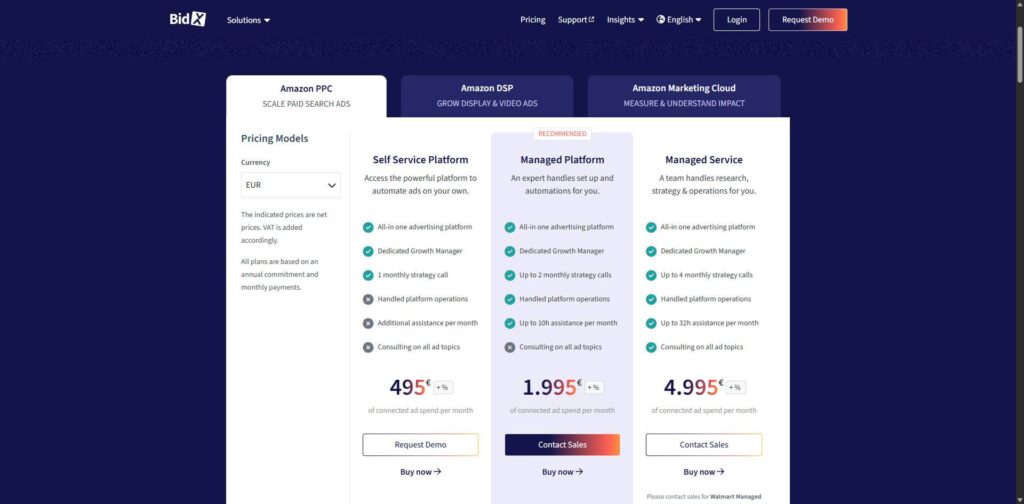
BidX is a rule-based Amazon PPC tool that gives sellers complete control over bid adjustments using IFTTT logic.
Instead of relying solely on AI, users can create highly granular rules and conditions that trigger automated bid changes, making it ideal for agencies or power users who want transparency and precise campaign management across multiple accounts and marketplaces.
Key Features:
- Individual rules for precise bid adjustments.
- 14 metrics supported (ACoS, ROAS, clicks, impressions, etc.).
- Match-type-specific rules.
- Dayparting for peak hours.
- Campaign Creator for faster setup.
| Pros | Cons |
| Maximum rule customization. | Requires understanding IFTTT logic. |
| Detailed bid logs. | Higher starting price. |
| Backed by experts and an Amazon Ads Advanced Partner. | System executes rules without checking logic. |
5. Sellozo
Sellozo provides AI-driven Amazon PPC automation with a predictable flat-fee pricing model that doesn’t scale with ad spend.
Its AI bid optimization, Autopilot campaign creation, and Campaign Studio allow sellers to streamline ad management, while dayparting and heatmaps improve performance visibility.
This makes Sellozo ideal for sellers seeking hands-off automation without surprise costs, streamlining campaigns, and simplifying Amazon affiliate automation.

Key Features:
- AI Bid Optimization for target ACoS.
- Autopilot campaign creation.
- Campaign Studio drag-and-drop workflow.
- Dayparting with heatmap analysis.
- ProductVu Dashboard consolidates sales and profitability.
| Pros | Cons |
| Average 70% increase in ad profit. | 2 to 3 months adaptation period. |
| Flat-fee structure. | Not the cheapest entry-level option. |
| Hands-on onboarding. | Limited advanced customization. |
6. Quartile
Quartile is designed for enterprise brands managing large advertising budgets across multiple channels.
It provides AI-driven hourly bid adjustments, single-keyword and ASIN campaign structures, and integrates with Amazon Marketing Cloud to analyze shopper behavior and purchase paths, combining automation with expert-managed services for improved ROAS and conversion rates.
Key Features:
- Hourly bid adjustments via Amazon Marketing Stream.
- Single keyword and ASIN campaign structures.
- Shopper data integration with Amazon Marketing Cloud.
- Managed services with expert support.
| Pros | Cons |
| +41% ROAS and +33% conversion rate. | High base cost. |
| Advanced AI and human guidance. | Custom pricing not transparent. |
| Multi-channel capability. | Smaller sellers excluded. |
7. SellerApp
SellerApp combines pre-built rule-based automation templates with expert oversight to help sellers optimize campaigns without relying on AI “black boxes.”
Its structured approach includes tools for bid management, wasted click reduction, inventory adjustments, and organic ranking improvements, making it a strong option for small to mid-sized sellers.
Key Features:
- Nine pre-built automation templates.
- Wasted Click Eliminator, ACoS Reducer, Dayparting.
- Inventory Refactoring to prevent stockouts.
- Search Rank Booster for organic growth.
| Pros | Cons |
| Affordable starting price. | Limited real-time optimization. |
| Expert-verified rules. | Amazon-only focus. |
| Structured automation templates. | Few third-party integrations. |
8. Teikametrics
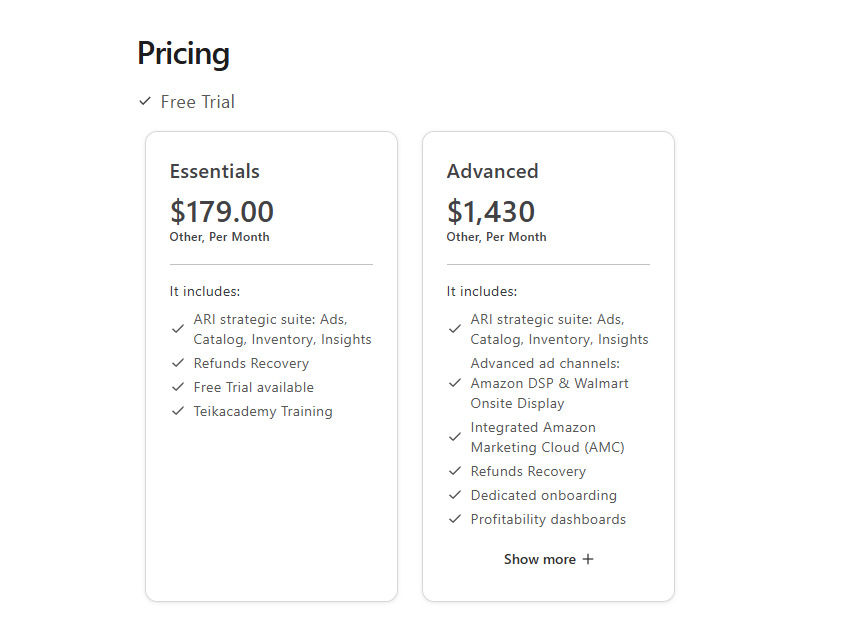
Teikametrics leverages its Flywheel AI engine to optimize Amazon, Walmart, and TikTok Shop campaigns simultaneously.
With cross-marketplace keyword harvesting, inventory-aware pacing, multi-touch attribution, and generative AI for listing optimization, it is ideal for brands running large-scale campaigns who want predictive modeling and multi-channel control.
Key Features:
- Cross-marketplace keyword harvesting.
- AMC audience insights.
- Inventory-aware pacing.
- Multi-touch attribution.
- Generative AI listing optimization.
| Pros | Cons |
| Significant ROAS and sales growth. | Costly for smaller sellers. |
| AI and managed service. | Limited research tools. |
| Multi-marketplace coverage. | Requires high ad spend. |
9. Viral Launch
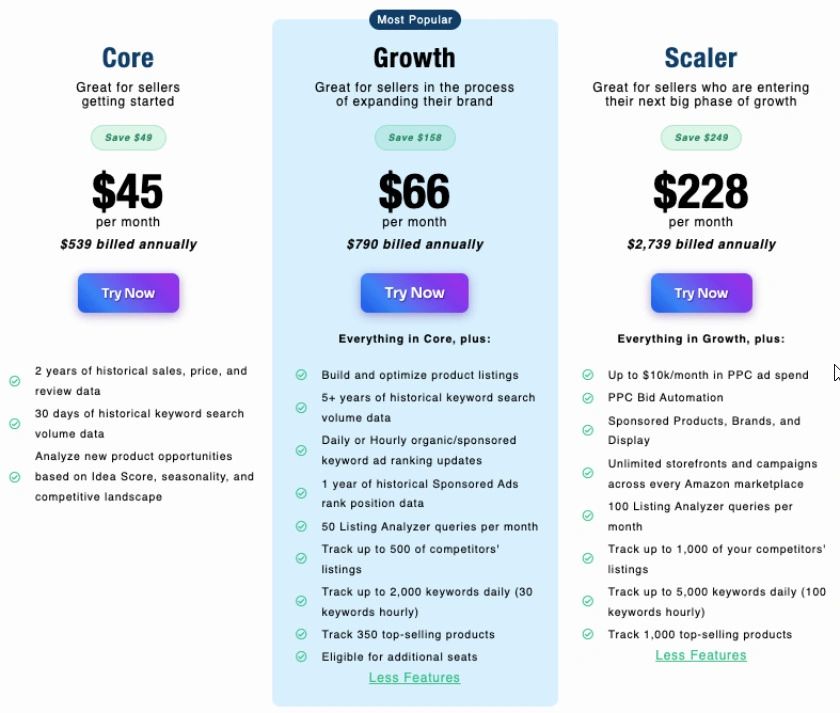
Viral Launch helps sellers launch products successfully while automating PPC campaigns with AdSprout.
Its rule-based system allows custom strategies for keyword discovery, ranking tracking, and campaign management, a good choice for early-stage sellers aiming to increase product visibility and initial sales velocity.
Key Features:
- Rule-based PPC management.
- Pre-made templates and custom strategies.
- Tracks Sponsored Ad Rank Position.
- 24/7 PPC monitoring.
| Pros | Cons |
| Best-in-class launch services. | US marketplace only. |
| Flexible rule-based management. | Advanced features require the Scaler plan. |
| Reliable market intelligence. | Higher pricing than competitors. |
10. Zon.Tools
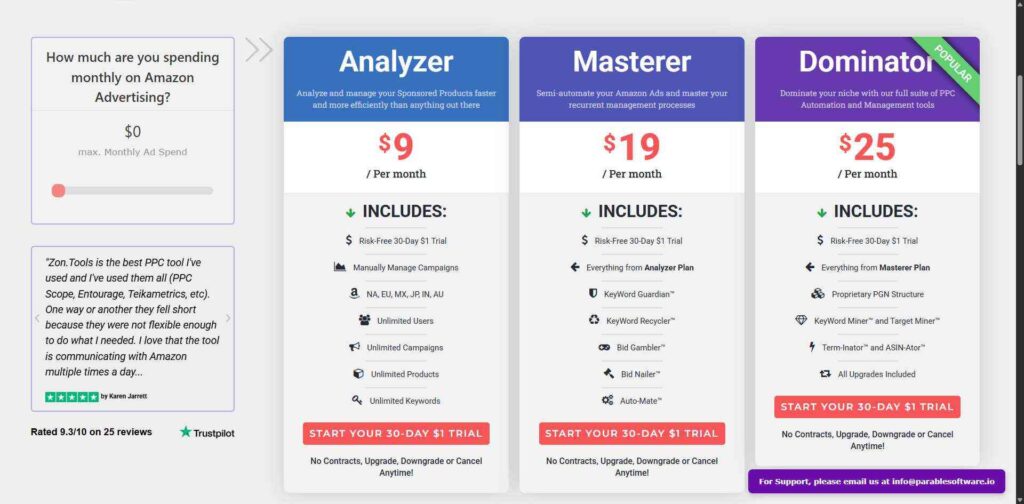
Zon. Tools provide transparent automation across nine engines with frequent updates, giving sellers control over keyword testing and bid adjustments.
It supports all major marketplaces, making it suitable for smaller sellers who want clear visibility into campaign mechanics without opaque AI systems.
Key Features:
- Keyword Guardian, Recycler, Miner, Target Miner.
- Bid Gambler and Bid Nailer automation.
- Supports all major marketplaces.
| Pros | Cons |
| Reduced ACoS from 40% to 28%. | Setup requires PGN understanding. |
| Flexible automation strategies. | Support delays. |
| Frequent updates. | Limited advanced analytics. |
11. Ad Badger
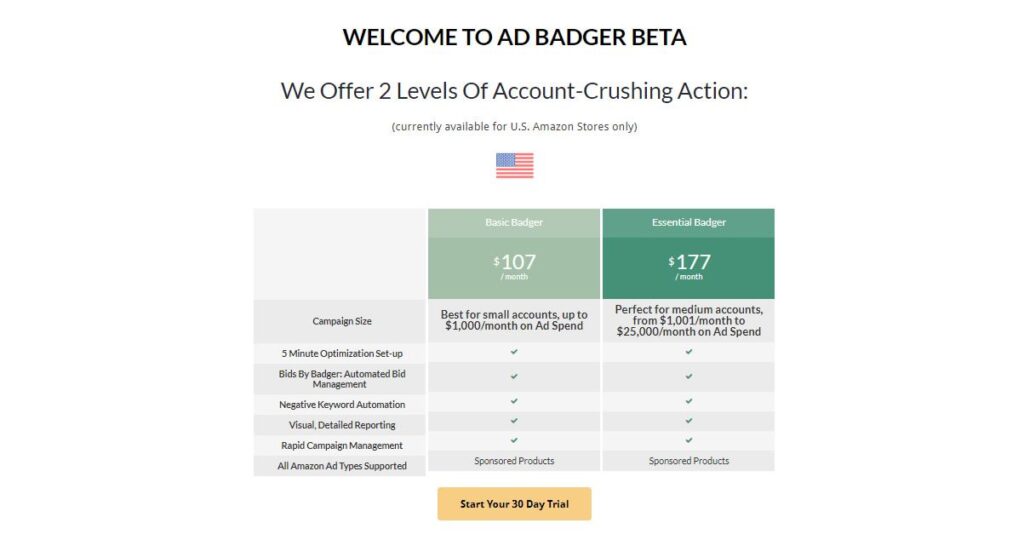
Ad Badger automates bid adjustments and negative keyword management to minimize wasted ad spend.
It tracks product-level performance, stores historical campaign data, and adjusts bids daily, making it an efficient solution for mid-tier sellers seeking automation without AI black boxes.
Key Features:
- Daily micro bid adjustments.
- Negative keyword automation.
- Product-level performance insights.
- Duplicate Hunter.
| Pros | Cons |
| Saves 80% of PPC management time. | Lacks cost-of-goods reporting. |
| Lower cost for mid-tier budgets. | Performance lag at $100K+ spend. |
| Transparent automation. | Manual approvals slow execution. |
12. Sellerboard
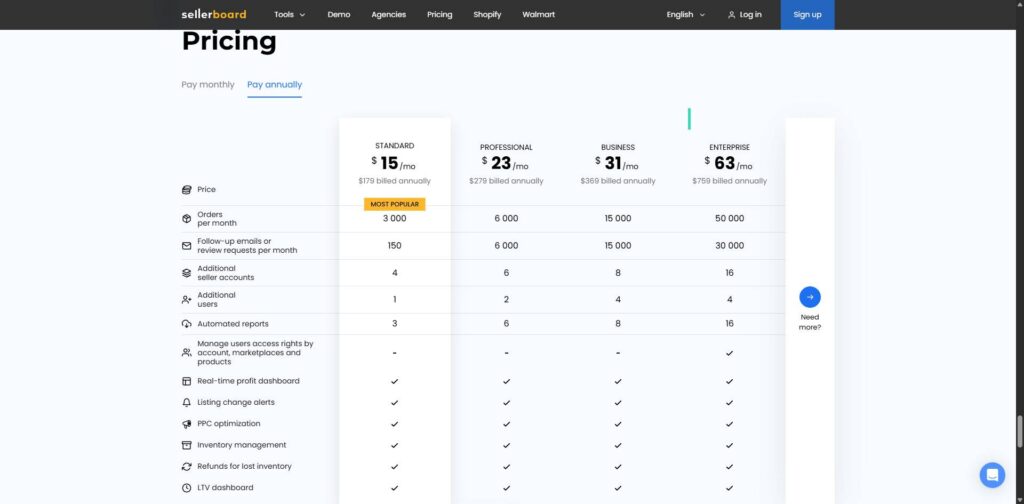
Sellerboard combines real-time profit dashboards with automated PPC optimization, providing Amazon sellers with precise profit tracking, bid control, bulk editing, and keyword harvesting.
Its features are ideal for small to mid-sized sellers seeking visibility into profitability while managing ad campaigns efficiently.
Key Features:
- Real-time profit tracking.
- Automated bid optimization.
- Direct campaign editing and bulk editing.
- Keyword harvesting automation.
| Pros | Cons |
| Starting at $15/month. | Amazon-only. |
| Detailed cost tracking. | Slower performance. |
| PPC optimization at all tiers. | Limited integrations. |
What Is Amazon PPC Software & How It Works
Amazon PPC software automates the management of pay-per-click advertising campaigns on Amazon’s marketplace. These platforms handle bid adjustments, keyword discovery, and budget allocation without constant manual intervention.
Understanding Amazon Pay-Per-Click Advertising
Amazon PPC operates as an auction-style system where sellers bid on keywords. You pay only when shoppers click your ad. The platform charges one cent more than your competitor’s bid.
For example, if you bid $3.00 and your competitor bids $1.00, Amazon charges you $1.01 for that placement.
Ad rank determines placement visibility. Amazon calculates this using click-through rate history, conversion rate, total sales, product descriptions, search terms, and your bid amount. Higher ad rank places your product on page one versus page four of search results.
The Three Types Of Amazon PPC Campaigns
Sponsored Products promote individual listings within search results and product pages. These ads appear throughout the customer journey and should comprise the majority of your advertising budget.
They use keyword targeting with broad, phrase, and exact match types. Sponsored Brands showcase your logo, custom headline, and three products at the top of search results.
These ads build brand awareness and require Amazon Brand Registry enrollment. They typically carry a higher cost-per-click than Sponsored Products.
Sponsored Display targets shoppers both on and off Amazon based on browsing behavior rather than keywords.
These ads retarget customers who viewed your products within 30 days but didn’t purchase. According to Amazon, sellers using Sponsored Display audiences see up to 82% of sales from new-to-brand customers.
Why Manual PPC Management Is Challenging
Manual campaign management consumes excessive time and resources, limiting scalability and preventing sellers from implementing effective Amazon sales increase strategies. Data shows 68% of sellers spend over 5 hours weekly making manual adjustments.
This approach produces an 18% error rate during peak seasons. Manual processes lead to decision fatigue after analyzing 200+ data points per session.
Consequently, sellers make poorer choices and experience 15-20% lower conversion rates compared to automation. Budget control suffers too, resulting in 23% more overspending incidents.
Key Features To Look For In The Best Amazon PPC Tools
Selecting the best Amazon PPC tools requires understanding which features deliver measurable results. Your software should handle repetitive tasks while providing actionable insights.
Bid Management & Automation
Best Amazon PPC tools offer two automation approaches: AI-driven and rule-based systems. AI platforms adjust bids automatically using machine learning algorithms that analyze historical performance patterns.
Rule-based tools let you set specific conditions for bid changes, such as increasing bids when ACoS drops below target thresholds.
Hybrid bidding systems provide the most flexibility. These combine automated calculations with manual control mechanisms, allowing you to plug existing campaigns into the tool rather than launching new structures.
The most effective platforms use Revenue-Per-Click bidding methods to calibrate CPCs for hitting the target ACoS.
Keyword Research & Harvesting
Keyword harvesting identifies high-performing search terms from auto and broad match campaigns. The process involves isolating these terms and moving them to manual campaigns for precise bid control.
Harvested keywords deliver 34% lower CPC and 2.1 times higher conversion rates helping sellers not only optimize ads but also rank Amazon products organically.
Quality Amazon PPC software automates this process by extracting search terms based on your performance criteria. Effective tools also handle negative keyword matching, stopping bids on low-performing terms that waste budget.
Performance Analytics & Reporting
Robust reporting tracks CTR, conversion rates, CPC, ACoS, and ROAS across campaigns. Advanced platforms separate organic sales data from ad revenue, providing clear performance visibility.
You need search term analysis, placement statistics, and SKU-level segmentation for informed decisions.
Budget Control & Optimization
Schedule-based budget rules increase spending during events like Prime Day. Performance-based rules adjust budgets when campaigns hit ROAS or conversion rate thresholds.
Automated budget optimization dynamically allocates funds to best-performing ad groups using real-time signals.
Dayparting Capabilities
Dayparting schedules ads during high-converting hours. According to case studies, implementing dayparting increased conversion rates by 30% during selected timeframes.
This feature reduces wasted spend during low-traffic periods and maximizes visibility when customers actively purchase.
Multi-Marketplace Support
Cross-country campaign management requires tools that handle multiple marketplaces simultaneously. The best PPC tools provide unified audience targeting across regions while respecting local policies.
How To Choose The Right Amazon PPC Software For Your Business
The right platform depends on your data maturity, monthly ad spend, and operational capacity. Choosing among the best Amazon marketing services ensures you consistently reduce wasted spend and improve efficiency.
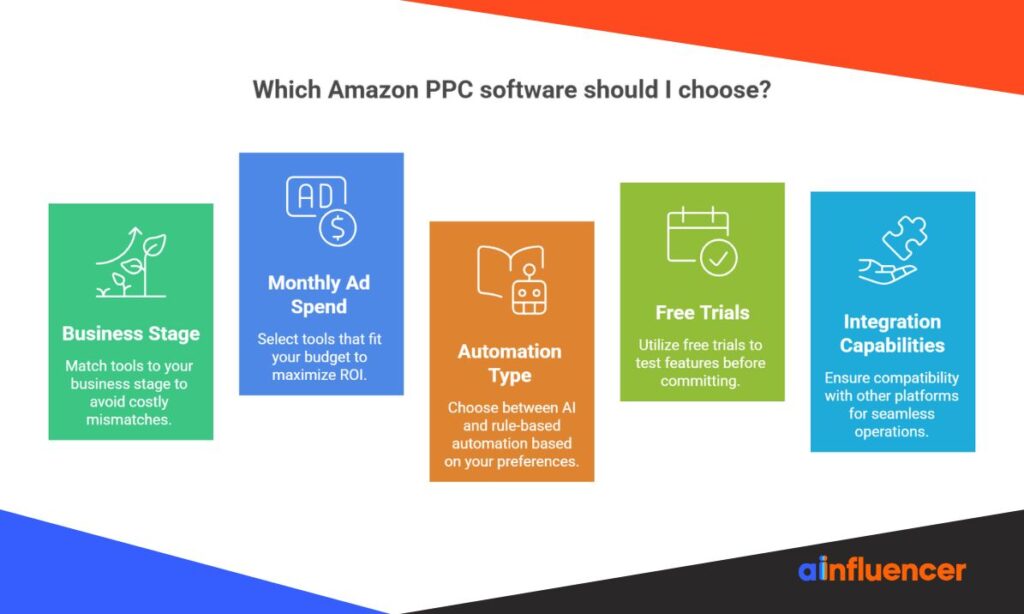
Match Tools To Your Business Stage
New sellers with limited data should avoid aggressive AI automation. Statistical noise corrupts AI decisions when data volume stays low.
You need twelve months of performance data before AI models make accurate suggestions. Initially, rule-based tools like BidX or SellerApp provide better control.
Established sellers with reliable conversion data benefit from AI platforms like Perpetua or Teikametrics.
Consider Your Monthly Ad Spend
Spending under $5,000 monthly suits entry-level Amazon PPC tools like Zon.Tools or Sellozo. Mid-tier budgets between $10,000-$50,000 fit platforms like Helium 10 or PPC Entourage.
High-volume advertisers exceeding $50,000 need enterprise solutions like Quartile. Pricing structures vary between flat fees and percentage-based models.
Evaluate AI Vs Rule-Based Automation
AI automation suits sellers wanting hands-off management and struggling with high ACoS.
Rule-based systems fit experienced advertisers preferring full campaign control. Most sellers start with AI, then transition to rules-based as knowledge grows.
Test With Free Trials
Free trials last 14-30 days typically. Before committing, test automation rules and reporting features.
Check Integration Capabilities
Verify compatibility with inventory management and analytics platforms. Most PPC tools connect through the Amazon Advertising API for real-time sync.
Which Amazon PPC Tools Actually Use AI, and When It Helps
Nearly every tool on this list now says AI somewhere on its pricing page, and the word covers at least three different things. Knowing which one you are buying matters more than the label does.
Three different things sold as AI
Rules with a scheduler. You set the condition and the threshold, the software applies it on a timer. This is automation rather than AI, and it is often what you actually want: it is predictable, you can explain every bid change, and nothing happens that you did not specify.
Statistical bid optimisation. The tool models conversion probability per keyword and moves bids toward a target ACoS or TACoS. This is genuine modelling and it is where most of the measurable gain comes from. It needs volume to work: on a keyword with four conversions a month there is nothing to model, and the tool will mostly add noise.
Generative features. Copy suggestions, negative-keyword drafting, campaign structure proposals. Useful for saving setup time, unrelated to bid performance, and the part most likely to appear in the demo and least likely to change your ACoS.
When automated bidding is worth paying for
The honest threshold is ad spend, not ambition. Below roughly $5,000 a month in spend, most accounts do not generate enough conversion data per keyword for a model to beat a careful human running a handful of rules, and the software fee is a real percentage of the budget. Between $5,000 and $50,000 is where automated bidding usually pays for itself, because there are more keywords than anyone can review weekly but still enough data per keyword to be meaningful. Above that, the question stops being whether to automate and becomes which tool’s reporting you trust enough to act on.
Two tests before you commit. Ask what the tool does in its first two weeks: a model that starts bidding immediately on no data is guessing, and a good answer describes a learning period. And ask whether you can see and override every change it makes, because a tool that cannot show you why a bid moved is a tool you cannot debug when performance drops.
What no bidding tool fixes
None of them rescue a listing that does not convert. If your detail page converts at 5% against a category norm of 12%, automated bidding will efficiently find the cheapest clicks on a page that wastes them, and the dashboard will show an improving ACoS while absolute sales stay flat. Fix conversion first: everything in this list optimises traffic, not the page it lands on.
Final Thoughts
Using the best Amazon PPC tools is no longer optional for sellers who want predictable growth; they’re essential in a marketplace where rising CPCs and complex auction dynamics directly impact margins.
The right platform depends on your data maturity, monthly ad spend, and operational capacity, whether you need rule-based precision, AI-driven scalability, or enterprise-level multi-channel control.
Ultimately, the best Amazon PPC software should consistently reduce wasted spend, improve conversion efficiency, and deliver clear profitability insights beyond basic ACoS.
FAQs
Do I need a PPC tool, or can I just manage campaigns manually?
PPC tools mainly speed up bid adjustments, keyword harvesting, and reporting; they don’t magically replace a good strategy. Most sellers use them because manual work becomes inefficient and error-prone as campaigns grow, not because tools replace human decisions entirely.
Can sellers with small budgets still run profitable Amazon PPC campaigns?
Yes, small budgets can be profitable if you start focused: use exact-match keywords, aggressively add negative keywords to reduce waste, and optimize listings first. This approach minimizes wasted clicks and gets better ROI from limited spend.
What’s the difference between ACoS and TACoS, and which matters more?
ACoS only measures ad spend vs. sales from ads, while TACoS includes total sales (paid + organic). Long-term profitability relies more on TACoS because it shows whether ads are helping overall growth, not just individual ad sales.
Which Amazon PPC tools actually use AI?
Most of them claim it, and the word covers three different things: rules on a scheduler, which is automation rather than AI; statistical bid optimisation that models conversion probability per keyword, which is where the measurable gain comes from and which needs volume to work; and generative features for copy and negative keywords, which save setup time but do not change ACoS. Ask a vendor which of the three you are buying.