The 15 Best Amazon Marketing Services for 2026
If you’re not leveraging the best Amazon marketing services, you’re leaving revenue on the table.
The right Amazon marketing partner can transform stagnant listings into scalable assets by aligning PPC, SEO, and creative strategy with measurable growth goals.
In today’s marketplace, success on Amazon requires more than ads; implementing Amazon sales increase strategies combining SEO, PPC, and creative content drives sustainable growth.
The Best Amazon Marketing Services
Choosing the right Amazon marketing services can make all the difference in becoming a top seller on Amazon, helping your brand scale profitably instead of struggling with rising ad costs.
1. Sellozo
Sellozo is a dedicated Amazon PPC automation platform built for sellers who want algorithmic bid optimization without daily manual management.
Unlike traditional agencies, Sellozo operates as a software-first solution, using AI to dynamically adjust bids based on performance targets such as ACoS and profitability thresholds. Sellers using automation tools like Sellozo typically aim to reduce wasted ad spend while maintaining sales velocity.
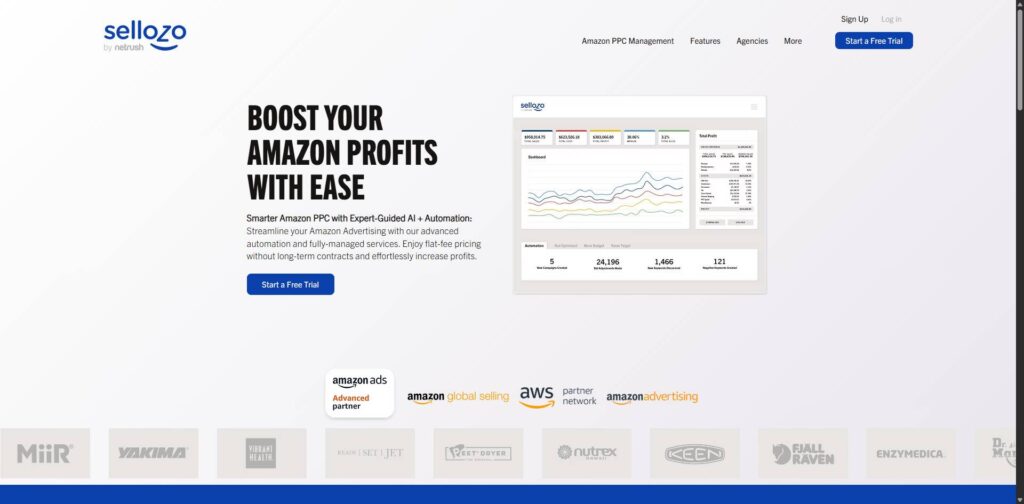
The platform is particularly suited to sellers who want transparency and control while minimizing hands-on campaign adjustments. Its visual Campaign Studio and rule-based automation make it attractive to brands managing multiple SKUs but lacking in-house PPC analysts.
Key Decision Factors:
- Primary Strength: AI-driven bid optimization and automation.
- Pricing Model: Flat monthly fee (no % of ad spend).
- Minimum Investment: $250/month.
- Ideal For: 1-1000 SKU sellers wanting hands-off PPC management.
- Not Ideal For: Brands seeking full-service Amazon account management.
- Standout Feature: Visual campaign builder + automated keyword harvesting.
- Best Use Case: Reducing manual PPC workload while maintaining ACoS targets.
2. The Amazing Marketing Co.
The Amazing Marketing Co. is a boutique Amazon agency founded by experienced sellers, primarily serving health and wellness brands.
PPC Boost section, or when discussing organic visibility alongside ads.With over $20M in Amazon sales managed and 300+ brands supported, the agency positions itself as a full-channel growth partner rather than just a PPC provider.
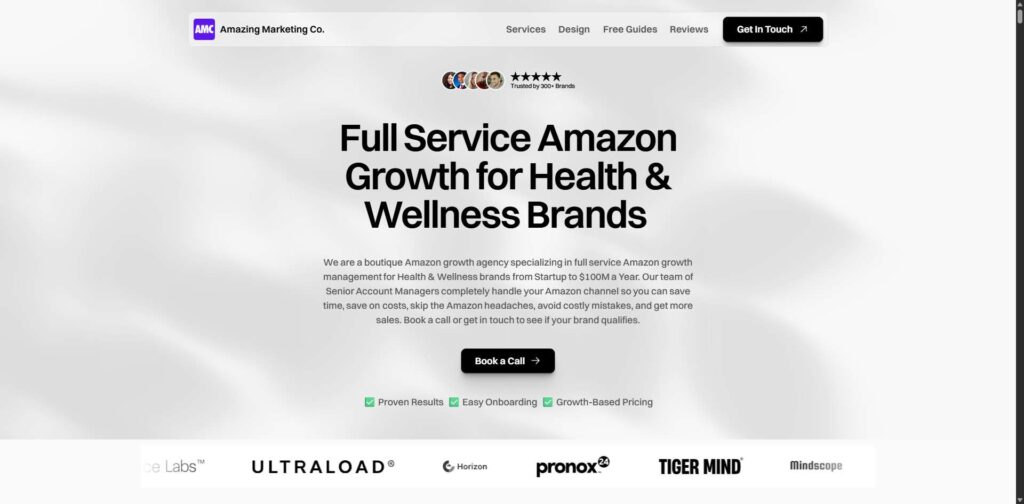
Their approach integrates PPC, SEO, optimizes Amazon listing, and inventory management under one strategy umbrella. This makes them appealing to brands looking to outsource Amazon operations entirely instead of managing multiple freelancers or tools.
Key Decision Factors:
- Primary Strength: Full Amazon channel management.
- Pricing Model: Revenue-based (1-10%) + base fee.
- Minimum Investment: $3,000/month.
- Ideal For: Established wellness brands scaling aggressively.
- Not Ideal For: Small sellers under $20K/month revenue.
- Geographic Focus: Primarily U.S.
- Standout Feature: Integrated operations + strategic growth consulting.
3. The Amazon Blueprint
The Amazon Blueprint helps sellers scale revenue with data-backed frameworks, including inventory forecasting, catalog expansion, and Amazon pricing strategy to maximize profit margins.
Rather than acting as an agency, it provides a systematic roadmap covering profitability analysis, inventory forecasting, catalog expansion, and advertising optimization.
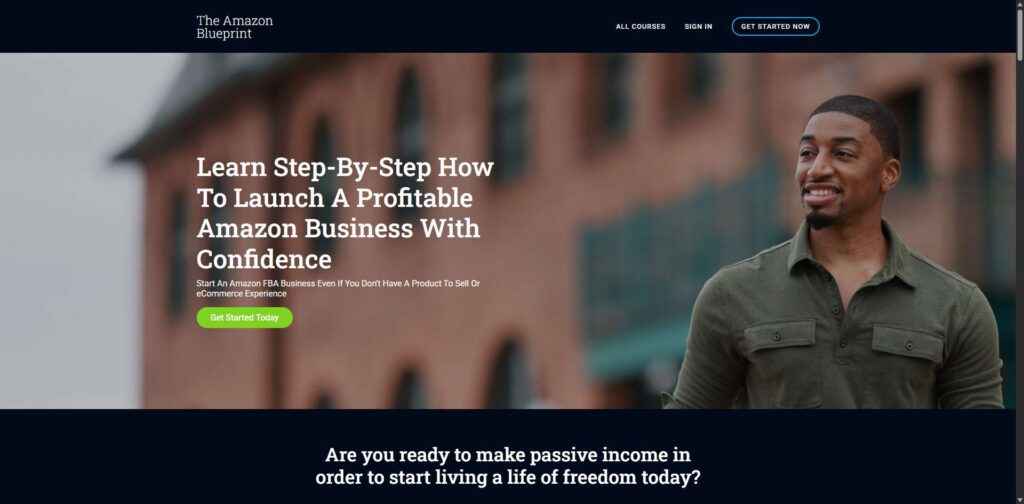
It is best suited for sellers who prefer control over implementation but want proven processes. Reported results often include revenue scaling within months, though performance depends heavily on execution quality and available capital.
Key Decision Factors:
- Primary Strength: Step-by-step profitability-focused framework.
- Pricing Model: One-time investment tiers.
- Minimum Investment: $1,500+.
- Ideal For: Mid-level sellers scaling from 5 to 6 figures monthly.
- Not Ideal For: Beginners with no product-market fit.
- Standout Feature: Emphasis on profit margins over vanity revenue metrics.
4. PPC Boost
PPC Boost specializes in branded keyword advertising strategies designed to dominate SERP real estate.
Their strategy focuses on capturing high-intent shoppers already searching for your brand name, often resulting in higher CTR and lower CPC compared to broad category terms.
This service is particularly useful for brands facing competitor bidding on branded keywords or seeking to maximize both paid and organic search visibility simultaneously.
Key Decision Factors:
- Primary Strength: Branded keyword domination.
- Pricing Model: Monthly retainer ($1,500+).
- Ideal For: Established brands with existing search volume.
- Not Ideal For: New brands without brand recognition.
- Risk Consideration: Potential organic cannibalization.
- Best Use Case: Defending brand SERP presence.
5. Nuver Digital
Nuver Digital operates as a performance marketing agency integrating Amazon with Meta, Google, TikTok, and Shopify ecosystems.
This model is particularly effective for brands already investing in multi-channel marketing and looking to unify data, forecasting, and profitability modeling under one strategic framework.
Brands can scale faster by combining advertising with Amazon affiliate automation, enabling affiliates to drive additional sales without extra manual work.
Key Decision Factors:
- Primary Strength: Cross-channel integration.
- Pricing Model: Custom + ad-spend based.
- Ideal For: Established DTC brands scaling internationally.
- Not Ideal For: Amazon-only sellers.
- Standout Feature: Fractional CMO-level strategic oversight.
6. Tale Digital
Tale Digital focuses specifically on the UK Amazon marketplace, offering localized expertise in British consumer behavior, VAT compliance, and regional keyword strategy.
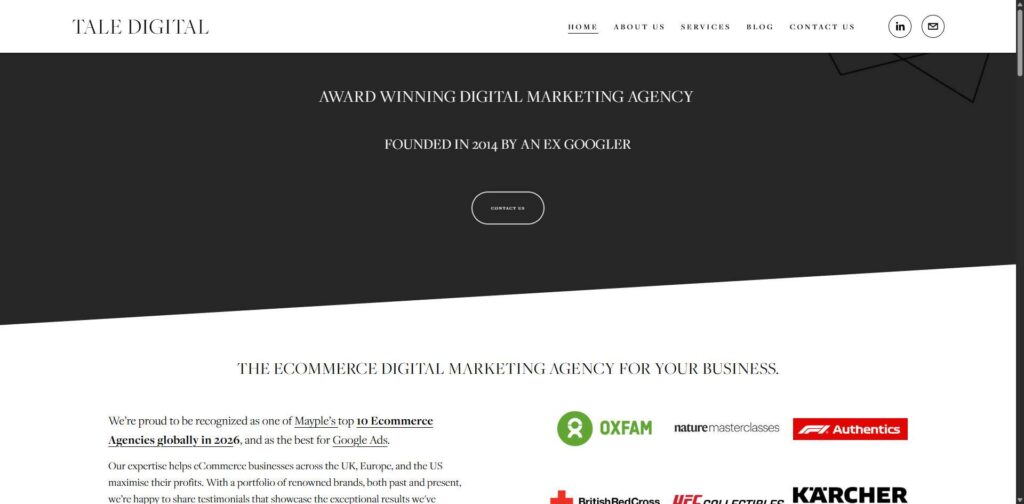
Their specialization makes them particularly valuable for brands entering or scaling within the UK. Instead of broad global management, they prioritize regional depth and marketplace-specific optimization.
Key Decision Factors:
- Primary Strength: UK marketplace specialization.
- Pricing Model: £1,200+ monthly.
- Ideal For: UK-based sellers or US brands entering the UK.
- Not Ideal For: US-only expansion strategies.
- Standout Feature: UK VAT + compliance expertise.
7. Pink Owl Media
Pink Owl Media positions itself as a boutique growth agency offering personalized strategy rather than standardized campaign templates.
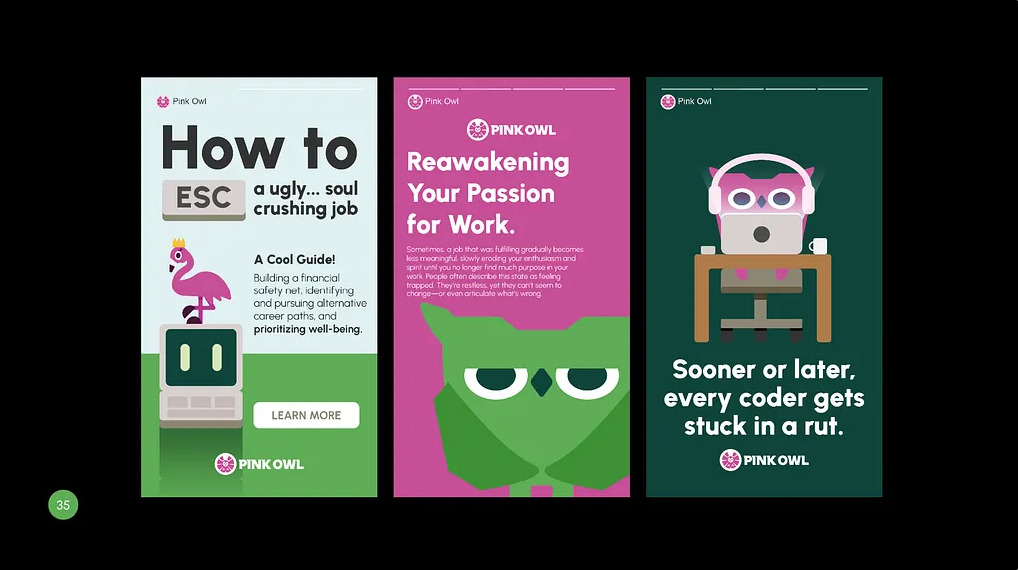
With over a decade in ecommerce marketing, they emphasize targeted customer acquisition and brand-focused scaling.
Their model appeals to brands seeking closer collaboration and granular performance management.
Key Decision Factors:
- Primary Strength: Personalized growth strategies.
- Pricing Model: $2,000+ monthly.
- Ideal For: Fashion, beauty, CPG brands.
- Not Ideal For: Budget-constrained startups.
- Standout Feature: High client retention + transparent reporting.
8. Pixated
Pixated differentiates itself through full-funnel marketing systems that align awareness, consideration, and conversion stages. Rather than optimizing campaigns in isolation, they integrate PPC with broader funnel design and website optimization.
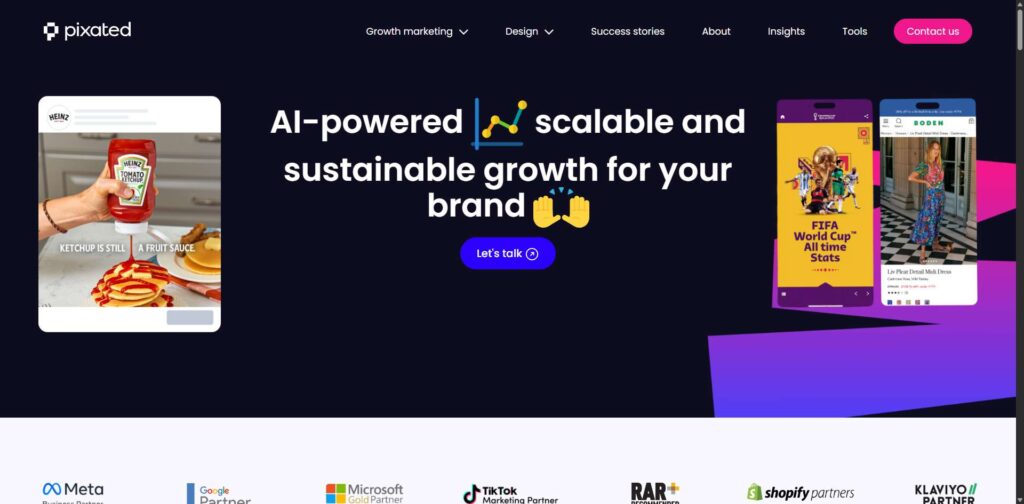
This approach is suited to brands seeking structured scaling backed by conversion rate improvements and performance tracking.
Key Decision Factors:
- Primary Strength: Full-funnel revenue strategy.
- Minimum Project Size: $5,000+.
- Ideal For: Established mid-to-large brands.
- Not Ideal For: Early-stage sellers.
- Standout Feature: Conversion rate uplift focus.
9. Sequence Commerce
Sequence Commerce specializes in cross-border marketplace expansion, managing campaigns across multiple Amazon regions and additional platforms like Walmart and TikTok Shop.
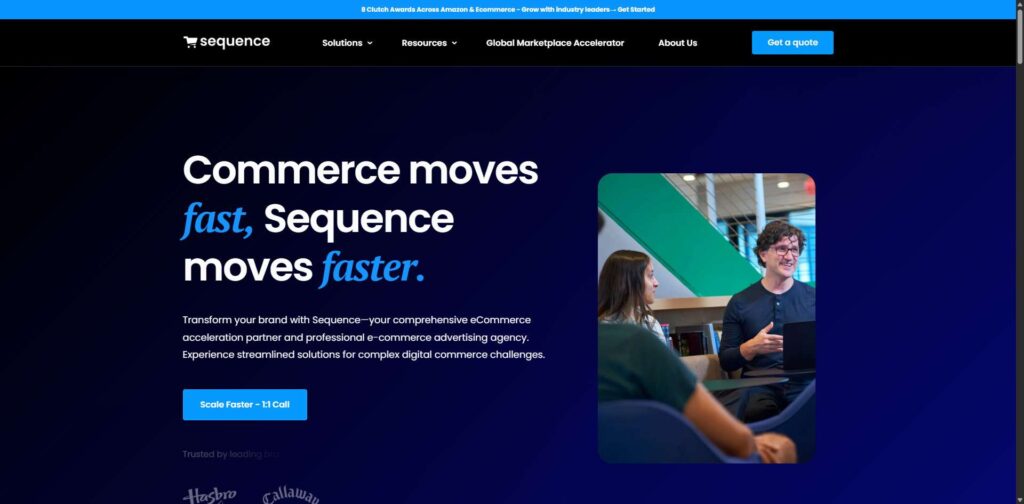
Their infrastructure supports localization, currency adaptation, and international advertising compliance.
This makes them suitable for brands entering multi-market growth phases.
Key Decision Factors:
- Primary Strength: International marketplace management.
- Minimum Project Size: $1,000+.
- Ideal For: Brands expanding globally.
- Not Ideal For: Single-market micro sellers.
- Standout Feature: Multi-language campaign execution.
10. 9 AM
9 AM is a performance-driven Amazon PPC agency focused on measurable ROI and rapid scaling. With significant ad spend managed, they emphasize iteration cycles, attribution modeling, and structured campaign growth.
Their methodology appeals to sellers prioritizing aggressive performance marketing.
Key Decision Factors:
- Primary Strength: ROI-first PPC scaling.
- Pricing Model: Performance/ad-spend based.
- Ideal For: Established private label brands.
- Not Ideal For: Sellers seeking full operational outsourcing.
- Standout Feature: Advanced attribution tracking.
11. inBeat
inBeat combines influencer-driven UGC production with Amazon advertising management. This hybrid approach strengthens creative assets while optimizing paid performance.
Brands targeting younger demographics or requiring authentic video content benefit most from this model.
Key Decision Factors:
- Primary Strength: UGC + PPC integration.
- Pricing Model: Performance + project-based.
- Ideal For: CPG, fashion, lifestyle brands.
- Not Ideal For: Sellers needing only backend PPC.
- Standout Feature: Access to vetted creator network.
12. AMZPPC
AMZPPC differentiates itself through commission-based pricing tied directly to advertising performance. This alignment model appeals to brands wanting accountability tied to measurable growth rather than fixed retainers.
Their focus remains exclusively on Amazon PPC.
Key Decision Factors:
- Primary Strength: Commission-based PPC model.
- Minimum Project: $1,000+.
- Ideal For: Sellers seeking incremental growth
- Not Ideal For: Brands needing full-service account management.
- Standout Feature: Financial analysis integration into bidding.
13. Blue Wheel Media
Blue Wheel Media specializes in removing unauthorized sellers and enforcing MAP policies. Their services extend beyond advertising into intellectual property enforcement and counterfeit monitoring.
This is critical for premium brands protecting long-term brand equity.
Key Decision Factors:
- Primary Strength: Brand protection & enforcement.
- Pricing Model: Custom.
- Ideal For: Established brands with counterfeit issues.
- Not Ideal For: Early-stage sellers.
- Standout Feature: Dedicated IP protection team.
14. Disruptive Advertising
Disruptive Advertising focuses on improving TACOS and total profitability rather than isolated ad metrics. Their strategy emphasizes conversion rate optimization and structured testing.
This appeals to brands experiencing high ad spend with inconsistent returns.
Key Decision Factors:
- Primary Strength: Conversion-focused PPC strategy.
- Pricing Model: Custom.
- Ideal For: Brands with scaling budgets.
- Not Ideal For: Micro sellers.
- Standout Feature: Strategy-first optimization methodology.
15. Power Digital
Power Digital operates as a tech-enabled growth firm integrating Amazon into a broader DTC and retail ecosystem. Their proprietary analytics systems connect marketplace revenue with holistic marketing performance.
This makes them ideal for brands requiring advanced attribution and cross-channel measurement.
Key Decision Factors:
- Primary Strength: Omnichannel integration.
- Pricing Model: Custom enterprise-level.
- Ideal For: Established multi-channel brands.
- Not Ideal For: Amazon-only sellers.
- Standout Feature: First-party data analytics platform.
How to Vet an Amazon Agency Before You Sign
Fifteen credible options is a shortlist, not a decision. These are the checks that separate them, in the order worth doing them.
“Award-winning” is usually not a credential
It is the phrase most searched alongside Amazon marketing services, and it is the one worth trusting least. There is no recognised industry award for Amazon agencies in the way there is for, say, architecture. Most “award-winning” claims trace back to programmes the agency entered and paid to enter, or to an internal category invented for the press release. A claim with no named awarding body, no year and no category is decoration.
What is checkable is the Amazon Ads Partner Network. Amazon publishes three tiers, Registered, Advanced and Verified, and runs a public partner directory you can search yourself rather than taking an agency’s word for it. If a prospective partner claims status, find them in that directory before the first call.
One caveat that matters, and that agencies rarely volunteer: Amazon describes these as recognition of expertise and engagement with Amazon Ads, not as performance scores. A Verified badge tells you the agency meets Amazon’s bar on spend, certifications and reviews. It does not tell you they grew anyone’s margin. Treat it as a filter for the shortlist, never as the reason to hire.
Reporting is where agencies differ most
“Transparent reporting” is in the pitch deck of every agency on this list, so ask for the specifics instead:
- Can you see the ad account directly? You should own it and grant the agency access, not the reverse. An agency that runs your ads inside its own account can take your campaign history with it when you leave.
- Does the report show TACoS, or only ACoS? ACoS alone makes any campaign look efficient while total sales stagnate. TACoS is the number that shows whether advertising is building the business.
- Is spend reported against contribution margin? Revenue growth bought below your margin is a loss presented as a win.
- Who writes the commentary? A dashboard is not a report. The value is someone telling you what changed and what they are doing about it.
Checking an agency is legitimate
A fast, unglamorous list that catches most of the problems:
- Find them in the Amazon Ads partner directory.
- Ask for two references in your category, at your revenue, and call them.
- Ask who will actually run the account day to day, and speak to that person before signing. At every size, the person in the pitch is often not the person on the account.
- Read the exit terms first. A 30-day notice with a written handover list is normal; a 12-month lock-in on a first engagement is not.
- Check how long the company has existed and whether its own site states a registered business address.
What it costs, and the three pricing models
Retainers buy dedicated management time and typically start in the low four figures monthly for smaller accounts. Percentage of ad spend, commonly in the mid single digits to low teens, aligns the agency with scale but rewards spending more rather than spending well. Percentage of revenue aligns with growth, and the whole question is what the percentage applies to: charged on total account revenue you pay for sales you would have made anyway, so insist it applies to incremental revenue above an agreed baseline from a stated period.
Whichever model, the test is the same. Ask what happens to the fee in a month where the right decision is to spend less.
Agency, software, or in-house
These three get confused and the wrong one is expensive. Below roughly $5,000 a month in ad spend, the data per keyword is too thin for either a tool or an agency to beat a careful founder, and fees are a real share of the budget. Between $5,000 and $50,000 is where outsourcing usually pays, because there are more keywords than anyone can review weekly. Around $100,000 a month a full-service retainer costs roughly what one competent in-house manager costs, so the choice becomes agency breadth against one person’s attention and institutional memory. Pick on your bottleneck, not on price: buy the agency if the gap is skill, hire the person if the gap is that nobody owns the account daily.
Conclusion
Choosing the best Amazon marketing services is no longer optional for brands that want to compete seriously. With sponsored listings dominating search results and ad costs steadily increasing, strategic execution matters more than ever.
The key is alignment. Sellers needing automation may benefit from AI-driven tools, while established brands often require full-service management or specialized brand protection.
When chosen carefully, an Amazon marketing partner doesn’t just manage campaigns; it supports sustainable, long-term marketplace growth.
FAQs
How do I measure if an Amazon marketing service is delivering results?
Track key metrics like ACoS, TACoS, organic rankings, conversions per click, and overall profitability. Ask the agency for regular, transparent reports showing real impact.
Should I use an agency or manage Amazon marketing in-house?
Agencies help if you lack PPC expertise or need multi-service support. In-house work is fine if you have skilled staff and tools, but agencies save time and reduce mistakes.
What are the common pitfalls when hiring an Amazon marketing agency?
Avoid vague promises, cookie-cutter strategies, or agencies that lack transparency. A good agency shares clear reporting, case results, and tailors strategies to your brand.