Influencer marketing for startups has become one of the most practical growth channels for startups operating with limited budgets. In practice, it consistently outperforms traditional advertising because audiences respond to people they already trust, not brand messages pushed through paid media.
Partnering with the right creators accelerates awareness and delivers higher-quality leads without the cost of large paid campaigns. This guide breaks down how startups can approach a better influencer marketing strategy in the coming year.
How to Master Influencer Marketing for Startups
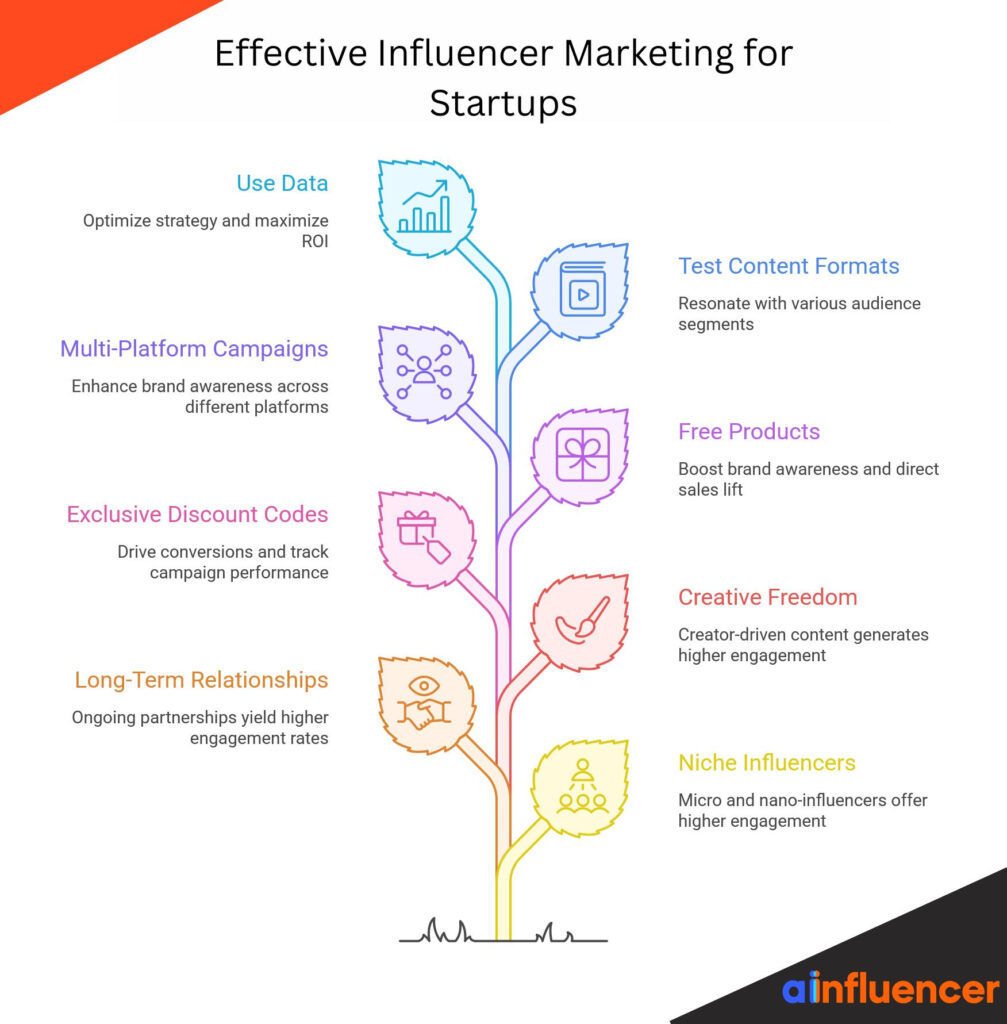
Ready to put influencer marketing for startups into action? These eight battle-tested tactics will help you maximize results while keeping your budget intact.
1. Start with Niche Influencers
For startups with limited resources, nano-influencers and micro-influencers deliver impressive results. Micro-influencers maintain strong relationships with their followers and effectively target specific audiences, making them perfect partners for early-stage companies.
Nano-influencers offer even higher engagement rates, averaging around 7.2%. These creators aren’t just affordable, they’re incredibly effective because their audiences trust them as peers rather than celebrities.
2. Build Long-Term Relationships
Instead of one-off collaborations, develop ongoing partnerships with influencers. According to experts, longer-term relationships yield an average 73% higher engagement rate. This approach enables influencers to genuinely understand your brand and build increasing trust with their audience over time.
To foster sustainable relationships, initiate with smaller test campaigns before committing to longer agreements. Throughout the partnership, engage consistently with their content, not just when your brand is mentioned by liking and commenting on their posts.
3. Give Influencers Creative Freedom
One critical mistake many startups make is micromanaging influencer content. In fact, 37% of creators cite creative constraints as a major pain point when working with brands. The solution? Provide clear guidelines and key messages, then step back.
Data confirms this approach works: creator-driven content generates 46% higher engagement on TikTok and 13% higher engagement on Instagram compared to brand-generated content. Additionally, it receives 10 times more shares than brand-created posts on TikTok.
This happens because influencers understand their audience best and can adapt their message to their unique voice.
4. Offer Exclusive Discount Codes
Discount codes serve dual purposes: they drive conversions and help track campaign performance. Create unique, influencer-specific codes that include their name or brand (like “AMANDA10” or “JOSH35”) to add a sense of exclusivity.
These codes work whether or not the visitor uses an affiliate link, creating urgency and providing an excellent tracking mechanism. For maximum impact, structure offers strategically deeper discounts for first-time customers and lower-depth codes for repeat purchasers.
5. Send Free Products for Honest Reviews
Product seeding, sending free items without requiring specific content, is exceptionally effective for startups. According to research, 92% of marketers reported that gifting products to influencers boosted brand awareness, while 76% saw a direct sales lift.
To increase your chances of getting organic posts, personalize each package with a handwritten note explaining why you think the influencer will love your product. The authenticity of these reviews builds tremendous trust and serves as powerful social proof.
6. Run Multi-Platform Campaigns
Consumers interact with different platforms throughout their day; multi-platform campaigns significantly enhance brand awareness. Research shows brand awareness increases by 68% when campaigns span three or more platforms.
Each platform serves a unique purpose: TikTok excels at trend-driven content for younger audiences, YouTube delivers educational content, and Instagram bridges both with visual, shoppable content.
Strategic cross-promotion amplifies reach, for instance, use Instagram Stories to tease YouTube videos or TikTok content to drive Instagram traffic.
7. Test Different Content Formats
Different content formats resonate with various segments of your audience. Short-form video performs exceptionally well on platforms like TikTok, Instagram, and YouTube, while carousel posts on Instagram generate an average engagement rate of 0.55%.
Other high-performing formats include thought leadership articles, tutorial videos, polls, and user-generated content. For startups, it’s crucial to experiment with multiple formats to discover what drives not just engagement but actual conversions for your specific audience.
8. Use Data to Refine Your Strategy
Finally, use performance data to optimize your influencer marketing strategy for startups continuously. Track key metrics, including engagement rates, click-throughs, conversions, and audience growth, after each campaign.
Look beyond vanity metrics like follower counts, examine true reach, audience demographics, and which content formats drive the most saves or shares. This data-driven approach enables you to make mid-campaign adjustments and allocate resources to high-performing creators and content types, maximizing your return on investment.
Why Influencer Marketing Works for Startups
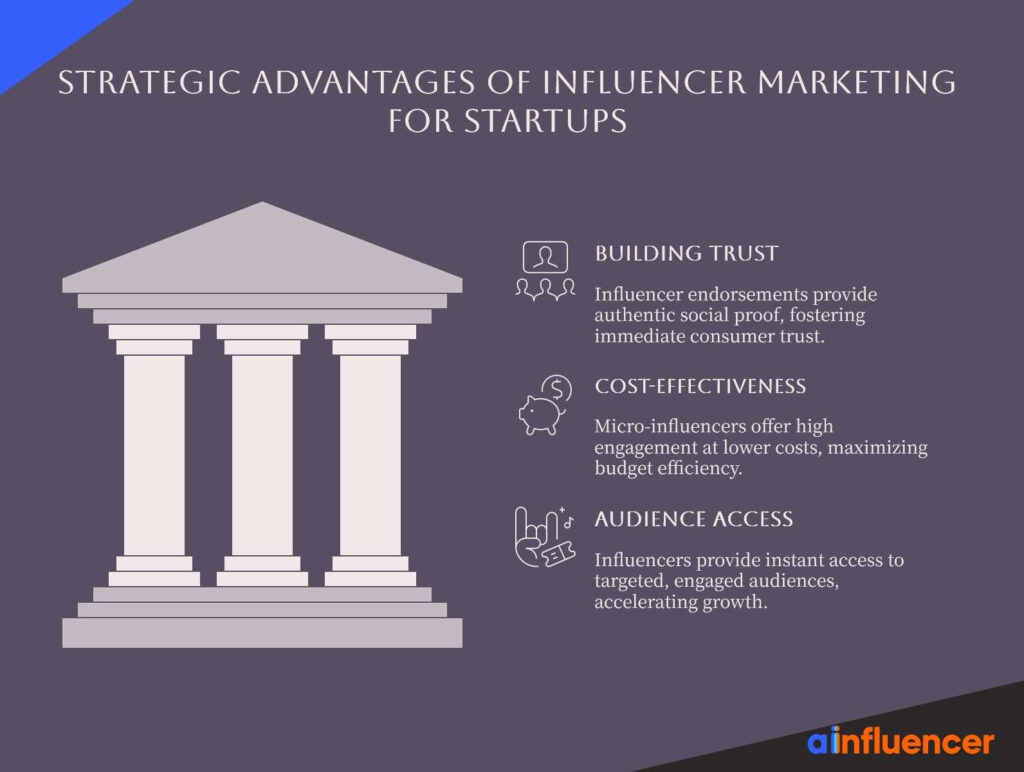
When building a startup from scratch, the challenge isn’t just creating an amazing product; it’s getting people to trust you enough to try it. Influencer marketing for startups addresses this exact challenge head-on.
Builds Trust Faster Than Ads
In today’s ad-saturated world, consumers have developed strong filters against traditional marketing messages. Consequently, many Americans now seek recommendations from relatable sources when making purchase decisions.
The power of startup influencer marketing lies in its authenticity. Unlike conventional advertising, influencer endorsements feel genuine because they come from voices your target audience already respects.
Indeed, 71% of consumers trust opinions and product placements from influencers, making this approach remarkably effective for new brands with little prior recognition.
This trust transfer is immediate. When an influencer recommends your startup’s product, it functions essentially as peer-driven social proof, which proves far more persuasive than any branded advertisement you might create on your own.
Cost-effective for Early-Stage Growth
For cash-conscious startups, influencer marketing strategy for startups delivers impressive financial efficiency. The numbers speak volumes that you can check out for yourselves.
Furthermore, you don’t need celebrity budgets to see real results. Micro-influencers often deliver better engagement at lower costs. Notably, these smaller creators generate more engagement on sponsored posts compared to some of the macro-influencers.
This cost-effectiveness extends beyond monetary considerations. Many influencers, especially nano and micro influencers, are open to partnerships in exchange for:
- Free products
- Commission-based compensation
- Smaller upfront fees
This flexibility enables startups to use influencer marketing effectively, maximizing impact without straining limited resources.
Taps Into Ready-Made Audiences
The biggest advantage of influencer marketing for startups is instant access to established, engaged audiences. Instead of building awareness from scratch, startups can reach followers who already trust the creators they follow.
Influencer content often includes clear calls-to-action, creating a direct path to qualified prospects that would otherwise take months or years to build organically. Because these audiences are highly targeted, campaigns deliver stronger engagement and higher conversion rates than broad advertising.
By combining trusted recommendations, cost efficiency, and immediate reach, influencer marketing for startups offers a powerful alternative when traditional channels are financially out of reach.
How to Find the Right Influencers
Finding the perfect influencer partners can make or break your influencer marketing for startups. First and foremost, you need a systematic approach that focuses on quality over quantity, and learning the differences between micro vs. macro-Influencers can aid you.
Use Audience-First filtering
The most successful startup influencer marketing begins with your customer persona, not influencer follower counts. Ask yourself: what hashtags do they follow?
Which accounts do they trust? Beyond that, analyze audience demographics, including age, gender, location, and interests, to ensure alignment with your target customer.
An audience-first approach means starting with who you want to reach, understanding what they care about, and identifying where they spend time online.
Above all, consider audience overlap, ensuring an influencer’s followers match your ideal customer profile.
Remarkably, campaigns with strong demographic alignment see 67% higher conversion rates compared to misaligned partnerships. For maximum impact, use discovery tools like CreatorIQ or Upfluence to filter potential partners by audience characteristics.
Check Engagement Quality, Not Just Numbers
During your search, look beyond follower counts and overall engagement rates. As experts note, “A micro-influencer with 10,000 highly engaged followers often outperforms a macro-influencer with 1 million passive followers“.
You can also use tools such as the Instagram Engagement tool by brandID for better results.
Healthy engagement shows genuine audience investment. Examine comment sections for thoughtful questions, personal experiences, and real conversations. Superficial responses like “Nice!” or emoji-only reactions typically indicate lower-quality engagement.
A reliable formula for calculating engagement is: Engagement Rate = (Likes + Comments + Shares + Saves) / Followers × 100. However, this number tells only part of the story; engagement quality matters more than quantity.
Evaluate Authenticity & Content Style
Authenticity drives a successful influencer marketing strategy for startups. Key indicators include:
- Consistency across posts and platforms.
- Transparent disclosure of sponsored content.
- Natural integration of products into their lifestyle.
- Active community engagement through responses.
Research confirms authenticity hinges on five core properties: expertise, connectedness, originality, transparency, and integrity. As you develop how startups use influencer marketing, seek influencers whose values truly align with yours, rather than focusing solely on metrics.
Finally, use these influencer outreach templates to streamline your first messages and A/B test subject lines.
Budgeting & Compensation Models
Managing your budget for influencer marketing for startups requires strategic thinking and flexibility. With limited resources, understanding compensation models becomes crucial for maximizing return on every dollar spent.
Free products vs. Flat Fees vs. Commissions
The backbone of startup influencer marketing lies in choosing the right payment structure, and for easier pricing on Instagram, you can use the brandID influencer pricing tool for Instagram.
Generally, three primary models exist:
- Product seeding involves sending free products to influencers, hoping they’ll create content. This approach works well when your product delivers obvious value, like software with a retail value of $2,000 but costs you only $200.
- Flat fee arrangements remain the most popular, 83% of creators prefer this straightforward model. You pay a fixed amount for specific deliverables, providing budget predictability for your influencer marketing strategy for startups.
- Commission-based models (also called affiliate partnerships) align costs directly with sales. Influencers receive a percentage of each purchase generated through their unique tracking links or discount codes. This structure ensures you only pay when influencers drive actual revenue.
Many successful startups use a hybrid approach: “60% paid partnerships, 30% product seeding and barter, 10% reserve fund. This balanced strategy allows you to test multiple creators without depleting your budget.
How to Negotiate Fair Deals
Effective negotiation starts with research. Calculate expected ROI using this formula: (Total expected gain – Cost) / Cost × 100 = ROI%. This data helps determine if an influencer’s asking price aligns with potential returns.
Occasionally, the first number offered is rarely their best; it’s typically the lowest they think you might accept. Correspondingly, it’s perfectly acceptable to counter with a higher number supported by reasoning.
If an influencer’s fee exceeds your budget, consider:
- Negotiating on deliverables (fewer posts).
- Offering value-added perks beyond cash.
- Providing large website credits or product bundles.
- Creating longer-term relationships with flexible timelines.
Smart startups develop formula-based pricing models using creator reach and performance metrics as benchmarks for fair negotiations. Initially, standard templates for creators help streamline contracting, saving valuable time.
When to Scale with Paid Partnerships
Despite the appeal of free product seeding, how startups use influencer marketing eventually evolves toward paid partnerships. The right moment to scale typically arrives when:
- Your product seeding generates consistent organic mentions.
- You have data proving influencer content drives conversions.
- Your runway supports marketing expansion.
After, consider allocating budget strategically: “Your $10K influencer budget can disappear in two ways: blow it all on one macro-influencer’s single post, or spread it across 15-20 micro-creators. The latter approach typically delivers better ROI for early-stage companies.
As you grow, explore performance-based compensation that ties pay to measurable outcomes. This approach ensures ROI, encourages authentic promotion, and strengthens long-term partnerships with top-performing influencers.
Tracking Results & Optimizing Campaigns
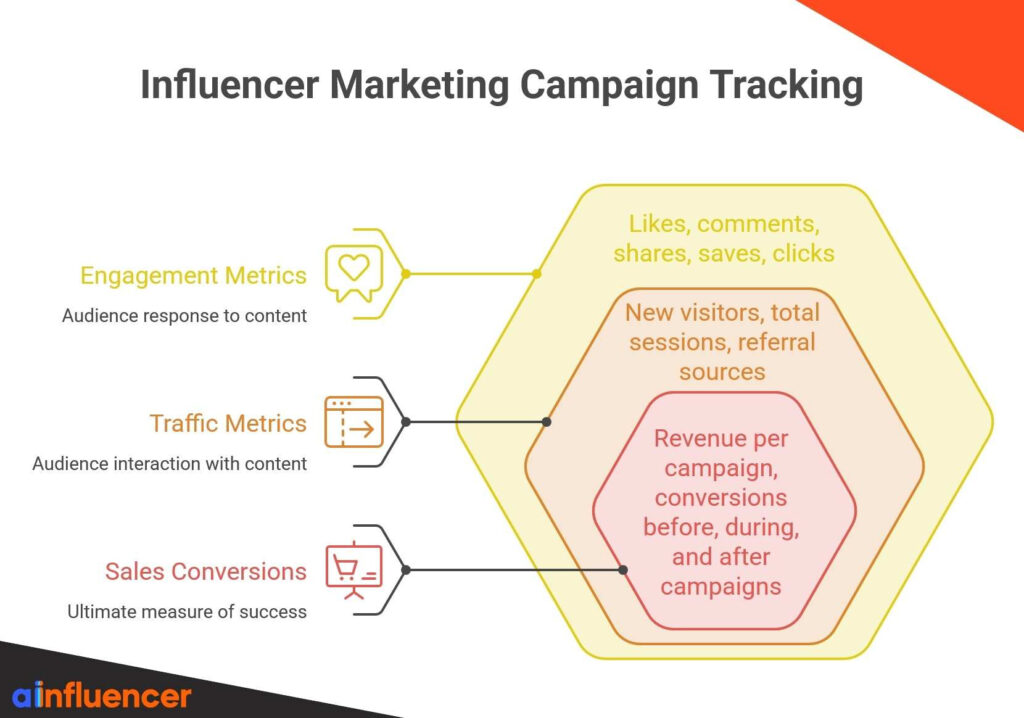
The difference between good and great startup influencer marketing often comes down to measurement and optimization. Easily track influencer marketing ROI by attributing conversions to codes, UTMs, and revenue per campaign
Key Metrics to Monitor
The foundation of tracking starts with engagement metrics like likes, comments, shares, saves, and clicks. These indicators reveal how your audience responds to influencer content. Yet engagement alone doesn’t tell the full story.
Traffic metrics provide deeper insights into campaign effectiveness. Track new visitors, total sessions, referral sources, and time on site. This data shows not just how many people see your content but how they interact with it afterward.
Sales conversions remain the ultimate measure of success for your influencer marketing strategy for startups. An effective approach is tracking influencer marketing results before, during, and after campaigns to identify changes during active promotions.
Using UTM Links & Discount Codes
UTM tracking links serve as your secret weapon for precise measurement. These modified URLs include tags that let you track traffic and conversions from each influencer. Without them, all influencer efforts blend, leaving you making blind decisions.
Simultaneously, discount codes offer dual benefits: they incentivize purchases while providing clear attribution. For Shopify users, these codes can automatically apply at checkout, ensuring revenue is correctly linked to specific creators.
How to Analyze Influencer Performance
Analyzing performance starts by examining data in Google Analytics. Navigate to Acquisition > Campaigns to track traffic, conversions, bounce rates, and user behavior based on UTM tags. Create visual dashboards showing metrics like traffic by influencer, cost per lead, and ROI.
Naturally, this allows you to identify top performers and refine your strategy accordingly. As you gather data, look beyond vanity metrics. Identify which influencers generate the most impact and which content formats drive actual conversions.
This data-driven approach ensures your influencer marketing for startups continuously improves, delivering maximum returns on limited resources.
Final Thoughts
Influencer marketing for startups is one of the most effective growth levers for startups because it builds credibility faster than paid ads. Start with niche and micro creators whose audiences match your customers, and prioritise engagement over raw reach.
Run small tests, product seeding, and modest paid pilots give creators room to be authentic, and treat each campaign as an experiment.
Track conversions alongside qualitative signals (comments, DMs, creator feedback) and double down on what works by moving top performers into longer-term partnerships and repurposing their content.
Start small, measure what matters, and iterate steadily; with disciplined testing and the right partners, influencer marketing becomes a scalable, cost-efficient channel that accelerates awareness, trust, and growth.
1. How much should a startup expect to pay nano- and micro-influencers?
Typical ranges help planning: nano influencers usually charge around $10–$100 per post, micro influencers about $100–$500 per post, with video and reels at the higher end. Always adjust for platform, content complexity, exclusivity, and usage rights, and consider adding a small performance bonus to align incentives.
2. How do I spot fake followers or influencer fraud?
Do a quick audit: review comment quality, check for sudden follower spikes, and sample follower profiles for activity. Ask for an analytics export and, for higher-value hires, run the account through a third-party vetting tool before signing a contract.
3. What disclosure and legal steps must I follow?
Require clear, prominent disclosure in captions or platform disclosure tools, so audiences know a post is paid or gifted. Put disclosure and content-approval rules into the contract, monitor compliance during the campaign, and enforce fixes if an influencer fails to disclose noncompliance risks, including both regulatory trouble and reputational damage.