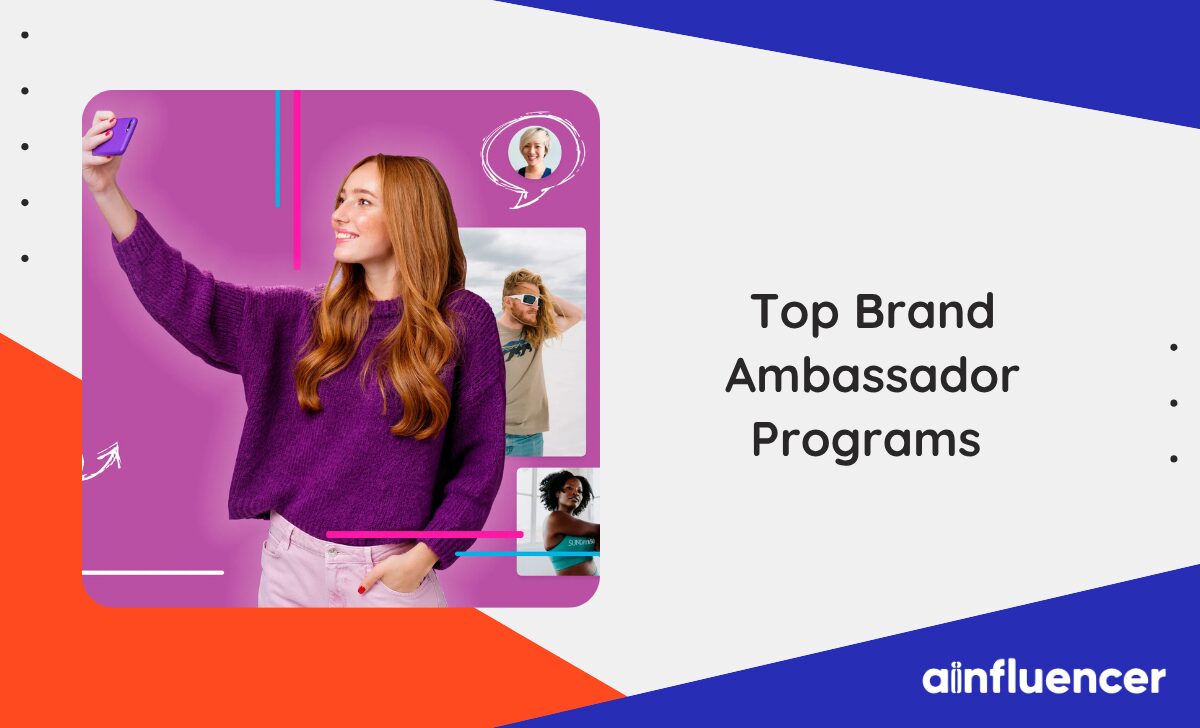
10 Brand Ambassador Programs
That Accept Nano & Micro Influencers
Real programs with no massive follower requirements — what each one pays, what you get for free, who gets accepted, and exactly how to apply in 2026.
You don’t need 100K followers to represent a brand. Some of the most recognizable names in fashion, beauty, food, and lifestyle run ambassador programs that actively recruit creators with a few hundred to a few thousand followers — and reward them with free products, commissions, and long-term partnerships.
Becoming a brand ambassador is one of the most realistic ways for a small creator to start earning from content. Unlike one-off sponsored posts, ambassador programs are built on ongoing relationships: you promote a brand you genuinely use, and in return you get perks that compound over time — gifted products, discount codes, affiliate commissions, event invites, and sometimes paid campaigns.
The catch is that most “top ambassador programs” lists are packed with brands that quietly filter out anyone under 50K followers. This guide is different. Every program below has a track record of accepting nano and micro influencers, and for each one we cover the niche, real acceptance criteria, the perks, and the exact application path.
What Is a Brand Ambassador Program?
A brand ambassador program is a structured, long-term partnership between a brand and a group of creators who represent it continuously — not just in a single sponsored post. Ambassadors share the brand’s products in their everyday content, use dedicated hashtags or referral links, give product feedback, and often get first access to launches.
For brands, ambassadors deliver something ads can’t buy: sustained word-of-mouth from real people. Roughly nine out of ten consumers say they trust recommendations from people over traditional advertising, which is why companies across every creator tier keep expanding these programs. For creators, the appeal is stability: instead of chasing one-off deals, you build a relationship that keeps paying in products, commissions, and exposure.
All 10 Programs at a Glance
Before the detailed reviews, here’s how the ten programs compare on the criteria that matter most to a small creator: minimum audience, what you actually receive, and whether real money is on the table.
| Program | Niche | Follower minimum | Free products | Commission / cash |
|---|---|---|---|---|
| Windsor | Fashion & apparel | None | ✓ | ✗ Perks only |
| BarkBox | Pets | None (quality platform) | ✗ | ✓ $20–25 per signup |
| Bubble Skincare | Skincare | None (16+) | ✓ | ✓ Referral rewards |
| Laura Geller | Beauty & cosmetics | 1K–10K (US, 18+) | ✓ | ✗ Gifting-first |
| Thayers | Skincare & personal care | None | ✓ | ✗ Points & perks |
| LaCroix | Beverage | College students only | ✓ | ✗ Product & events |
| Daniel Wellington | Fashion & accessories | None (3K+ for top perks) | ✓ | ✓ Commission + cash |
| Mejuri | Fine jewelry | Micro-friendly | ✓ | ✓ Paid collabs possible |
| SPANX Society | Fashion & lifestyle | 500+ (US/Canada, 18+) | ✓ | ✓ Affiliate commission |
| HelloFresh | Meal kits & food | None (quality content) | ✓ | ✓ Personal promo codes |
The 10 Best Brand Ambassador Programs for Small Creators
Each review below is based on the program’s public requirements plus what accepted ambassadors report about the experience. Programs change their terms, so always confirm details on the brand’s official ambassador page before applying.
Windsor
Windsor, the go-to retailer for dresses and event-ready outfits, runs one of the most accessible fashion ambassador programs anywhere. Applications go straight through the brand’s website, follower count isn’t a gate, and accepted creators showcase Windsor pieces on Instagram and TikTok. Students get an extra path in through the College Ambassador Squad, which adds monthly gifts and exclusive merch on top of standard perks. Micro creators with under 30K followers are visibly active in the program, so this is a genuine entry point rather than a marketing claim.
- Free Windsor products and early access to new releases
- Invitations to exclusive events
- Exclusive promo codes to share with your audience
- Feature opportunities on Windsor’s site and socials
BarkBox
BarkBox, the monthly subscription box of dog toys and treats, runs its creator program through the Impact affiliate network — and it’s one of the few options on this list that pays real money from day one. There’s no follower requirement; what matters is whether your content can convince pet owners to subscribe. Unboxing videos of your dog tearing into a themed box, honest reviews, and gift guides are the formats that convert.
- Per-signup commissions with transparent payout terms
- Access to seasonal promotions and monthly box themes
- Creator updates and assets to help content convert
Bubble Skincare
Bubble treats ambassadors as part of the product team, not just a promo channel: members test unreleased products, give feedback directly to the brand, and spread awareness through social posts, word-of-mouth, and even local events. The program runs on the SocialLadder platform and is famously welcoming — creators with under 100 followers have been accepted, especially those who were already engaging with Bubble’s community before applying. There’s a dedicated campus program for college students too, with rewards and leadership tracks.
- Free product testing and early access to launches
- Workshops, events, and a private ambassador community
- Discounts, reward points, and gamified challenges
- Referral commission opportunities in some cases
- Feature chances on Bubble’s official channels
Laura Geller
Laura Geller’s gifting program is explicitly designed for the smallest tier of creators: the stated range is 1,000 to 10,000 followers, which makes it one of the best beauty programs for anyone starting out as a nano influencer. The brand’s marketing centers on women over 40, so creators in that demographic report noticeably higher acceptance rates. Content-wise, makeup tutorials and honest reviews are what the team looks for.
- Free product gifting and first access to new launches
- Invitations to participate in brand campaigns
- A community of like-minded beauty creators
- Exclusive invites and members-only benefits
Thayers (Thayers Slayers)
Thayers explicitly considers applicants at every follower level as long as they’re active, and its “Slayers” community runs on participation: ambassadors complete content challenges (like story posts) to earn points that unlock product drops and perks. Long-time members note that free drops have become more competitive as the community has grown, so speed and consistency matter — but the program remains one of the friendliest entry points in skincare.
- Free products and early access to new launches
- Exclusive Thayers merch
- Campaign participation opportunities
- Features on Thayers’ social channels
LaCroix
LaCroix’s ambassador route is its college program — a campus-marketing squad for full-time undergraduates rather than an open influencer program. If you’re a student who’s active on social and involved in campus communities, it’s an easy yes: you get monthly LaCroix deliveries for personal use and sampling, and you participate in lifestyle-driven community campaigns. It’s not a salaried position, so treat it as a portfolio-builder and free-product perk rather than an income stream.
- Monthly product deliveries for use and sampling
- Participation in community marketing campaigns
- Brand experience that strengthens future applications
Daniel Wellington
Daniel Wellington built its entire brand on working with small creators, and the “DW Icon” program continues that playbook. There’s no strict follower minimum, though creators above roughly 3,000 followers with strong engagement unlock more missions and perks. A detail worth knowing: DW rotates ambassadors by region, so creators in less-saturated countries have a genuinely better shot. Seasonal style content — “spring watch outfits,” holiday gift guides — tagged with campaign hashtags like #DWPickOfTheDay is the proven way to get noticed and land the collaboration.
- Commission on referred sales
- Free products, gift cards, and exclusive discount codes
- Campaign missions with extra rewards for active creators
- Access to new launches and exclusive offers
Mejuri
Mejuri’s “Fine Crew” collaborates with micro creators who show its everyday jewelry in real contexts — work outfits, date nights, weekend casuals — rather than studio-styled shoots. The brand watches the #mejuripartner tag closely, and strong organic content is often the bridge from gifting collaborations to paid ones. Getting featured on Mejuri’s own channels (over a million Instagram followers) is a meaningful visibility boost for a small account on its own.
- Gifted jewelry collaborations
- Paid partnerships for creators with strong past work
- Feature exposure on Mejuri’s large social platforms
SPANX Society
SPANX structures its Society program like a game: you complete shareable content tasks, earn points, and level up to unlock progressively better rewards. That performance-based design is actually good news for small creators — consistency beats audience size, and a 500-follower minimum keeps the door open for true nano accounts. Alongside the gamified perks, members get affiliate links, so there’s a real earning path for creators whose audiences convert.
- Gifted SPANX products and early access to drops
- Affiliate commission via a member dashboard
- Exclusive promos and offers
- Feature opportunities on SPANX’s official channels
HelloFresh
HelloFresh works differently from the in-house programs above: it sources and manages creators through influencer marketing platforms (its application currently runs through Upfluence), so outreach may come from the platform partner rather than HelloFresh directly. The brand welcomes creators of all sizes who make engaging food, cooking, recipe, or meal-prep content — genuine interest in food and quality engagement matter more than follower count.
- Free HelloFresh boxes to unbox and share
- Personalized discount codes for your audience
- Guided onboarding and creator support
How to Get Accepted: The 5-Step Path
The path successful small creators follow to land (and keep) ambassador spots
Influencer Programs vs. Brand Ambassador Programs: What’s the Difference?
The two terms get used interchangeably, but they describe different relationships — and knowing which one you’re applying to changes how you should pitch yourself.
Influencer programs are campaign-based: a brand hires a creator for a defined deliverable — a sponsored post, an unboxing, a review — pays per post or per campaign, and the relationship typically ends when the campaign does. The goal is reach and quick awareness. If you want to see what is actually open to creators right now, our roundup of the best influencer programs lists 24 of them sorted by niche, from fashion and beauty to fitness, travel and tech.
Ambassador programs are relationship-based. Ambassadors represent the brand continuously over months or years, create regular organic-feeling content, give product feedback, and sometimes co-create campaigns or appear at events. Compensation is usually a blend — free products, commissions, exclusive perks, and, for top performers, recurring payments. If you’re weighing which side to build your career on, our guide to influencer marketing strategy breaks down how brands decide between the two models.
| Feature | Influencer Programs | Ambassador Programs |
|---|---|---|
| Duration | Short-term / one-off | Long-term (months to years) |
| Primary goal | Visibility and quick sales | Trust, loyalty, ongoing engagement |
| Relationship | Transactional | Consistent and personal |
| Content type | Sponsored posts, stories, unboxings | Regular posts, behind-the-scenes, co-creation |
| Commitment level | Low | High |
| Payment structure | Per post or per campaign | Products, commissions, perks, or monthly pay |
5 Tips to Boost Your Acceptance Rate
Across every program on this list, accepted creators share the same habits. Build these in before you apply and your odds improve dramatically.
1. Apply where you already fit
Programs vet feed-to-brand alignment first. A skincare brand won’t accept a gaming account with 50K followers over a 800-follower creator whose whole feed is skincare routines.
2. Know your engagement rate
Brands check it, so you should too. Run your account through a free Instagram engagement checker before applying and mention the number in your pitch if it’s strong.
3. Post about the brand first
Bubble and Mejuri both visibly favor applicants with organic brand content. Buy the product, post honestly, tag the brand, then apply with proof already on your feed.
4. Personalize every application
One extra sentence — “I’ve used your rose water toner for two years, here’s my review post” — beats a copy-pasted bio. Application readers can spot templates instantly.
5. Treat your first collab as an audition
Ambassador programs are tiered almost everywhere — SPANX’s levels and DW’s missions make it explicit. Deliver early, deliver consistently, and track your results so you can show them; the same metrics brands use to measure influencer campaigns are the ones that move you into the paid tier.
How to Find More Brands to Work With
The ten programs above are a starting point, not a ceiling. The fastest way to scale from a handful of ambassador perks to a steady stream of collaborations is an influencer marketplace, where brands post open campaigns and invite matching creators directly.
Ainfluencer is built exactly for this. Instead of cold-emailing brands or waiting for application reviews, you create a free profile and let the platform’s AI match you with campaigns that fit your niche, audience size, and content style — across Instagram, TikTok, and YouTube.
Why creators start on Ainfluencer
- Free forever: no signup fees, no application fees, no charge to get paid.
- Open campaigns daily: brands regularly post gifting, affiliate, and paid campaigns you can apply to — or get invited to when your profile matches.
- AI matching: suggestions based on your niche, audience demographics, and engagement, not just follower count.
- In-platform negotiation: chat, agree on terms, and finalize deals in one thread instead of scattered DMs and email chains.
- Escrow-protected payments: for paid collabs, the money is held securely and released when you deliver — no chasing invoices.
- Reputation building: brands rate your work after each collab, and good ratings compound into more invites over time.
FAQs About Brand Ambassador Programs
How do I join a brand ambassador program?
Check the brand’s website for an “Ambassador” or “Influencer” page and submit the application form. Some brands recruit through campus rep programs or affiliate networks like Impact, and influencer marketplaces list open opportunities you can apply to directly.
Are brand ambassadors paid?
It depends on the program. BarkBox, Daniel Wellington, and SPANX pay commissions or cash; Windsor, Thayers, and Laura Geller compensate with free products, discounts, and event access. Top-performing ambassadors in almost every program eventually unlock paid campaigns.
Can I become a brand ambassador with a small following?
Yes. Windsor, Bubble, Thayers, and HelloFresh have no follower minimum, Laura Geller is built specifically for 1K–10K accounts, and SPANX starts at roughly 500 followers. Engagement quality and niche fit matter far more than audience size.
Can college students join brand ambassador programs?
Absolutely — several brands run dedicated campus tracks, including LaCroix’s college program, Windsor’s College Ambassador Squad, and Bubble’s campus community. Enthusiasm and campus involvement often outweigh follower count entirely.
Which brand ambassador programs give free stuff?
Laura Geller, Thayers, LaCroix, Daniel Wellington, Bubble Skincare, SPANX, and Mejuri all include gifted products among their perks, and HelloFresh ships ambassadors free meal boxes to unbox and share.
How is an ambassador program different from a one-off influencer deal?
Influencer deals are short-term and paid per post; ambassador programs are ongoing relationships compensated with a mix of products, commissions, and perks. Ambassadors become recurring faces of the brand, which builds the trust that drives long-term marketing ROI.
Key Takeaways
- Brand ambassador programs are long-term partnerships that reward creators with free products, commissions, and exposure — and many actively recruit nano and micro influencers.
- Windsor, Bubble, Thayers, and HelloFresh have no follower minimums; Laura Geller targets 1K–10K accounts; SPANX opens at ~500 followers.
- BarkBox, Daniel Wellington, SPANX, and Mejuri offer real earning paths through commissions or paid collaborations.
- Acceptance comes down to niche fit, engagement quality, and organic brand love — engage with a brand before you apply, and personalize every application.
- Ambassador programs differ from influencer deals in duration, commitment, and pay structure: relationships over transactions.
- To scale beyond individual applications, marketplaces like Ainfluencer match small creators with open brand campaigns for free.
Published on the Ainfluencer Blog. Ainfluencer is an AI-powered influencer marketing marketplace connecting brands with Instagram, TikTok, and YouTube creators for paid collaborations, product gifting, and affiliate deals, with built-in messaging, escrow, and campaign management.