Although the business-to-business (B2B) and business-to-consumer (B2C) ecosystems are different, they usually share marketing trends and tactics. B2B Influencer marketing is the direct result of this collaboration and trend.
Through this method, marketers like you can get in touch with some of the most famous social media figures from all influencer types and then use their reach to interact with your target audience.
B2B influencer marketing has quietly gone from just an experiment to a must‑have growth channel for brands that sell to other businesses. Let’s see what it is exactly and how it works.
What is B2B Influencer Marketing?
In simple terms, B2B influencer marketing is the practice of partnering with industry experts, creators, and thought leaders who influence business decisions. This partnership then creates content that nudges other companies toward your product or service. Unlike B2C, the goal is less about going viral and more about earning trust with small, high‑value audiences.
These influencers can be:
- Niche LinkedIn creators who regularly post about your category.
- Practitioners who host podcasts, webinars, or newsletters in your space.
- Analysts, consultants, or community leaders whose opinions are important to buyers.
B2B influencer marketing can shorten long sales cycles, fuel content, and give your brand a human voice. This human aspect is so important if you want to collaborate with smaller influencers, like nano influencers.
Why Does B2B Influencer Marketing Work?
It’s important to remember that B2B buyers are still people. They scroll LinkedIn, they go through webinars at 2x speed, and they trust people more than logos. B2B influencer marketing uses this behavior instead of fighting it. Here are some of the reasons this method works:
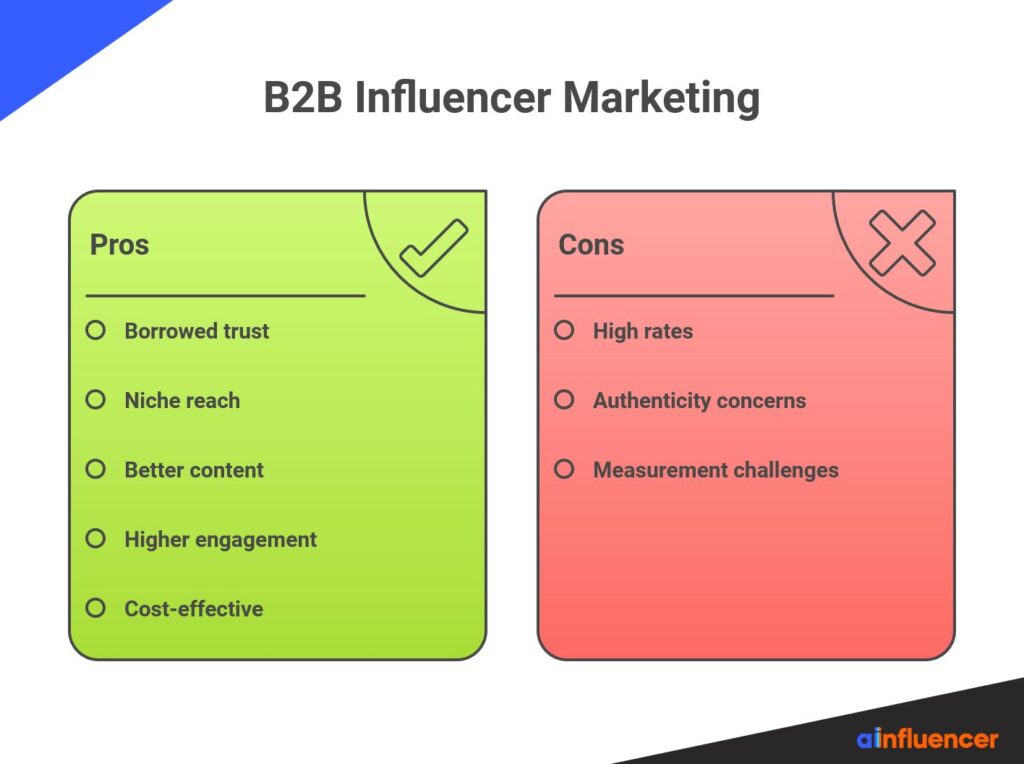
- Borrowed trust: Decision‑makers are more likely to trust brands that are associated with respected experts and influencers in their industry.
- Niche reach: B2B influencers often work in very specific segments, which beats broad, expensive ad targeting.
- Better content: Influencers are natural content creators; they turn your boring product messaging into stories, use cases, and opinions people actually want to consume. This is the main reason that some of the influencers’ rates can be very high.
- Higher engagement: Their followers are used to interacting with them by commenting, debating, and sharing. So your message will be heard over long distances.
- Cost‑effective: You can see all sorts of macro vs micro influencer comparisons all over the net. But the smaller ones have one big advantage. They can drive serious impact for a fraction of what you’d pay for display ads or celebrity endorsements.
Types of B2B Influencers For Collaboration
Not all influencers are worth working with or investing in. For a strong B2B influencer marketing strategy, map the right type of influencer to your goals and budget, and always have an eye for influencer marketing trends and how they can help you.
You can choose influencers by their size:
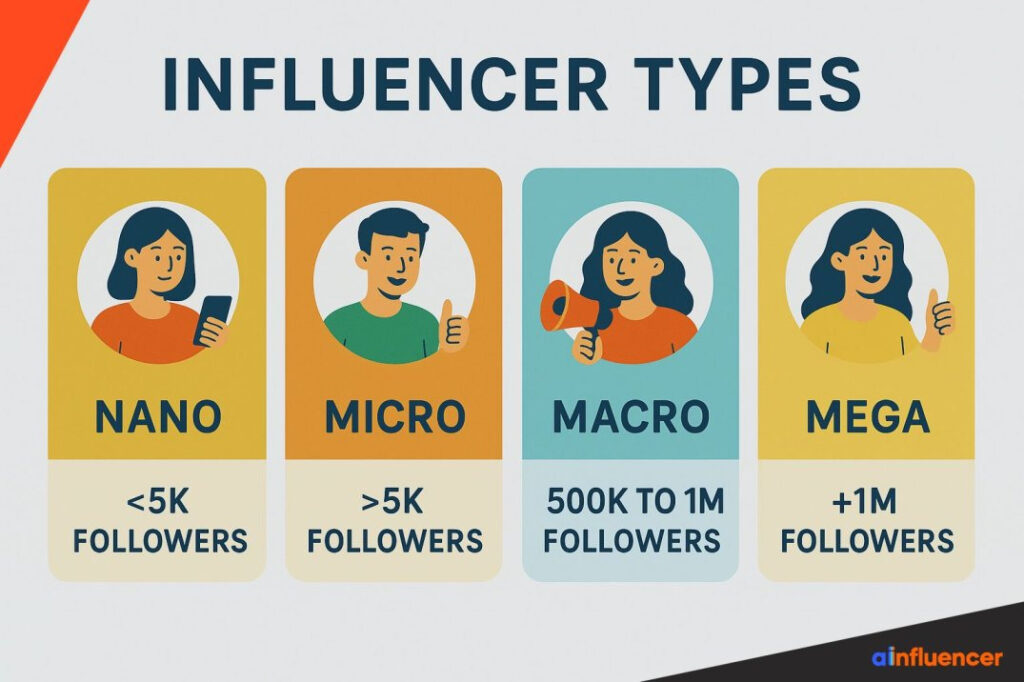
- Nano influencers (1k–5k followers):
- They have high engagement, low cost, great for niche segments and early experiments.
- Micro influencers (5k–500k followers):
- Ideal balance of reach, authority, and authenticity for most B2B brands.
- Macro influencers (500k–1M followers):
- Polished content, with a wider reach, is particularly helpful for big launches or category plays.
- Better fit for big brands with budgets to match.
- Mega / celebrity influencers (1M+ followers):
- These are global names, major authors, and star analysts.
- Great for brand‑level awareness.
As a brand, you need to learn how to track influencer marketing results to make informed decisions for future collaborations. There is another way to choose an influencer, which is their role:
- Subject experts: influencers who are engineers, CMOs, and data leaders who share playbooks and frameworks.
- Media builders: Podcasters, newsletter authors, community hosts who control ongoing distribution.
- Analysts/advisors: People whose research and opinions appear are important for the audience.
The smartest B2B influencer marketing campaigns often mix these types to reach all of these aspects at the same time.
How to Build a B2B Influencer Marketing Strategy?
You need a real B2B influencer marketing strategy if you want more than one-off postings. Instead of ordering a sponsored article, think of it as creating a long-term program. Here is how you do it the right way:
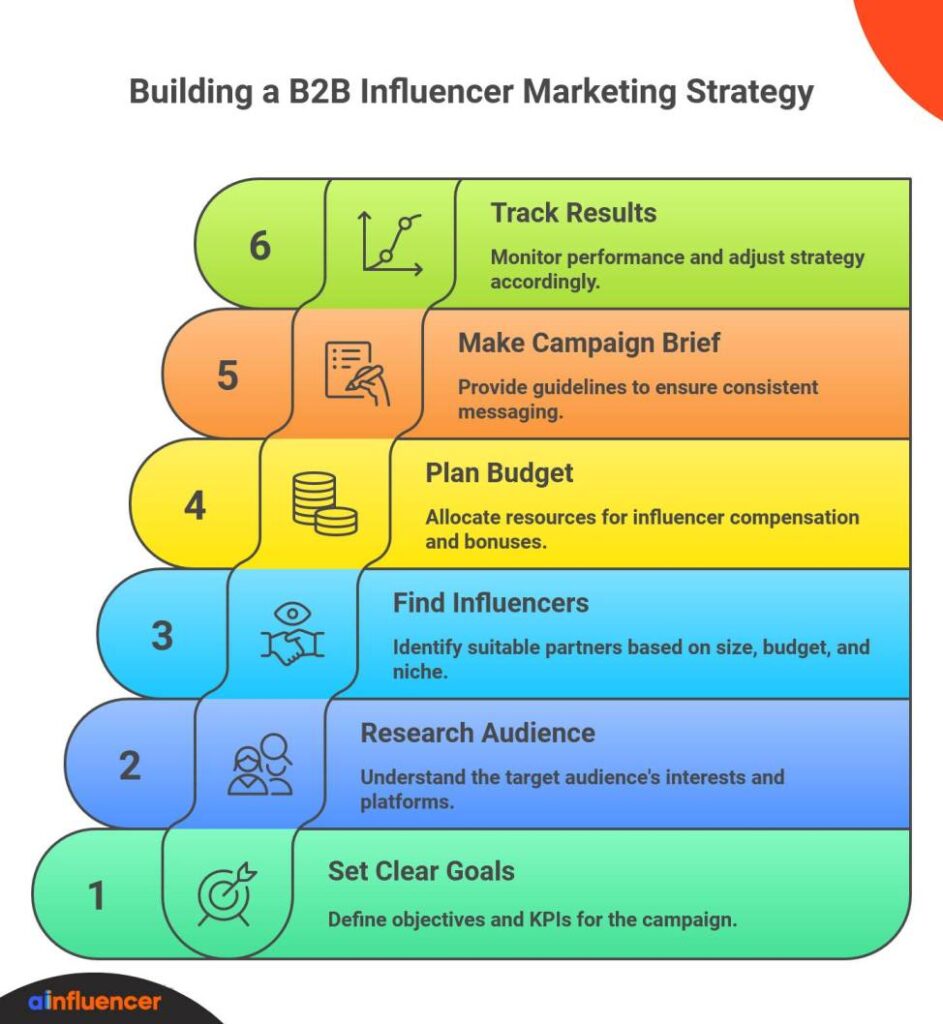
1. Set Clear Goals
Any effective influencer marketing strategy, or any marketing campaign, starts with clear goals. First, decide what you hope to accomplish with the influencer’s help. Do you want to raise sales, create leads, improve brand awareness, or enhance website traffic? Make sure your objectives are clear. Remember to establish your KPIs (Key Performance Indicators).
2. Research Your Audience
You’re essentially flying blind if you haven’t done any research on your target audience. Before you even consider choosing an influencer, it’s important to know who you want to target.
Examine the hobbies, occupations, industries, and most popular platforms of your target audience. Your efforts will enable you to build communications that genuinely resonate with them.
3. Find the Right Influencers
Look at your company’s size, your budget, and the kind of influencer you wish to collaborate with in order to identify the ideal partner. You can find partners by:
- Manually tracking who your ideal buyers already follow on LinkedIn and X.
- Using influencer marketing platforms like Ainfluencer for filters like niche, engagement rate, and audience authenticity.
- Mining your own ecosystem. Customers, power users, partners, and internal experts are valid choices.
4. Plan Your Budget
Choose up front how much you’ll spend for your influencers: a fixed amount, free goods or services, or a combination of the two.
If you want to pay your influencers for reaching certain goals, such as more leads, higher ROI, or higher engagement rates, you may also think about implementing performance bonuses. It’s an effective method of inspiring people.
5. Make a Campaign Brief
Give influencers clear brand guidelines so they are aware of your beliefs, tone, and boundaries. It will help people recall the importance of consistency in your messaging. Establishing these guidelines early on is crucial to preventing your brand from being overlooked or confused during the campaign.
6. Track Your Results
By examining data from your campaigns, you can keep an eye on the effectiveness of your collaborations. Examine measures such as reach, engagement, clicks, and conversions.
Additionally, adjust your strategy regularly. Talk about the outcomes with your influencer and utilize the information to enhance your upcoming campaign or ongoing initiatives.
B2B Influencer Marketing Best Practices
To keep your program from turning into a very expensive popularity contest, try to learn from these B2B influencer marketing best practices that leading brands use.
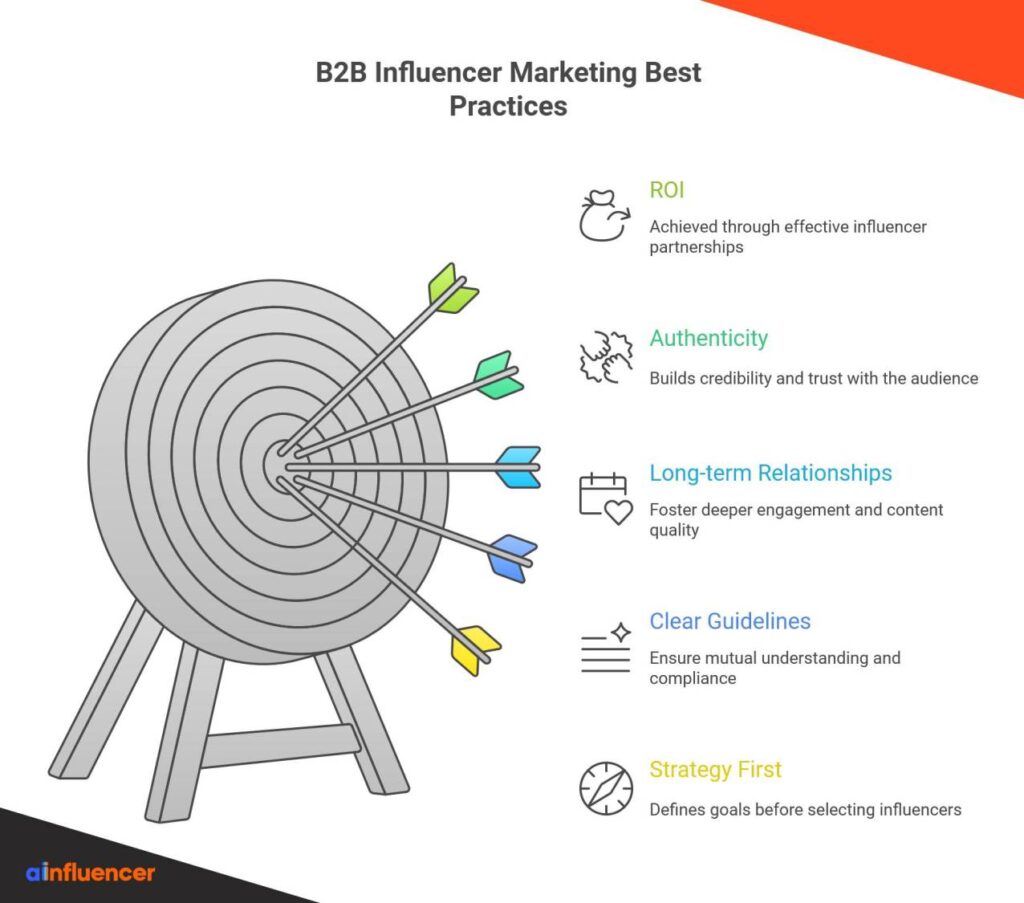
- Start with strategy, not names: Don’t pick influencers until you know the job you need them to do.
- Think long‑term: Multi‑month relationships outperform one‑offs for trust, content quality, and ROI.
- Prioritize authenticity: Let influencers speak like humans, include nuance, and even disagree with you occasionally. It builds credibility.
- Use contracts and clear guidelines: Define deliverables, approval processes, usage rights, disclosure, and payment terms up front.
- Respect their audience: If every post feels like an ad, you’ll lose the very people you’re trying to win over.
Common Mistakes to Avoid in B2B Influencer Marketing
Now is the time to go through all the things that might go wrong or things that may be appealing at first but will ruin your effort. Here are some mistakes you should avoid at all costs:
- Chasing follower count: A giant audience of the wrong people is more liability than an asset.
- Treating influencers like ad slots: If you ignore their content, you lose the thing that made them influential, trust.
- No internal alignment: Sales, product marketing, and comms should know what’s happening and how to use the content.
- Measuring too soon or too late: Give campaigns enough time to compound, but establish tracking from day one
Conclusion
Nowadays, B2B influencer marketing has become the bridge between brand credibility and real business impact. The companies winning today aren’t just selling their products. They’re making ecosystems of experts and creators who can tell their story better than any ads ever could.
So as you design your next campaign, look for those who share your values, understand your audience, and can educate, inspire, and finally sell your product.
FAQs
1. Which Platforms Are Best for B2B Influencer Marketing?
LinkedIn is the most effective platform for B2B influencer marketing, but X (Twitter), YouTube, and podcasts can be effective too. However, the best platform depends on where your target audience uses the most content.
2. Is B2B Influencer Marketing Expensive?
In general, no. B2B influencer marketing can be cheaper compared to paid advertising. Many B2B influencers prioritize long-term partnerships and value-based collaborations over one-off paid posts, especially in niche industries. This reduces the cost in the long term.
3. How Long Does It Take to See Results From B2B Influencer Marketing?
Results typically appear over medium to long timeframes due to longer B2B buying cycles. Brand awareness and engagement may increase quickly, while lead generation and revenue impact often take several months.
4. Is B2B Influencer Marketing Suitable for Small or Mid-sized Businesses?
Yes. Small and mid-sized businesses can benefit greatly by partnering with micro-influencers or niche experts who have highly relevant audiences. These partnerships are more affordable and lead to higher trust and engagement.