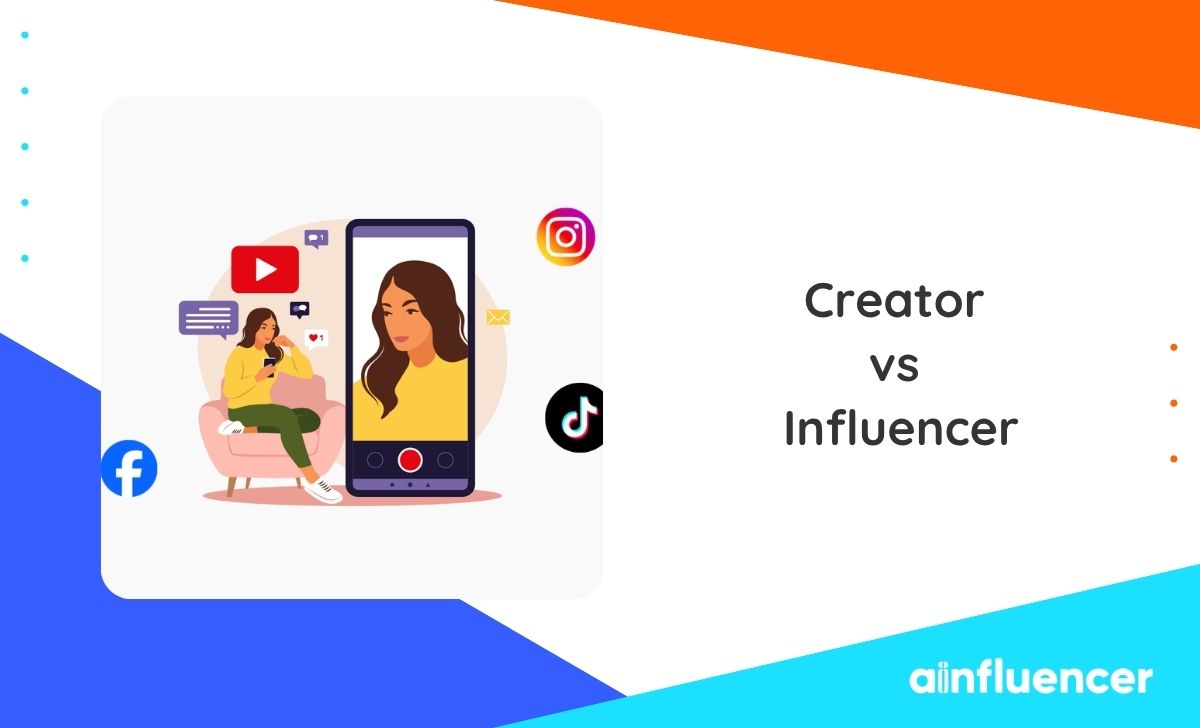
Creator vs Influencer:
Key Differences & Which to Hire
They get lumped together, but brands pay them for completely different things. Here’s the real distinction — motivations, content, audiences, and money — plus a goal-by-goal guide to choosing the right one in 2026.
Creator vs influencer isn’t a debate about which is “better” — it’s a question of what you’re actually paying for. Creators are prized for craft, freshness, and platform-native storytelling. Influencers win on trust, reach, and the ability to move people toward a purchase. Confuse the two, and you’ll hire the wrong partner for the job.
The distinction matters more every year because platforms, audiences, and budgets reward different outcomes. Understanding current influencer marketing trends — the shift toward performance deals, UGC-driven ads, and long-term partnerships — helps brands decide whether to prioritize creators, influencers, or both. And whichever way you lean, that choice should flow from your overall influencer marketing strategy, not from whoever happens to land in your inbox.
This guide breaks down the real differences — motivation, content style, audience relationship, and how each one makes money — then gives you a decision table for matching the right partner to each campaign goal.
Quick Definitions: Content Creator vs Influencer
A content creator is a professional paid primarily for the content they produce — its craft, quality, and usefulness. They make videos, photos, tutorials, and posts designed to inform or entertain, and their value doesn’t depend on the size of their own audience.
An influencer is a person paid primarily for access to their audience and the trust they’ve built with it. Their content exists to engage their followers, and their value to brands scales with reach, engagement, and their ability to drive action.
One sentence captures the whole divide: brands pay creators for content, and influencers for distribution. Everything else — motivation, content style, metrics, pricing — follows from that difference.
Creator vs Influencer: The Full Comparison
Here’s the side-by-side view across every dimension that matters to brands and to anyone choosing a career path:
| Aspect | Content Creator | Influencer |
|---|---|---|
| Primary goal | Creativity, craft, and expertise | Growing a personal brand and audience |
| Core motivation | Passion for content and mastery | Popularity, credibility, and influence |
| Content focus | Niche-driven, skill-based, value-first | Lifestyle-oriented, broad appeal, promotional |
| Content lifespan | Evergreen — tutorials, guides, reusable assets | Momentum-based — timely posts, stories, trends |
| Audience relationship | Community built on shared interests & learning | Followers built on aspiration & personality |
| What brands pay for | The content itself (production & usage rights) | Audience access, trust, and reach |
| Typical compensation | Per asset, per project, or retainer | Per post, affiliate commission, or campaign fee |
| Follower count matters? | Barely — portfolio quality wins | Significantly — reach is the product |
| Success metrics | Asset performance, longevity, ad results | Reach, CTR, conversions, campaign ROI |
| Best for brands needing | Content libraries, UGC, tutorials, ads | Awareness, social proof, fast sales |
The 5 Key Differences, Explained
1. Motivation: Passion for the Craft vs Growth of the Brand
At their core, creators and influencers operate with different primary goals. Creators make content for the sake of making content — driven by a passion for the medium, the skill, and the subject. A cooking creator obsesses over the recipe and the edit; whether a given video reaches 5K or 500K viewers matters less than whether it’s genuinely good.
Influencers create primarily to grow their personal brand. The content is a vehicle: every post is designed to deepen the relationship with followers, expand reach, and strengthen the influence that brands ultimately pay for. Neither motivation is “better” — they simply produce different assets and different results.
2. Content Style: Educational and Evergreen vs Lifestyle and Timely
The difference shows up immediately in the feed. Creators tend to produce educational or evergreen content: tutorials, how-tos, breakdowns, and reviews that stay useful for months or years. Their goal is to teach and deliver actionable value, which positions them as experts and builds communities centered on learning.
Influencers prioritize lifestyle-driven content: personal experiences, aspirational moments, curated visuals, and trend participation. It’s inspiration-focused and inherently promotional — which is exactly why it converts. A creator’s tutorial makes you smarter; an influencer’s post makes you want what they have.
3. Audience Relationship: Community vs Followers
Creators build communities around shared interests. Their authority comes from consistent, high-quality content, and their recommendations are trusted because of demonstrated expertise. Engagement is typically deeper, even when the audience is small.
Influencers cultivate follower relationships based on personality and aspiration. Followers admire and observe more than they collaborate, and audiences skew larger but often less engaged per capita. That’s why smart brands vet engagement quality before signing anyone — a quick pass through a free Instagram engagement checker and an Instagram audit tool reveals whether an audience is genuinely active or padded with passive (or fake) followers. For a full screening checklist, see our guide to vetting influencers.
4. Monetization: Paid for Content vs Paid for Reach
Follow the money and the distinction becomes crisp. Creators monetize through content itself: brand-commissioned assets, UGC packages, usage rights, ad revenue, courses, and retainers. Their income scales with skill and output, not follower count — which is why a creator with 2,000 followers can out-earn an influencer with 50,000.
Influencers monetize through audience access: sponsored posts, affiliate commissions, ambassadorships, and appearance fees. Pricing scales with reach and engagement, and the fastest-growing slice of the market is performance-based influencer marketing, where payment ties directly to clicks and sales rather than posts published.
5. How Brands Work With Each
Brands hire creators like a production partner: brief in, assets out, publish wherever the brand wants — its own social channels, website, or paid ads. Brands hire influencers like a media channel: the influencer publishes to their own audience, and the brand buys the exposure and the endorsement. The workflows, contracts, and success metrics differ accordingly, as many successful influencer marketing campaigns show — the best ones assign each role deliberately instead of expecting one person to do both jobs implicitly.
Where Creators and Influencers Overlap
The two roles aren’t sealed categories — the middle of the Venn diagram is where much of the industry now lives. Hybrid creator-influencers produce high-quality niche content and command an audience large and trusted enough to move it. And UGC creators occupy their own corner: hired purely for content that brands run on their own channels, with audience size irrelevant.
Two different value propositions — with a growing overlap in the middle
“Brands pay creators for content and influencers for distribution. The hybrid who delivers both is the most valuable partner in the market.”
Skills & Career Paths: What Each Role Demands
Content creator skills and roles
The creator path rewards technical depth. Strong visual communication — design, photography, videography — is the baseline, and video editing has become the single most valuable skill as every platform tilts toward video. Writing and storytelling fundamentals matter across formats, from scripts to captions. Career-wise, the industry offers specialized tracks: videographers, graphic designers, content editors, and SEO content specialists, with roles across media companies, agencies, and in-house brand teams. Many creators also build independent businesses selling UGC packages directly to e-commerce brands.
Influencer skills and roles
The influencer path rewards connection. Authentic storytelling cuts through the noise; consistent engagement — replying to comments, holding conversations, showing up daily — builds the loyal community that brands are actually buying. Networking with brands and fellow creators expands opportunity, and understanding your own metrics is non-negotiable: reach, engagement rate, and conversions are your rate card. Influencers typically progress from gifted collaborations to paid posts to long-term partnerships, and the most stable careers graduate into brand ambassador roles, where a single relationship pays continuously instead of post-by-post.
Shared skills: the platform game
Both roles live and die by platform strategy. Each network has its own audience, format expectations, and algorithm, so top performers adapt content per platform instead of cross-posting identical material. Both need SEO awareness — YouTube is the world’s second-largest search engine with its own ranking logic — and both need enough data literacy to read their analytics and refine what works. The metrics that matter map directly to standard influencer marketing KPIs: engagement rate, reach, click-throughs, and conversions.
Which Should Your Brand Hire? A Goal-by-Goal Guide
Skip the abstract debate and match the partner to the campaign objective:
| Your campaign goal | Hire | Why |
|---|---|---|
| Fast brand awareness | Influencer | Reach and trust move perception quickly; one strong post can outperform weeks of owned content. |
| Evergreen content library | Creator | You own reusable, high-production assets for your site, socials, and email — no reach fees attached. |
| UGC for paid ads | Creator | Authentic-feeling ad creative at per-asset pricing; audience size is irrelevant to ad performance. |
| Immediate sales & conversions | Influencer | Affiliate links and promo codes convert follower trust into tracked revenue. |
| Tutorials & product education | Creator | Educational craft keeps working for months in search and on product pages. |
| Long-term trust building | Both | Convert your best partners into ambassadors; sustained advocacy compounds. |
| Product launch | Both | Creator assets for the launch content, influencer reach for the launch moment. |
On budget: creators are generally cheaper per asset because you’re paying for production, not reach — and the content is reusable. Influencer pricing scales with audience: nano and micro influencers deliver the best engagement per dollar, while macro accounts command premium fees for scale. The highest-ROI pattern in 2026 combines the two: commission creator-made content, then amplify it through influencer partners whose audiences match your customer. If you’re planning your first hybrid campaign, our walkthrough on how to create an influencer marketing campaign covers the process end to end — and measure everything against real influencer marketing ROI, not vanity metrics.
How to Find Creators and Influencers in One Place
Here’s the practical problem: creators and influencers hang out in the same feeds, and manually separating “great content maker” from “great audience owner” takes hours of profile-by-profile digging. A marketplace solves it with filters.
On Ainfluencer, brands search millions of Instagram, TikTok, and YouTube profiles by niche, audience demographics, engagement rate, and follower range — so you can shortlist high-engagement micro influencers for a reach campaign, or filter by content quality and past collaborations to find creators for UGC work. Then the whole collaboration runs in-platform: direct chat negotiation, campaign management, and escrow-protected payment. It’s free for brands, with no subscription or platform fees.
FAQs About Creators vs Influencers
What is the difference between a content creator and an influencer?
A creator is paid primarily for the content they produce — its craft and usefulness — while an influencer is paid primarily for access to their audience and its trust. Creators make educational, evergreen, skill-based content; influencers make lifestyle content and recommendations that move followers to act.
Should my brand hire a creator or an influencer?
Match the role to the goal. Hire a creator for reusable content libraries, UGC ads, tutorials, and evergreen assets. Hire an influencer for fast awareness, social proof, engagement, and immediate sales. The strongest campaigns combine creator craft with influencer distribution.
Can one person be both a creator and an influencer?
Yes — hybrids are increasingly the norm. Many professionals produce high-quality niche content while also holding an audience large and trusted enough to move it. These creator-influencers can both make your campaign assets and distribute them.
Is a UGC creator the same as an influencer?
No. UGC creators are hired to make content the brand publishes on its own channels and ads — audience size is irrelevant. Influencers publish to their own audience, so followers and trust are exactly what the brand pays for. See our guide to finding UGC creators for the full breakdown.
Which is cheaper to work with?
Creators, generally — you pay per asset, not per follower, and the content is reusable. Influencer pricing scales with reach, though nano and micro influencers remain very affordable and often deliver the best engagement per dollar.
What metrics should I track for each?
For creators: engagement per asset, content longevity, ad performance of UGC, and SEO impact. For influencers: reach, click-through rate, conversions, promo-code redemptions, and overall campaign ROI. Our guide on how to track influencer marketing covers the measurement setup step by step.
Key Takeaways
- The core distinction: brands pay creators for content and influencers for distribution — everything else follows from that.
- Creators focus on craft and evergreen, educational content; influencers focus on personal brand, lifestyle content, and audience trust.
- Creators monetize per asset regardless of follower count; influencer pricing scales with reach and engagement.
- The roles overlap in a growing hybrid middle — and UGC creators are a distinct third category where audience size doesn’t matter at all.
- Match the hire to the goal: creators for content libraries, UGC, and education; influencers for awareness, social proof, and conversions; both for launches and long-term trust.
- The highest-ROI 2026 pattern combines creator-made content with influencer distribution — and marketplaces let you find and manage both in one place.
Published on the Ainfluencer Blog. Ainfluencer is an AI-powered influencer marketing marketplace connecting brands with Instagram, TikTok, and YouTube creators for paid collaborations, product gifting, and affiliate deals, with built-in messaging, escrow, and campaign management.