Influencer Content Strategy: The Long-Term Framework for Creators (2026)
Posting more is not a strategy. This guide walks you through building a real influencer content strategy: a repeatable framework of pillars, formats, and a calendar that grows your audience, keeps brands interested, and turns content into a career.
An influencer content strategy is the repeatable framework that decides what you post, why, and when, so your content builds an audience and a brand instead of chasing the algorithm. It is the difference between a creator who posts and a creator who grows.
This guide is built for creators thinking long-term. It walks through every layer of a durable influencer content strategy: defining your niche and voice, choosing content pillars, mapping formats to goals, building a sustainable calendar, and measuring what works. If you want the brand-side view of how campaigns are planned, our guide to influencer marketing strategy is a useful companion.
Strategy is what turns scattered posts into a compounding asset. Let’s build yours, layer by layer.
01 / FoundationsWhat Is an Influencer Content Strategy?
An influencer content strategy is a documented plan for your content: your niche, your audience, the themes you cover, the formats you use, how often you post, and how you measure success. It replaces “post whatever, whenever” with a system you can repeat and improve.
The point of a content strategy is compounding. A single viral post fades. A consistent strategy builds recognition, trust, and a body of work that keeps attracting both audience and brands. This is exactly what brands look for when they evaluate creators, as covered in our guide on how they vet creators before a partnership.
Strategy versus posting
Posting is an activity. Strategy is a direction. Many creators are busy posting daily yet stuck, because there is no framework tying their content to a goal. A clear influencer content strategy makes every post pull in the same direction.
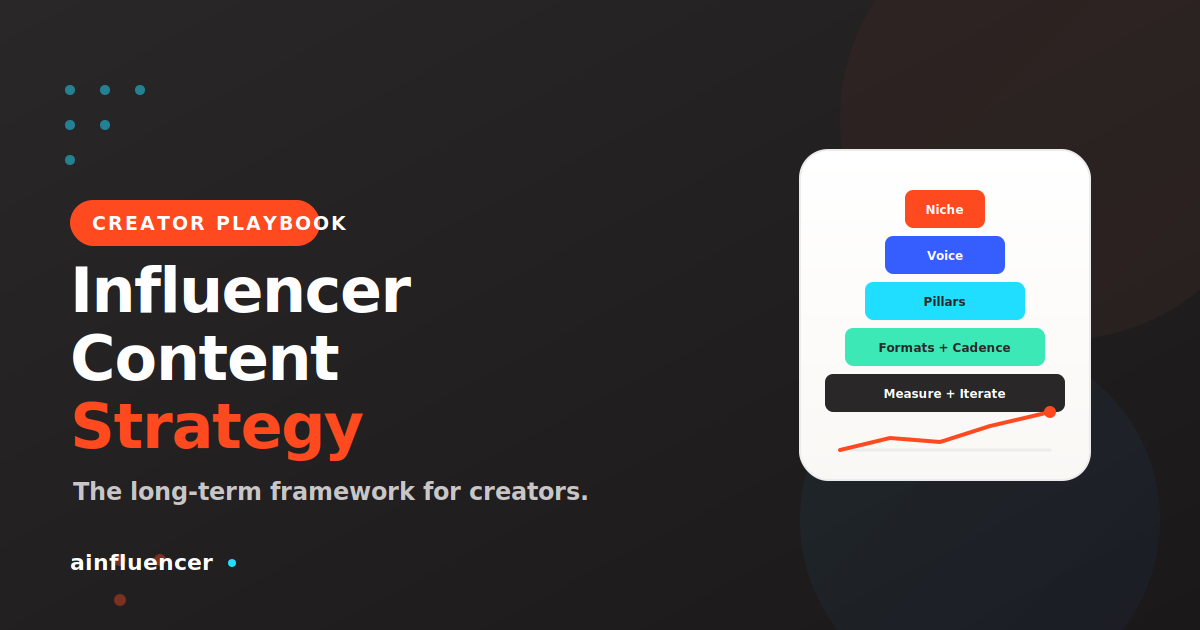
The 5 Layers of a Content Strategy
02 / Layer 1Define Your Niche and Audience
Every content strategy starts with a clear answer to two questions: what is your niche, and who is it for? A vague, everything account has no strategy because it has no audience it can serve deeply. A focused niche gives every later decision a filter.
Get specific about your audience: their age, interests, problems, and what they want from your content. The tighter your niche, the more your content resonates, and the more valuable you become to brands whose customers match your audience. Explore how creators position themselves in our overview of the types of influencers.
Why a narrow niche wins
Narrow does not mean small. A tightly defined niche builds a loyal, engaged audience faster than a broad one, which is why micro-influencers and nano-influencers often outperform larger, unfocused accounts on engagement and trust.
03 / Layer 2Develop Your Brand Voice and Identity
Your voice is what makes content recognizably yours. Two creators can cover the same topic and feel completely different because of tone, personality, and visual style. A consistent identity is what audiences remember and brands want to partner with.
The elements of a creator identity
Your identity is built from a few consistent choices: your tone (funny, expert, warm, bold), your visual style (colors, editing, thumbnails), and your recurring point of view. Decide these deliberately so every post reinforces the same identity rather than diluting it.
04 / Layer 3Choose Your Content Pillars
Content pillars are the three to five core themes your account keeps returning to. They are the backbone of any influencer content strategy because they give you a near-endless supply of on-brand ideas while keeping your account focused and recognizable.
How to pick your pillars
Choose pillars that sit where your expertise, your audience’s interests, and your monetization goals overlap. A fitness creator might use pillars like workouts, nutrition, mindset, and gear reviews. Each pillar should be broad enough for dozens of posts but specific enough to stay on-niche.
| Pillar Type | Purpose | Example Content |
|---|---|---|
| Educational | Build authority and saves | How-tos, tips, myth-busting |
| Entertaining | Boost reach and shares | Trends, humor, storytelling |
| Inspirational | Deepen audience connection | Journeys, before-and-afters |
| Community | Drive comments and loyalty | Q&As, polls, replies |
| Promotional | Monetize and convert | Brand deals, your products |
Aim to keep promotional content to roughly 20% of your output. When your value-first pillars do the heavy lifting, your audience welcomes the occasional brand deal instead of tuning it out. That balance is what keeps sponsorships effective, which matters when you start landing performance-based partnerships.
05 / Layer 4Map Formats and Set Your Cadence
With pillars set, decide how you will deliver them. Different formats serve different goals, and a strong influencer content strategy uses a deliberate mix rather than defaulting to one. Then set a cadence you can actually sustain.
Short-form video for reach
Reels, TikToks, and Shorts are the top discovery engines in 2026. Use them to reach new audiences with your entertaining and educational pillars. If short-form is your focus, our guide to TikTok influencer marketing shows how brands value it.
Carousels and posts for depth
Carousels and in-feed posts are ideal for educational, save-worthy content that builds authority. They keep viewers on your content longer and are highly shareable within a niche.
Stories for connection
Stories are where community happens: polls, questions, behind-the-scenes, and daily presence. They deepen loyalty and keep you top of mind between bigger posts. Grow this muscle with our guide on growing your account.
Set a cadence you can keep
Consistency beats intensity. It is better to post three strong pieces a week for a year than to burn out at daily posting in a month. Choose a realistic rhythm per format and protect it.
06 / Layer 5Build a Content Calendar and Batch
A calendar turns your strategy into a routine. Planning content in advance, then batching creation, is what keeps quality high and burnout low. This is where a long-term framework becomes a sustainable practice rather than a daily scramble.
How to plan a 90-day calendar
Map your pillars across a quarter so each week has a balanced mix. Slot in known moments, launches, seasons, campaigns, then fill the rest with evergreen pillar content. Batch-record similar content in one session to save time and keep your look consistent.
Repurpose to multiply your output
One of the highest-leverage moves in any influencer content strategy is repurposing. A single strong idea can become a short-form video, a carousel, a Story series, and a caption-led post, each reaching a slightly different slice of your audience. Instead of inventing fresh ideas daily, you extract more value from your best ones. This keeps your calendar full without multiplying your workload, and it reinforces your pillars through repetition across formats. Creators who repurpose well often produce twice the content in half the time, which is exactly the kind of efficiency a long-term framework is meant to unlock.
07 / MeasureTrack What Works and Iterate
A strategy is only as good as your willingness to adjust it. Regularly review which pillars and formats drive your goals, then do more of what works. This feedback loop is what separates a static plan from a living influencer content strategy, and it is the habit that keeps your influencer content strategy improving quarter after quarter.
The metrics that matter
Track reach and saves for growth, engagement rate for audience health, and profile visits or link clicks for conversion. Watch which pillars consistently outperform and lean into them. For a deeper look at measurement, see our guide on how to track influencer marketing performance.
Do This
- Document your strategyWrite down your niche, voice, pillars, and cadence so you can follow and refine it.
- Batch your contentCreate in focused sessions to protect quality and avoid burnout.
- Review monthlyCheck your metrics and double down on the pillars that perform.
- Keep 80% value-firstEarn the right to promote by leading with genuinely useful content.
Avoid This
- Chasing every trendTrends that do not fit your niche confuse your audience and dilute your identity.
- Posting without pillarsRandom topics leave your account forgettable and hard to place.
- Over-promotingToo many brand deals in a row erodes the trust that makes them work.
- Ignoring your dataGuessing what works wastes effort you could aim at proven content.
08 / ChecklistYour Content Strategy Checklist
Before you plan your next month of content, run through this checklist. If you can tick every box, you have a real framework, not just a posting habit.
The Content Strategy Checklist
- Niche and audience definedYou can name your niche and describe your ideal viewer in one line.
- Brand voice setYou have a one-sentence description of your tone and stick to it.
- 3 to 5 pillars chosenYour core themes are clear and give you endless on-brand ideas.
- Formats mapped to goalsYou know which format serves reach, depth, and community.
- Sustainable cadence setA posting rhythm you can keep for a year, not just a week.
- Calendar and metrics in placeYou plan ahead and review what works each month.
09 / FAQInfluencer Content Strategy: FAQ
What is an influencer content strategy?
It is a documented, repeatable plan for your content covering your niche, audience, brand voice, content pillars, formats, posting cadence, and measurement. It replaces random posting with a system designed to grow your audience and attract brand partnerships over the long term.
How many content pillars should I have?
Three to five pillars is the sweet spot. Fewer than three can feel repetitive, while more than five tends to blur your niche. Well-chosen pillars give you a near-endless supply of on-brand ideas while keeping your account focused and recognizable.
How often should I post as an influencer?
Consistency matters more than raw frequency. A sustainable cadence you can keep for a year, such as three to five strong pieces a week, beats daily posting that leads to burnout. Choose a realistic rhythm per format and protect it.
How much of my content should be promotional?
A common guide is the 80/20 rule: roughly 80% value-first content and 20% promotional. Leading with genuinely useful content earns you the right to promote, so occasional brand deals land well instead of pushing your audience away.
How do I know if my content strategy is working?
Track reach and saves for growth, engagement rate for audience health, and profile visits or link clicks for conversion. Review monthly, identify which pillars and formats consistently perform, and shift more effort toward them. See our guide on tracking performance.
Does a content strategy help me get brand deals?
Yes. Brands look for creators with a clear niche, consistent identity, and engaged audience, all of which a content strategy builds. A recognizable, well-run account is far easier to partner with and price than a scattered one, which directly improves your sponsorship prospects.
A strong strategy makes brands come to you.
Once your content framework is working, put it to work. Build a free creator profile on ainfluencer, showcase your niche and engagement, and connect with brands looking for exactly your kind of content.