Free Influencer Marketing Tools
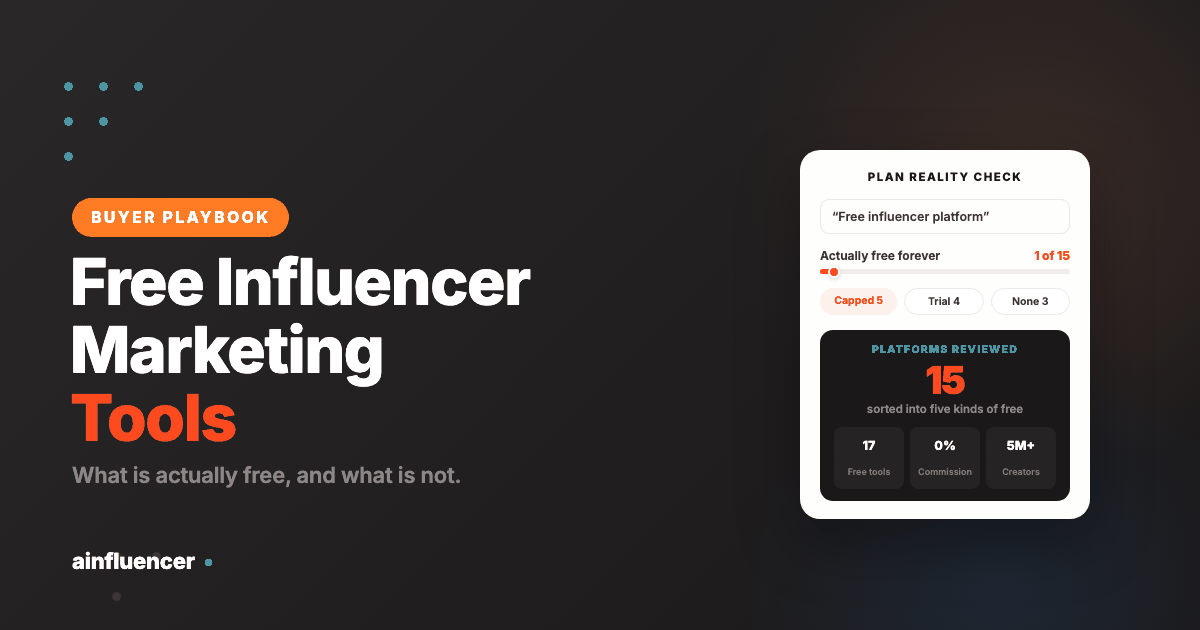
Most influencer marketing tools advertised as free are not free. Of the platforms reviewed here, one is free forever with no cap that stops you working, five have a real but tightly limited free tier, two offer a plan that does almost nothing, four give a trial rather than a plan, and three have no free option at all.
The word “free” is doing a lot of work on pricing pages in this category. It covers a genuine free-forever account, a fourteen day trial that needs a card, and a plan that unlocks three creator names and then stops. Those are not the same product, and picking the wrong one wastes a week.
This guide sorts the main platforms into five honest categories, gives the pros and cons of each, and lists the free tools you can use today without an account at all.
The five kinds of free
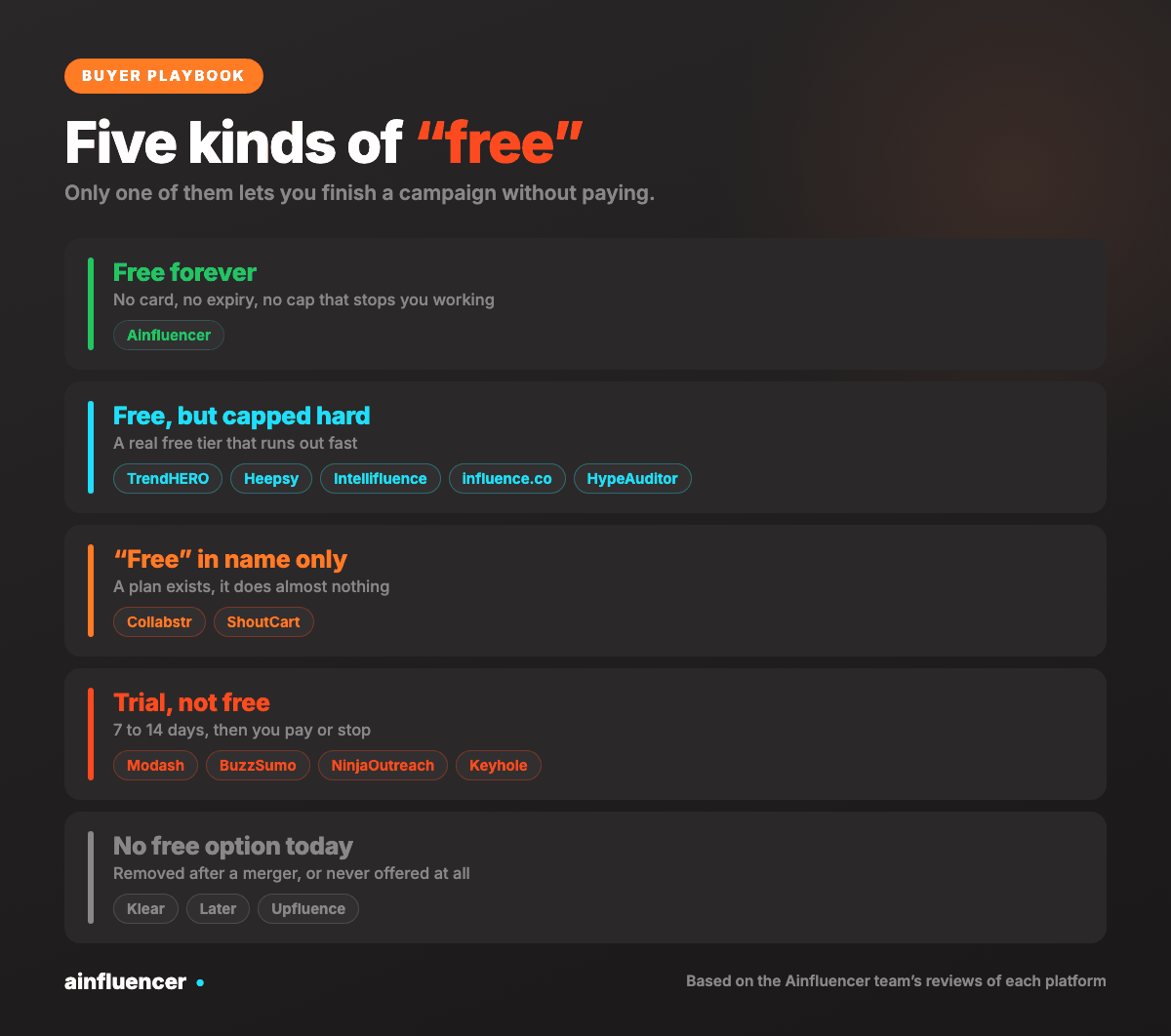
Before comparing individual platforms, it helps to know which of the five you are actually being offered. The label on the pricing page rarely tells you.
- Free forever. No card, no expiry, and no cap that stops you finishing a campaign.
- Free but capped hard. A real free tier that runs out quickly, usually on searches, creator unlocks, or profiles per month.
- Free in name only. A plan exists so the word can appear on the pricing page. In practice it does almost nothing.
- Trial, not free. Seven to fourteen days, then you pay or stop. Some require a card up front.
- No free option. Either the free plan was removed, or there never was one.
Every platform, sorted
The table below is the short version. Each platform name links to our full review, which carries the pricing detail and the user feedback behind the verdict.
| Platform | What free actually gets you | The catch |
|---|---|---|
| Ainfluencer | Free forever, unlimited search, campaigns and messaging | Marketplace model, creators apply to you |
| TrendHERO | $0/mo plan: one report on a creator under 10K followers | Instagram only, no campaign monitoring |
| Heepsy | Restricted free tier for evaluation | 12% commission on creator payments, on top of $69-$299/mo |
| Intellifluence | Free plan, plus a 60-day trial on paid tiers | Every plan below the top tier caps usage |
| HypeAuditor | Free influencer search | Plans from $399/mo, no campaign tool, trial withdrawn for some users |
| influence.co | Freemium profile and browsing | Too limited to run a campaign, creator authenticity inconsistent |
| Collabstr | A free plan exists | It offers almost nothing, and the pro tier is limiting too |
| ShoutCart | Free plan with three credits | Three credits equals three creator usernames, no messaging |
| Modash | 14-day trial, no card required | No free version after the trial, contact limits per plan |
| BuzzSumo | 7-day trial, free signup to look | No free plan, no Instagram, from $199/mo |
| Keyhole | No free plan | From about $89/mo, pricing not fully published |
| NinjaOutreach | Free trial | Trustpilot users report $300+ charges without notice |
| Klear | None. Free plan removed after the Meltwater merger | Users cite a $10k/mo minimum |
| Later | None. Free influencer plan discontinued in 2025 | Subscription required to reach the database |
| Upfluence | None. No trial and no plan | 12-month contracts, pricing not published |
Platforms with a genuinely usable free tier
Ainfluencer
Free forever for both brands and creators, with no commission taken on creator payments and a database of over five million verified creators across Instagram, TikTok and YouTube. Search, campaigns, messaging and reporting are unlimited rather than metered, which is the difference that matters when a free plan is judged.
The trade-off is that it is a marketplace model. You post a campaign and creators apply, which suits brands who want volume and choice, and suits creators who want to be found. Brands who want to hand a shortlist to an account manager will find a managed service faster.
TrendHERO
The clearest free plan in the group. It costs nothing per month and gives you an analytics report for one influencer under ten thousand followers, plus a fourteen day trial of the paid features.
Pros: a real zero-cost tier, a fourteen day trial on top, and an interface that does not need training.
Cons: the database covers Instagram only, there is no campaign monitoring, and one report a month is a demonstration rather than a workflow. Full detail in our TrendHERO review.
Heepsy
Founded in 2016 and indexing over eleven million creators. The free plan exists for evaluation and is heavily restricted; paid tiers run from sixty nine to two hundred and ninety nine dollars a month.
Pros: a large database, and filters that are genuinely useful once you are paying.
Cons: the free tier is for looking, not working, and Heepsy takes a twelve percent commission on creator payments processed through the platform. That commission sits on top of the subscription, so the real cost is higher than the plan price. See our Heepsy review.
Intellifluence
An Arizona company built around warm, opt-in contact with a network of over two hundred thousand creators. There is a free plan, and paid tiers from ninety nine to five hundred and ninety nine dollars come with a sixty day trial, which is unusually long.
Pros: the sixty day trial is the most generous in this list, the marketplace uses fixed pricing so there is no haggling, and creators have opted in to be contacted.
Cons: every plan below the top tier caps what you can do, so the ceiling arrives sooner than the price suggests. Detail in our Intellifluence review.
HypeAuditor
Best known for audience quality analysis rather than campaign management. Influencer search is available free, which is genuinely useful, but the plans start at three hundred and ninety nine dollars a month.
Pros: a large multi-platform database and the strongest fake-follower analysis in the group.
Cons: there is no campaign tool for creators to apply to, no in-app chat, and users have reported the free trial being withdrawn without notice. Our HypeAuditor review covers the pricing complaints.
influence.co
A freemium network with a profile-led model. Our assessment is that the free plan is too limited to run anything real, and both brands and creators end up on a paid plan to be visible.
Pros: free to join and browse, and useful as a creator portfolio.
Cons: creator authenticity is inconsistent, and the free tier is a shop window rather than a tool. See the influence.co review.
Platforms where free means almost nothing
Collabstr
Collabstr looks budget-friendly on the surface, with separate tools and the promise of a free plan. Looking closely changes that impression: the free plan offers almost nothing, and the pro plan is limiting enough that most users move up again.
Pros: a clean marketplace for one-off creator hires, and no negotiation.
Cons: the free plan is effectively a preview, and the value only starts on higher tiers. Our Collabstr review goes through what each plan actually unlocks.
ShoutCart
ShoutCart has three plans and no trial. The first is called free, but each creator you want to see costs a credit, and the free plan comes with three. In the best case that is three usernames.
Pros: fast hiring and secure payments once you are on a paid plan.
Cons: no messaging on the free plan, no influencer vetting, and a limited database. Detail in our ShoutCart review.
Platforms offering a trial rather than a free plan
Modash
A fourteen day trial with no card required, which is the friendliest trial here. Beyond it there is no free version.
Pros: responsive support, automatic collection of creator content from campaigns, solid influencer analytics, and a built-in fake follower checker.
Cons: filtering is limited, each plan caps how many creators you can contact, platform support is narrow and outreach is awkward. See our Modash review.
BuzzSumo
Primarily a content research tool that is used for creator discovery. There is no free plan, but a seven day trial, with plans from one hundred and ninety nine dollars a month.
Pros: free signup to look around, and an interface that is easy to pick up.
Cons: no Instagram support, limited filtering, no in-app messaging, no influencer analytics and no campaign creation. Our BuzzSumo review covers the gaps.
Keyhole
Social listening and campaign tracking. Plans start around eighty nine dollars a month, and the pricing is not fully published, which makes comparison harder than it should be.
Pros: strong tracking and reporting for campaigns already running.
Cons: no free plan, and opaque pricing. See our Keyhole review.
NinjaOutreach
An outreach-first tool with a free trial. Worth reading the reviews before entering card details: users on Trustpilot report signing up for the trial and being charged three hundred dollars or more without notice, and describe difficulty cancelling.
Pros: large prospect database and email outreach built in.
Cons: the billing complaints are consistent enough to be a pattern rather than isolated. Our NinjaOutreach review collects them.
Platforms with no free option today
Klear
Klear offered a limited free plan before the Meltwater merger. It no longer exists, exact pricing is not published, and users cite a minimum around ten thousand dollars a month. That puts it outside the reach of anyone reading an article about free tools, but it is worth knowing why it disappeared from shortlists. Our Klear review has the history.
Later
Later previously offered a free plan on its influencer marketing product. As of 2025 it has been discontinued, so reaching the creator database now requires a subscription, and pricing is not transparent up front. See the Later review.
Upfluence
No free trial and no free plan, combined with twelve month contracts and pricing that is not published. The database is large, at over twelve million creators, and the e-commerce integrations are genuinely good, but none of it is reachable without a signed contract.
Pros: extensive database, advanced filtering, e-commerce integration, and AI-assisted outreach.
Cons: no way to evaluate it without committing, forced annual contracts, and users report difficulty cancelling. Our Upfluence review covers the contract terms.
Free tools you can use without an account
Separate from platforms, there is a category of single-purpose tools that need no signup at all. These are worth knowing because they cover the checks that free platform tiers usually meter.
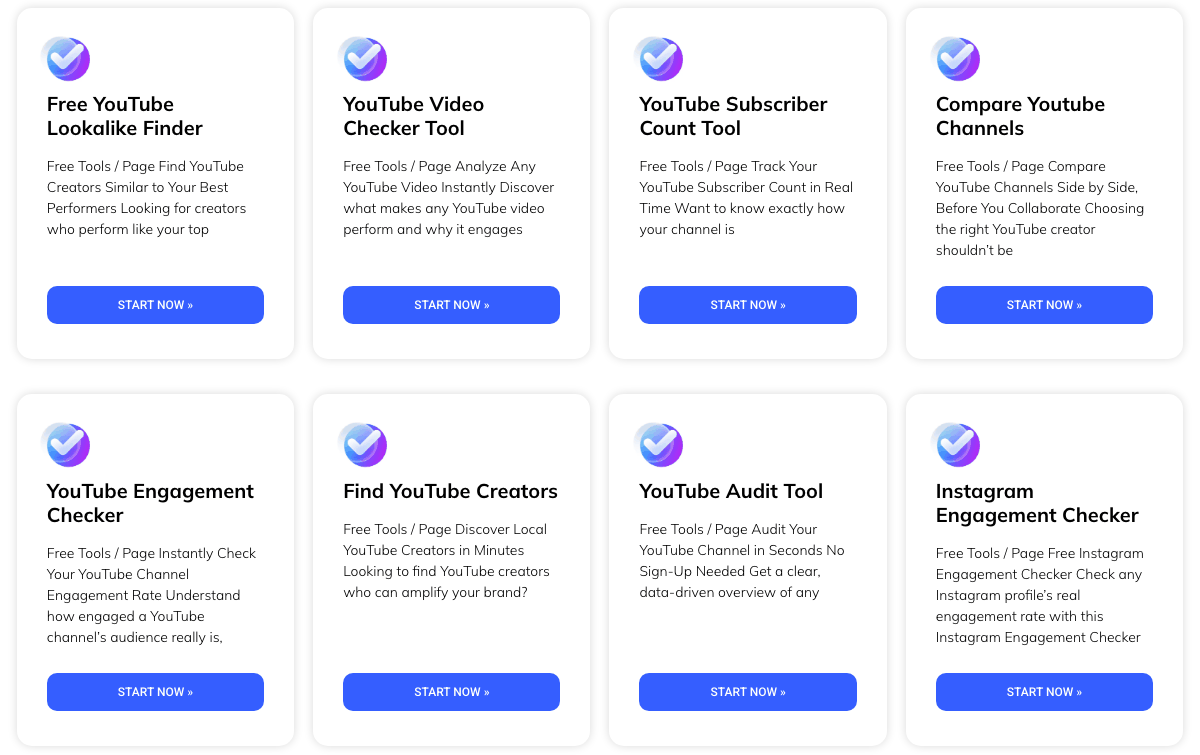
Ainfluencer publishes seventeen of them. The most useful for vetting are the Instagram audit tool, the fake follower checker, the engagement checker, and the pricing calculator, with equivalents for YouTube including a YouTube audit tool and a channel comparison tool.
None of them require an account, which makes them a practical way to run the numbers in our influencer profile audit checklist before you commit to any platform at all.
How to build a zero-budget stack
You can run a small campaign end to end without paying, provided you accept that the work moves from software to you.
- Discovery. Use a free-forever marketplace so creators apply to you. Inbound removes the search cap that free tiers impose.
- Vetting. Run each shortlisted profile through a free audit and fake follower tool rather than a metered platform check.
- Pricing. Use a rate calculator to set a defensible offer before negotiating, and compare it against published influencer rates.
- Outreach. Message creators directly. Our guide on how to DM influencers covers what to send.
- Measurement. Agree the metrics up front and track them yourself. See influencer marketing KPIs.
The limit of a zero-budget stack is scale. Below roughly ten creators the manual work is trivial. Above thirty it stops being sensible, and the question becomes which paid tier costs least for the volume you actually run.
A third route is worth knowing about: several of these jobs can now be handed to a model rather than a tool. We looked at where that holds up and where it does not in AI in influencer marketing, and compared the paid options in AI tools for influencer marketing.
How to judge a free plan before you sign up
Four questions separate a usable free tier from a marketing device.
- What is metered, and how much do you get? Searches, creator unlocks and profile views are the usual meters. Three of anything is a demo.
- Does it need a card? A trial that takes card details is a subscription with a grace period.
- Is there a commission on top? A platform fee on creator payments can cost more than the subscription you avoided.
- Can you message a creator? A plan that lets you find people but not contact them cannot complete a campaign.
Frequently asked questions
Is there a genuinely free influencer marketing platform?
Yes, but the category is small. Most platforms marked free offer either a capped tier or a trial. A genuinely free platform has no expiry, no card requirement, and no cap that prevents you completing a campaign. Ainfluencer runs this model, free for brands and creators with no commission on creator payments.
What is the difference between a free plan and a free trial?
A free plan continues indefinitely with limits on what you can do. A free trial gives full access for a fixed window, usually seven to fourteen days, and then stops. Trials often require a card, which means the subscription starts automatically unless you cancel. Read which one is on offer before you enter details.
Are free influencer marketing tools good enough for a small brand?
For fewer than about ten creators a campaign, yes. Free audit and analytics tools cover the vetting, and a free marketplace covers discovery. What you give up is automation, bulk outreach and reporting, which only start to matter at volume. Above roughly thirty creators the manual time costs more than a subscription.
Which free tools work without creating an account?
Single-purpose analysis tools generally need no signup: audit tools, fake follower checkers, engagement rate calculators and pricing calculators. Ainfluencer publishes seventeen such tools covering Instagram and YouTube. Platform databases almost always require an account, because the creator data is the product.
Why do platforms remove their free plans?
Usually after an acquisition or a move upmarket. Klear dropped its free plan after the Meltwater merger, and Later discontinued its free influencer plan in 2025. Both now target enterprise buyers, where a free tier attracts support load without producing customers. It is worth checking the current pricing page rather than an older article.
Does a free plan mean lower quality creators?
No. The creator pool and the pricing model are separate things. What free tiers do restrict is your ability to filter and verify at volume, which is why running an independent audit on each shortlisted profile matters more when you are not paying for built-in analysis.